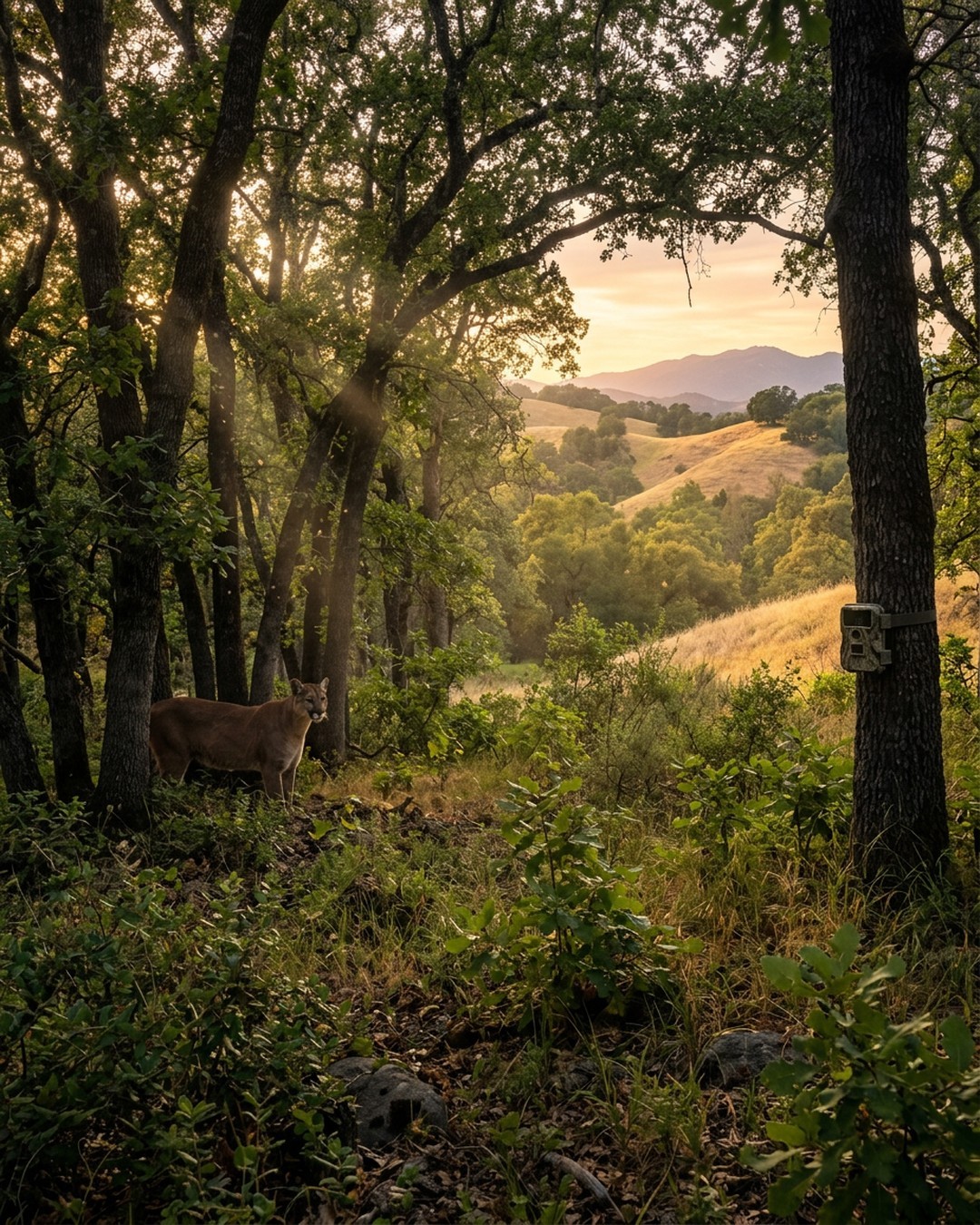
Mountain Lions Transform Ecosystem at Jasper Ridge

scitechdaily biology ecology stanford-university wildlife-biology

Zusammenfassung

Mindmap Titelbild
KI Generiertes Titelbild

A recent Stanford University study published on September 17, 2026, in Ecology and Evolution revealed that visiting mountain lions transformed an entire ecosystem at the Jasper Ridge Biological Preserve, located about 45 miles south of San Francisco. Researchers combined motion-activated camera records from 2015 to 2020 with vegetation surveys to analyze how top predators influence small protected habitats. The study demonstrated that increased mountain lion presence triggered trophic cascades, causing deer activity to drop and young oak trees to flourish. Furthermore, mid-sized predators such as coyotes and bobcats decreased their activity to avoid the apex predators, while fox populations increased and subsequently suppressed rabbit activity. Senior author Elizabeth Hadly and lead author Chinmay Sonawane emphasized that small preserves, which make up about 82 percent of protected areas smaller than 5 square kilometers in the United States, still possess significant ecological value when connected to large wilderness areas like the Santa Cruz Mountains. The findings highlight the importance of maintaining fully functioning ecosystems containing top predators, even in suburban or urbanized settings, despite the pervasive influence of human activity acting as the ultimate apex predator.

Schlüsselpunkte

01

🔹 Stanford Study Findings on Mountain Lions

Published on September 17, 2026, in Ecology and Evolution, a Stanford University study led by Chinmay Sonawane and Elizabeth Hadly discovered that mountain lion visits to the Jasper Ridge Biological Preserve transformed the local ecosystem. The research combined motion-activated camera data from 2015 to 2020 with vegetation surveys to document ecological shifts in a small suburban refuge 45 miles south of San Francisco.

02

🔸 Tri-Trophic Cascade Affecting Deer and Oak Trees

As mountain lion (Puma concolor) visits increased, motion-activated cameras recorded a noticeable drop in deer activity. Simultaneously, vegetation surveys revealed that woody plants typically eaten or trampled by deer, including young oak trees, began to flourish significantly, demonstrating a classic tri-trophic cascade linking predators, herbivores, and flora.

03

⭐ Impact on Mid-Sized Predators and Prey

Increased puma activity led to a decline in coyote and bobcat activity as these mid-sized predators either left the area or shifted their active hours to avoid the larger cats. In contrast, foxes appeared more often and took advantage of reduced coyote and bobcat pressure, which in turn suppressed rabbit activity in the preserve.

04

📊 Ecology of Fear and Human Impact

Behavioral shifts driven by predator perception are termed the ecology of fear. Mountain lions themselves experience this pressure from humans, who represent the leading cause of puma mortality through hunting and car accidents. Pumas actively avoid human smells, sounds, and movements by operating nocturnally.

05

💡 Ecological Value of Small Suburban Preserves

The study proves that small preserves, which account for about 82 percent of protected areas under 5 square kilometers (2 square miles) in the United States, maintain high ecological value. When connected to large wilderness areas like the Santa Cruz Mountains, small reserves can successfully host magnificent phenomena like trophic cascades.

Möchten Sie Ihre eigene Mindmap erstellen?

Melden Sie sich bei Neumap AI an und beginnen Sie mit der Erstellung Ihrer eigenen Mindmaps!

Loslegen