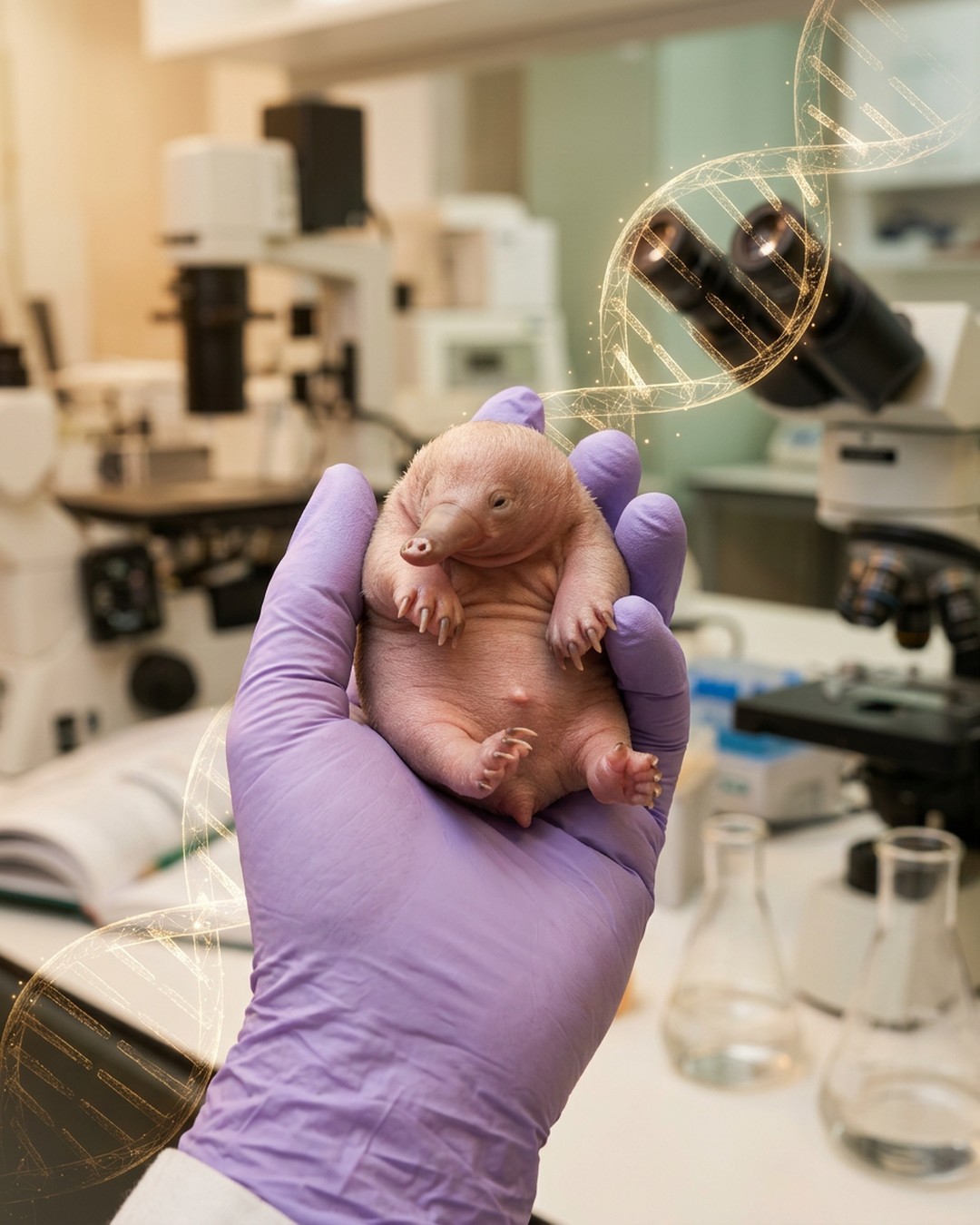
First University-Bred Echidna Puggle

echidna macquarie-university monotremes animal-breeding evolutionary-biology

Zusammenfassung

Mindmap Titelbild
KI Generiertes Titelbild

Researchers at Macquarie University in Sydney have successfully bred and reared a baby short-beaked echidna, known as a puggle, in a university setting for the first time. Led by Oliver Griffith, the team established a dedicated research colony consisting of five females and four males, including the mother named Kootear. The puggle was born earlier this month, and during its third weigh-in, it was temporarily removed from its mother's pouch, weighing 36 grams and displaying characteristic echidna features such as a beak and feet. The author conveys an enthusiastic and pioneering scientific attitude, emphasizing the milestone achievement in breeding a notoriously difficult species in captivity. This breakthrough represents a major step forward for behavioral and evolutionary biology research regarding egg-laying mammals. The essence of this achievement lies in overcoming the historical difficulty of breeding monotremes in captivity. By monitoring behavioral changes, such as the mother fasting and immobilizing for 10 days, researchers gained critical insights into the reproductive cycle of the short-beaked echidna, Tachyglossus aculeatus. This long-term research program aims to answer fundamental questions about the evolution of mammalian pregnancy. Scientists plan to analyze echidna eggshell proteins and compare them with reptile eggshells to determine whether they share a common evolutionary origin, offering broader insights into the divergence of mammals and reptiles.

Schlüsselpunkte

01

🔹 World's First University-Bred Echidna Puggle

Researchers at Macquarie University in Sydney successfully bred and reared a baby short-beaked echidna (Tachyglossus aculeatus) in a university setting for the first time. The research colony includes five females and four males, marking a significant milestone in breeding this notoriously difficult species in captivity.

02

🔸 Parental Behavior and Gestation Indicators

In early August, researchers noticed the mother echidna, Kootear, stopped eating and moving for approximately 10 days. This behavioral standstill is a crucial indicator that birth is imminent, as pregnant echidnas transfer their eggs into a pouch for incubation while fasting and immobilised.

03

⭐ Rapid Growth and Physical Development

When first discovered in the pouch three weeks prior, the baby was jelly-bean-sized. Within a week, it experienced a massive growth surge. During its third inspection under anaesthesia, the puggle weighed 36 grams and exhibited recognizable echidna features including a beak and feet, despite lacking fur and spines initially.

04

📊 Scientific Significance and Evolutionary Research

Monotremes are an ancient mammalian lineage of egg-laying species comprising only five known species, including three echidna species and the platypus (Ornithorhynchus anatinus). Studying the chemical composition and eggshell proteins of echidna eggs allows researchers to compare them with reptile proteins, providing clues on when mammals and reptiles diverged.

05

💡 Long-Term Research Program Goals

Led by Oliver Griffith, the Macquarie University colony is designed for a career's worth of long-term research. With echidnas living for more than 50 years in captivity, the animals will not be released into the wild, ensuring sustained scientific study into the evolution of mammalian pregnancy.

Möchten Sie Ihre eigene Mindmap erstellen?

Melden Sie sich bei Neumap AI an und beginnen Sie mit der Erstellung Ihrer eigenen Mindmaps!

Loslegen