Amygdala Neurons Predict Episodic Memory Encoding

scitechdaily biology neuroscience brain-memory cedars-sinai

Zusammenfassung

Mindmap Titelbild
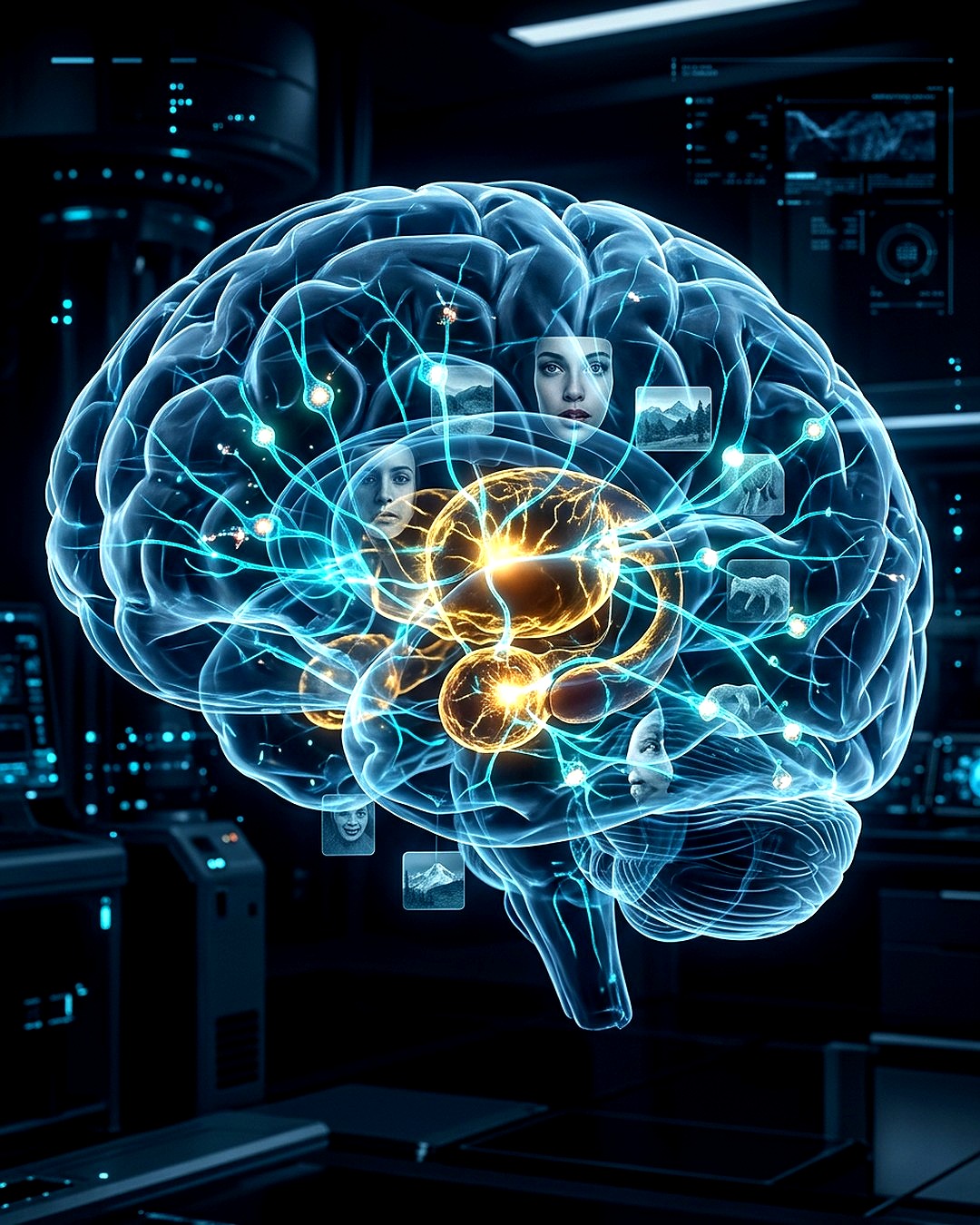
KI Generiertes Titelbild

Scientists have discovered that the amygdala, a brain region traditionally associated with processing emotions such as fear, plays a crucial and surprisingly broad role in determining which ordinary visual experiences become lasting memories. Published in Nature Neuroscience on October 27, 2026, researchers at Cedars-Sinai Health Sciences University analyzed single-neuron electrical activity from 112 epilepsy patients with implanted electrodes while they viewed unfamiliar images of faces, animals, and landscapes. The researchers found that specialized neurons in the amygdala respond preferentially to specific categories of images. When these neurons reacted more strongly during the initial viewing of an image, participants were significantly more likely to successfully recall that picture later the same day, demonstrating that initial neural firing strength predicts episodic memory encoding success. This groundbreaking human neuroscience study provides direct mechanistic insight into how the human brain selects information for long-term storage, expanding our understanding of the amygdala beyond purely emotional processing into ordinary perceptual memory encoding. These clinical implications suggest that the amygdala could serve as a novel therapeutic target for neuromodulation and cellular therapies to treat memory impairments associated with neurological conditions such as Alzheimer's disease and temporal lobe epilepsy.

Schlüsselpunkte

01

🔹 Amygdala Role in Memory Encoding

【📌 Key Finding】Specialized neurons within the amygdala help determine which new experiences are selected for long-term episodic memory storage, extending far beyond its traditional role in processing fear and emotion. 【⭐ Data Support】The study analyzed single-neuron recordings from 112 patients undergoing monitoring for epileptic seizures who viewed unfamiliar images and were tested on recall later the same day.

02

🔸 Stimulus-Specific Neural Responses

【📌 Key Finding】Neurons in the amygdala respond preferentially to specific categories of visual stimuli, including faces, animals, and landscapes. 【⭐ Data Support】When these specialized neurons reacted more strongly to an image during the first viewing, participants demonstrated a significantly higher probability of remembering that image later.

03

⭐ Research Methodology and Consortium Support

【📌 Key Finding】The research was conducted by Cedars-Sinai Health Sciences University in collaboration with a multi-institutional consortium and published in Nature Neuroscience. 【⭐ Data Support】Led by first author Jiayang Xiao and senior author Ueli Rutishauser, the study was supported by the NIH BRAIN Initiative under grant no. U01NS117839.

04

📊 Clinical Implications for Neurological Disorders

【📌 Key Finding】Disruptions in normal amygdala processes may contribute significantly to memory impairments observed in patients with neurological conditions. 【⭐ Data Support】The findings suggest that the amygdala could become a suitable clinical target for treating memory disorders like Alzheimer's disease and temporal lobe epilepsy using neuromodulation or cellular therapies.

05

💡 Future Research Directions

【📌 Key Finding】Current experiments focused exclusively on visual information, leaving open questions about cross-modal memory encoding. 【⭐ Data Support】Future investigations led by researchers like Ueli Rutishauser will examine whether the amygdala similarly governs memory selection for other sensory inputs such as sounds and smells.

Möchten Sie Ihre eigene Mindmap erstellen?

Melden Sie sich bei Neumap AI an und beginnen Sie mit der Erstellung Ihrer eigenen Mindmaps!

Loslegen