Human Sperm DNA Rewriting Before Meiosis

scitechdaily biology genetics reproductive-biology sperm wellcome-trust-sanger-institute

Zusammenfassung

Mindmap Titelbild
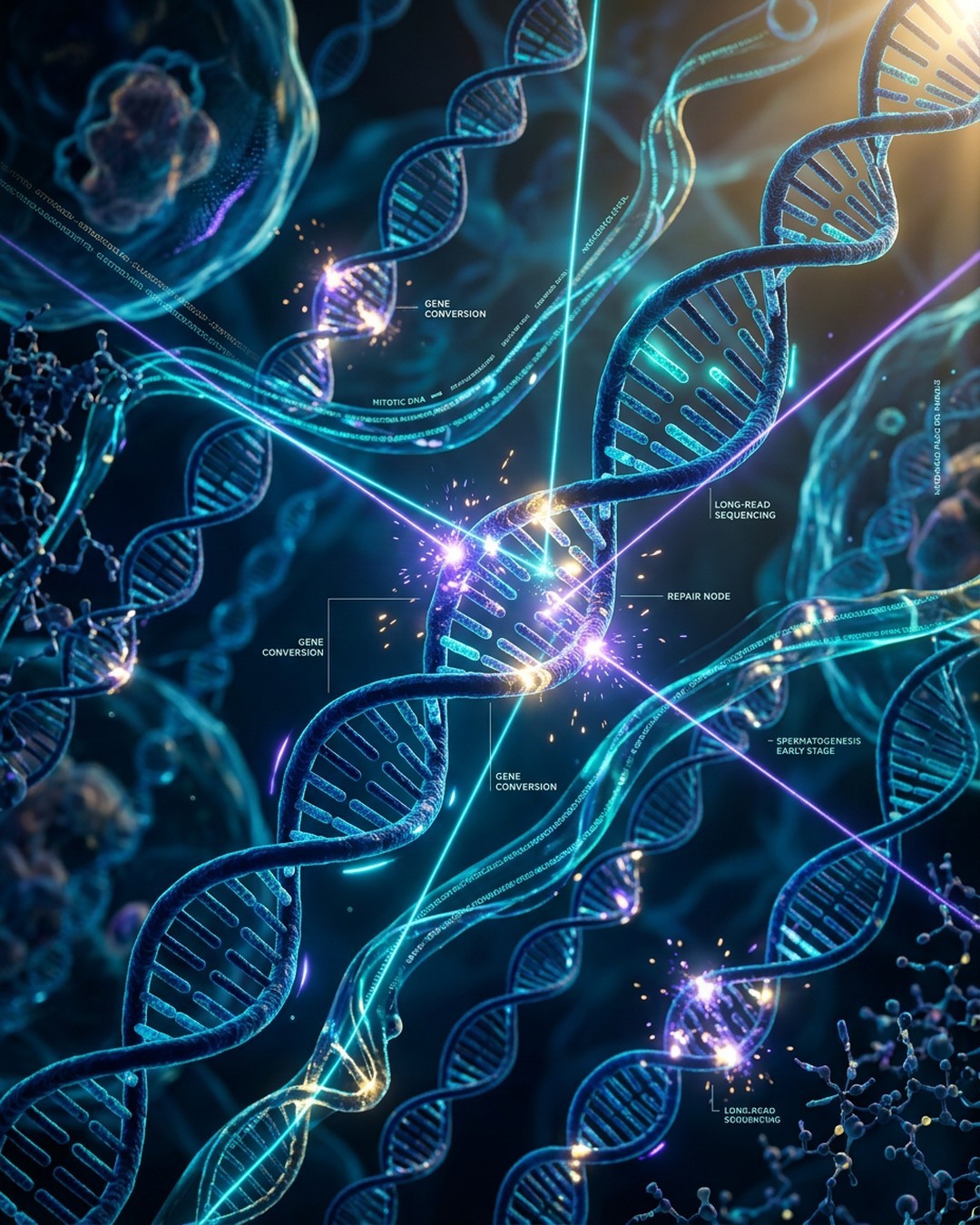
KI Generiertes Titelbild

Recent research published in Nature on August 26, 2026, reveals that genetic variation and DNA reshuffling in human sperm can begin years earlier than previously understood, specifically before meiosis during mitotic cell divisions. Scientists from the Wellcome Sanger Institute, University of Cambridge, and collaborating institutions analyzed 15 sperm samples from 13 donors aged 24 to 74 using high-accuracy long-read sequencing technology. The authors emphasize that non-crossover gene conversion occurs during routine maintenance divisions of sperm precursor cells, challenging the long-standing assumption that all meaningful recombination begins only after cells enter meiosis. This two-stage model demonstrates that both routine mitotic DNA repair and meiotic recombination contribute to shaping the genetic diversity passed to offspring. The study uncovered 7,143 crossovers and 2,382 non-crossover gene conversion events directly within sperm DNA, noting that patterns vary significantly across individuals, including between identical twins. Many copying events occurred in naturally fragile genomic regions prone to breakage, offering crucial new clues into how DNA repair mechanisms protect genomic integrity while occasionally generating inherited disease risks. These findings provide a powerful new window into reproductive biology and human genome evolution, opening pathways to investigate how pre-meiotic DNA processes influence hereditary variation. Researchers recommend applying high-accuracy long-read sequencing in future studies to further decode how individual biological differences and fragile DNA repair pathways shape the next generation's health.

Schlüsselpunkte

01

🔹 Pre-Meiotic Genetic Reshuffling Discovery

【📌 Key Finding】Genetic variation in human sperm begins earlier than previously recognized, occurring during mitotic cell division before meiosis begins. 【🔸 Impact Factors】Research published on August 26, 2026, in Nature by scientists from the Wellcome Sanger Institute and University of Cambridge challenges the assumption that recombination exclusively starts post-meiosis. 【⭐ Data Support】The study examined 15 sperm samples from 13 donors aged 24 to 74 using advanced long-read sequencing.

02

🔸 Two-Stage Recombination Model

【📌 Key Finding】Sperm genetic diversity is driven by a two-stage process combining routine mitotic DNA repair and meiotic recombination. 【🔸 Impact Factors】Non-crossover gene conversion copies short DNA stretches during ordinary precursor cell maintenance, whereas crossovers exchange large segments during meiotic division. 【⭐ Data Support】Researchers identified 7,143 crossovers and 2,382 non-crossover gene conversion events directly in human sperm.

03

⭐ Individual Variation and Twin Differences

【📌 Key Finding】Gene conversion frequency and location vary significantly across different individuals, including identical twins. 【🔸 Impact Factors】Despite nearly identical inherited genomes, identical twins show distinct recombination patterns, proving that biological events unfolding independently within each person shape sperm diversity. 【⭐ Data Support】Long-read genomic comparisons between sperm and blood samples revealed unique personal molecular signatures.

04

📊 Fragile DNA Sites and Disease Implications

【📌 Key Finding】Many newly identified copying events concentrate in fragile genomic regions prone to natural breakage. 【🔸 Impact Factors】While DNA repair in these unstable regions protects genomic integrity, repair mistakes can introduce mutations transmitted to future generations. 【⭐ Data Support】Studying these pre-meiotic repair activities provides fresh insights into inherited diseases and reproductive health maintenance.

05

💡 Advanced Sequencing Methodology

【📌 Key Finding】High-accuracy long-read sequencing enabled the direct detection of subtle recombination events previously missed by traditional methods. 【🔸 Impact Factors】Led by researchers like Dr. Regev Schweiger, Professor Richard Durbin, and Dr. Raheleh Rahbari, the technology successfully resolved hard-to-detect non-crossover gene conversions. 【⭐ Data Support】The method successfully mapped thousands of micro-recombination events across extended sections of individual DNA molecules.

Möchten Sie Ihre eigene Mindmap erstellen?

Melden Sie sich bei Neumap AI an und beginnen Sie mit der Erstellung Ihrer eigenen Mindmaps!

Loslegen