Ozempic and GLP-1 Drugs in Addiction Treatment

Ozempic AddictionTreatment Neuroscience GLP1Agonists HealthResearch

Zusammenfassung

Mindmap Titelbild
KI Generiertes Titelbild

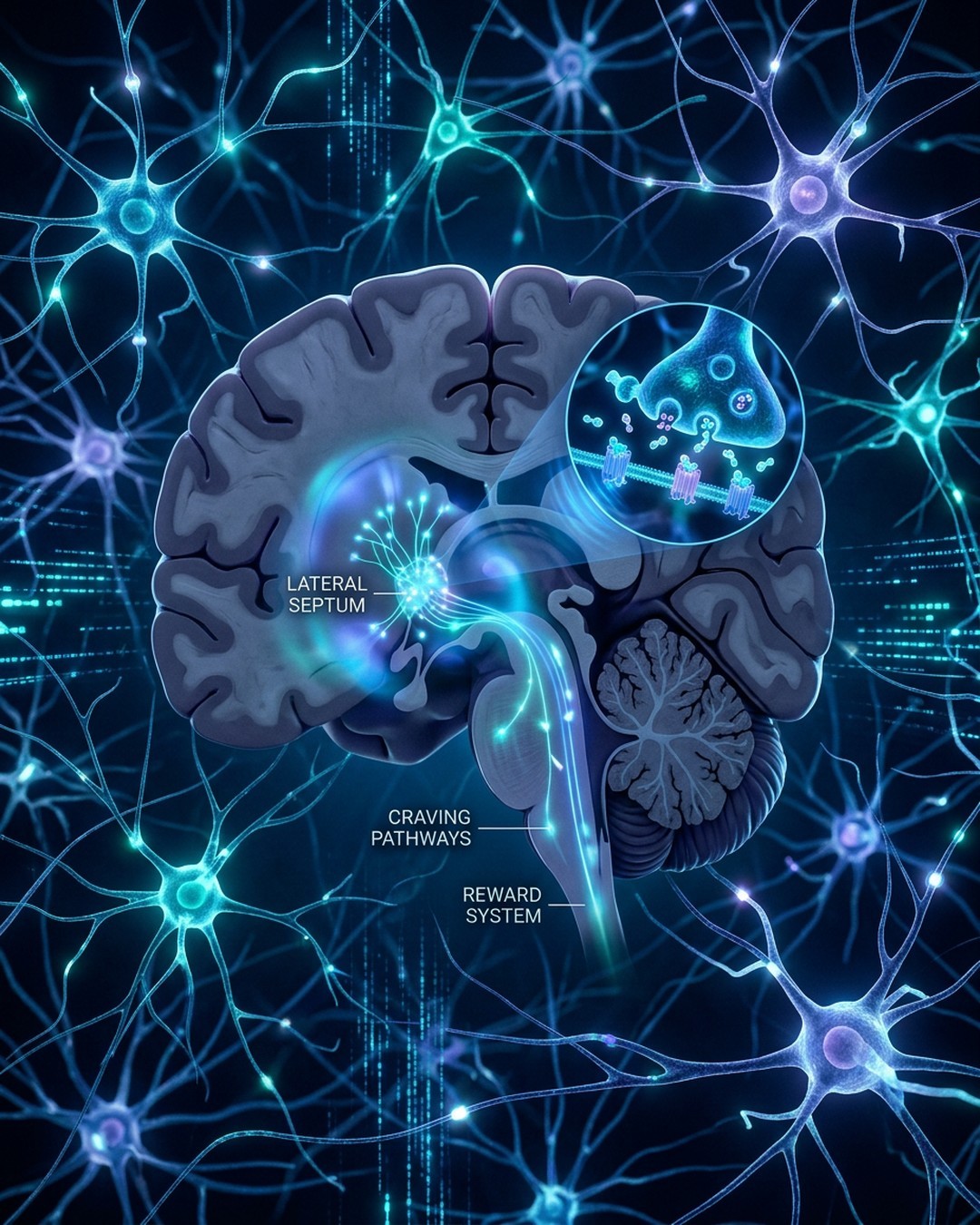
Recent neuroscience research published on August 7, 2026, reveals how GLP-1 receptor agonist drugs like Ozempic and Wegovy can potentially treat substance use disorders and addiction by targeting the lateral septum in the brain. Originally developed for type 2 diabetes and obesity management, these medications effectively reduce the consumption of alcohol, cocaine, amphetamines, opiates, and nicotine. The author explores the neurological mechanisms underlying cravings, moving beyond the traditional dopamine reward centers such as the ventral tegmental area and nucleus accumbens. Because these classic reward regions lack high densities of GLP-1 receptors, researchers investigated upstream structures and identified the lateral septum as a critical hub packed with GLP-1 receptors. The lateral septum acts as a vital bridge receiving spatial and temporal data from the hippocampus while strongly responding to rewards before communicating with dopamine-producing regions. Recent preclinical and clinical findings indicate that GLP-1 activation directly within the lateral septum dampens specific neural activity, curtailing cravings and compulsive consumption behaviors. These scientific breakthroughs offer promising new therapeutic pathways for treating alcohol dependence, overeating, and various substance addictions. Understanding this specific neurological pathway opens doors for developing targeted pharmacological interventions to combat widespread addiction disorders.

Schlüsselpunkte

01

🔹 GLP-1 Agonists and Addiction Reduction

【📌 Key Finding】Medications mimicking the hormone GLP-1, such as Ozempic and Wegovy, reduce cravings and consumption of multiple substances. 【🔸 Impact Factors】Human studies confirm decreased alcohol consumption, while preclinical animal research demonstrates reduced use of cocaine, amphetamines, opiates, and nicotine. 【⭐ Data Support】Published on August 7, 2026, by Robert Munn from the University of Otago, highlighting expanding medical applications beyond type 2 diabetes and obesity.

02

🔸 Rethinking Brain Reward Circuitry

【📌 Key Finding】Traditional dopamine-producing reward centers are not the primary target for GLP-1 action. 【🔸 Impact Factors】The ventral tegmental area (VTA) and nucleus accumbens (NAc) lack significant densities of GLP-1 receptors, prompting neuroscientists to investigate upstream brain structures. 【⭐ Data Support】Researchers shifted focus to alternative regions capable of explaining the anti-consumption and craving-reduction effects of GLP-1 drugs.

03

⭐ The Lateral septum as the Craving Hub

【📌 Category A】Lateral Septum Position: Located upstream from dopamine regions and heavily loaded with GLP-1 receptors. 【📌 Category B】Hippocampal Input: Receives 'where and when' spatial-temporal memory data from the hippocampus. 【⚖️ Key Differences】Unlike older historical theories linking the lateral septum only to emotional regulation and septal rage, modern research identifies it as a core reward-processing and craving control center.

04

📊 Neurological Mechanism of Action

【📌 Process Step 1】Hippocampus processes episodic memories and place cells, forwarding spatial and temporal data to the lateral septum. 【📌 Process Step 2】Lateral septum place cells integrate reward information ('what is good in this place') with hippocampal data. 【📌 Process Step 3】GLP-1 receptor activation directly in the lateral septum reduces specific neural activity, preventing effective communication with dopamine regions to curb cravings.

05

💡 Therapeutic Implications and Future Outlook

【📌 Clinical Application】Provides a concrete biological mechanism explaining why weight-loss and diabetes drugs successfully mitigate addictive behaviors. 【🔸 Future Treatments】Opens promising new avenues for treating obesity, alcohol dependence, and substance use disorders. 【⭐ Scientific Significance】Reshapes modern neuroscience understanding of how conscious perception of rewards links directly to neurochemical dopamine production.

Möchten Sie Ihre eigene Mindmap erstellen?

Melden Sie sich bei Neumap AI an und beginnen Sie mit der Erstellung Ihrer eigenen Mindmaps!

Loslegen