Arctic Mammal Evolution in the Late Cretaceous

paleontology arctic evolution mammals cretaceous science-research

Resumen

Mind Map Cover Image
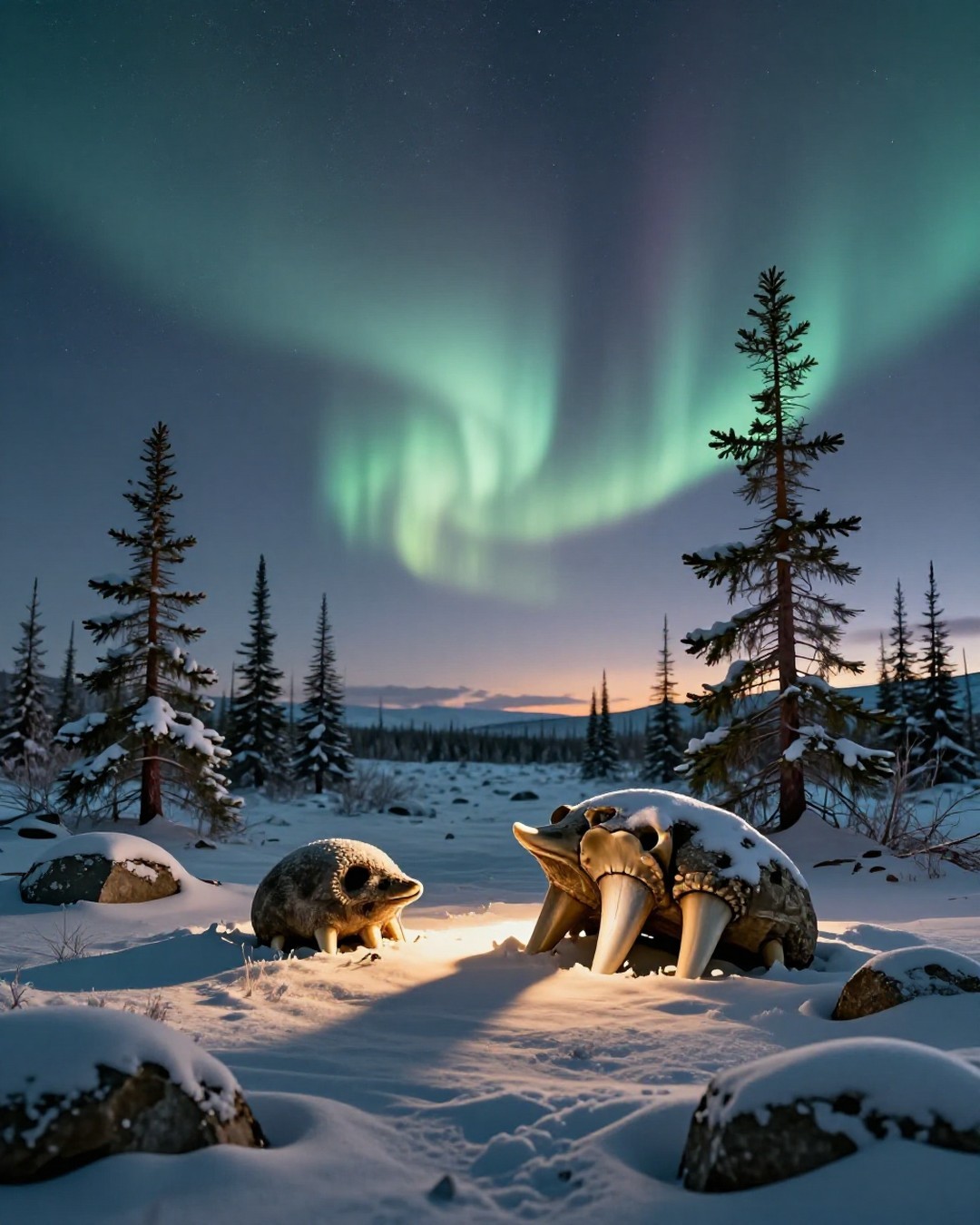
Imagen de Portada Generada por IA

Recent paleontological research published in the Proceedings of the National Academy of Sciences reveals that the ancient Arctic was a vibrant evolutionary hub during the Late Cretaceous period, approximately 73 million years ago. By analyzing fossilized teeth from the Prince Creek Formation in Alaska, researchers identified three previously unknown species of multituberculate mammals, challenging the traditional view that polar regions were merely peripheral to evolutionary development. The study highlights that these small, rodent-like mammals were highly resilient, thriving in an environment characterized by months of winter darkness and seasonal food scarcity. The authors argue that the Arctic served as a critical crossroads for species migration, specifically noting that ancestors of these mammals likely migrated from Asia to North America via a land bridge as early as 92 million years ago. The discovery of diverse tooth morphologies among the three species—Camurodon borealis, Qayaqgruk peregrinus, and Kaniqsiqcosmodon polaris—suggests specialized dietary strategies, including herbivory and omnivory. This dietary flexibility is identified as a key factor in their long-term survival, enabling them to endure for over 100 million years and persist through the mass extinction event that eliminated nonavian dinosaurs. This research provides significant insights into mammalian resilience and historical migration patterns, offering a deeper understanding of how species adapt to extreme climatic stresses. It serves as a reminder that polar ecosystems have long been active centers of biological innovation, providing a historical context for modern concerns regarding biodiversity and climate change.

Puntos clave

01

🔹 Discovery of Three New Mammal Species

Researchers identified three previously unknown multituberculate species from 73-million-year-old fossil teeth found in Alaska's Prince Creek Formation: Camurodon borealis (Northern curved-tooth), Qayaqgruk peregrinus (the little wandering hero), and Kaniqsiqcosmodon polaris (polar frost ornamented tooth).

02

🔸 Evolutionary Significance of the Ancient Arctic

The study challenges the assumption that the Arctic was an isolated evolutionary outpost. Instead, it identifies the region as an active crossroads where species adapted, diversified, and migrated, proving that polar regions were significant to mammal evolution during the Age of Dinosaurs.

03

⭐ Dietary Adaptations and Survival Strategies

Multituberculates were the longest-lived mammal group, surviving over 100 million years. Their success is attributed to dietary flexibility: Camurodon borealis was a herbivore, while Qayaqgruk peregrinus and Kaniqsiqcosmodon polaris were omnivores. This specialization allowed them to coexist despite seasonal food shortages and survive the K-Pg mass extinction.

04

📊 Evidence of Early Transcontinental Migration

Analysis shows that Qayaqgruk peregrinus is closely related to species from ancient Mongolia. This indicates a land bridge existed between Asia and North America as early as 92 million years ago, facilitating one of the earliest known examples of mammalian migration between the two continents.

05

💡 Research Context and Methodology

Led by Sarah Shelley (University of Lincoln) and Jaelyn Eberle (CU Boulder), the study utilized fossilized teeth to reconstruct paleoenvironments. The findings were published in the Proceedings of the National Academy of Sciences (PNAS) on May 18, 2026, supported by National Science Foundation (NSF) grants.

¿Quieres crear tu propio mapa mental?

¡Inicia sesión en Neumap AI y comienza a crear tus propios mapas mentales!

Comenzar