Rising Colorectal Cancer in Younger Adults (2026 Report)

AmericanCancerSociety ColorectalCancer PublicHealth CancerResearch ScreeningGuidelines

Resumen

Mind Map Cover Image
Imagen de Portada Generada por IA

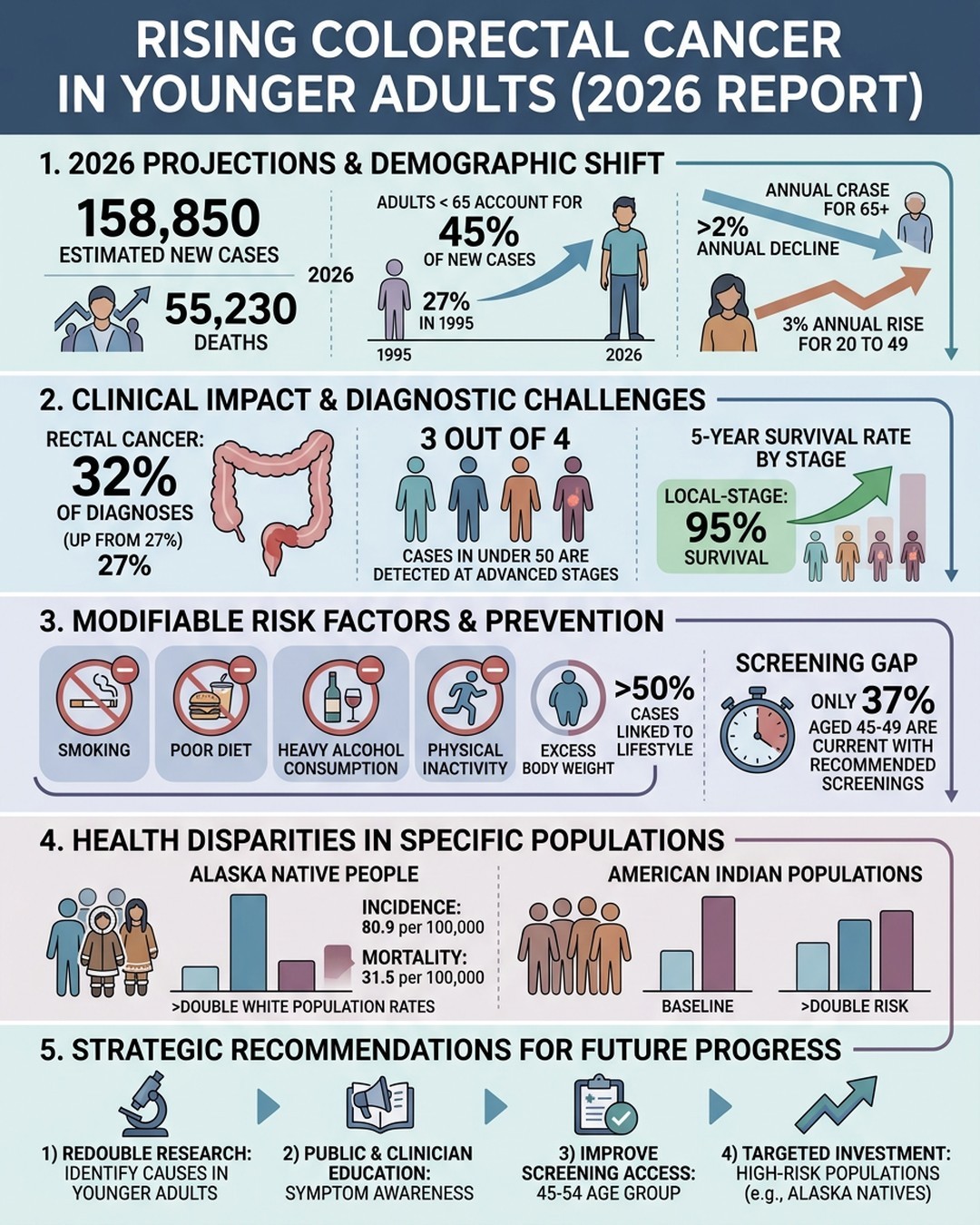
The American Cancer Society reports a concerning shift in colorectal cancer trends, with incidence rates rising rapidly among adults younger than 65, effectively reversing decades of progress. While mortality rates continue to decline for those over 65, the disease has become the leading cause of cancer death in individuals under 50, with nearly half of all new diagnoses now occurring in the younger demographic. Experts emphasize that this generational shift is largely driven by cancers in the distal colon and rectum. The report highlights that lifestyle factors such as poor diet, smoking, physical inactivity, and obesity contribute significantly to this trend, though the exact underlying causes for the surge in younger populations remain a critical area for ongoing research. The data underscores an urgent need for increased awareness and adherence to screening guidelines. Currently, only 37% of eligible adults aged 45 to 49 are up to date with screenings, despite the fact that early detection at a local stage offers a 95% five-year survival rate. Most cases in younger adults are unfortunately diagnosed at advanced stages. Practical application for the public includes prioritizing recommended screenings starting at age 45 and addressing modifiable risk factors. Clinicians are urged to educate patients on early symptoms, while researchers are called to focus on the specific disparities affecting high-risk groups, such as Alaska Native and American Indian populations.

Puntos clave

01

🔹 2026 Cancer Projections and Demographic Shift

The American Cancer Society estimates 158,850 new colorectal cancer cases and 55,230 deaths in 2026. A major generational shift has occurred: adults under 65 now account for 45% of new cases, compared to only 27% in 1995. While incidence falls by over 2% annually for those 65+, it rises by 3% annually for those aged 20 to 49.

02

🔸 Clinical Impact and Diagnostic Challenges

Rectal cancer now represents 32% of all colorectal diagnoses, up from 27% in the mid-2000s. Alarmingly, 3 out of 4 colorectal cancers in adults under 50 are detected at advanced (regional or distant) stages. Early detection is critical, as local-stage diagnosis correlates with a 95% five-year survival rate.

03

⭐ Modifiable Risk Factors and Prevention

More than 50% of cases are linked to preventable lifestyle factors: smoking, poor diet, heavy alcohol consumption, physical inactivity, and excess body weight. Despite eligibility, only 37% of adults aged 45-49 are current with recommended screenings, which are essential for detecting disease before symptoms manifest.

04

📊 Health Disparities in Specific Populations

Significant racial and ethnic disparities persist. Alaska Native people face the highest burden, with an incidence rate of 80.9 per 100,000 and a mortality rate of 31.5 per 100,000, more than double the rates observed in White populations. American Indian populations experience the second-highest incidence and mortality rates.

05

💡 Strategic Recommendations for Future Progress

The American Cancer Society calls for a multi-pronged approach: 1) Redoubling research to identify specific causes of the rise in younger adults; 2) Increasing public and clinician education regarding symptoms; 3) Improving screening access for the 45-54 age group; 4) Targeted investment in research for high-risk populations like Alaska Natives.

¿Quieres crear tu propio mapa mental?

¡Inicia sesión en Neumap AI y comienza a crear tus propios mapas mentales!

Comenzar