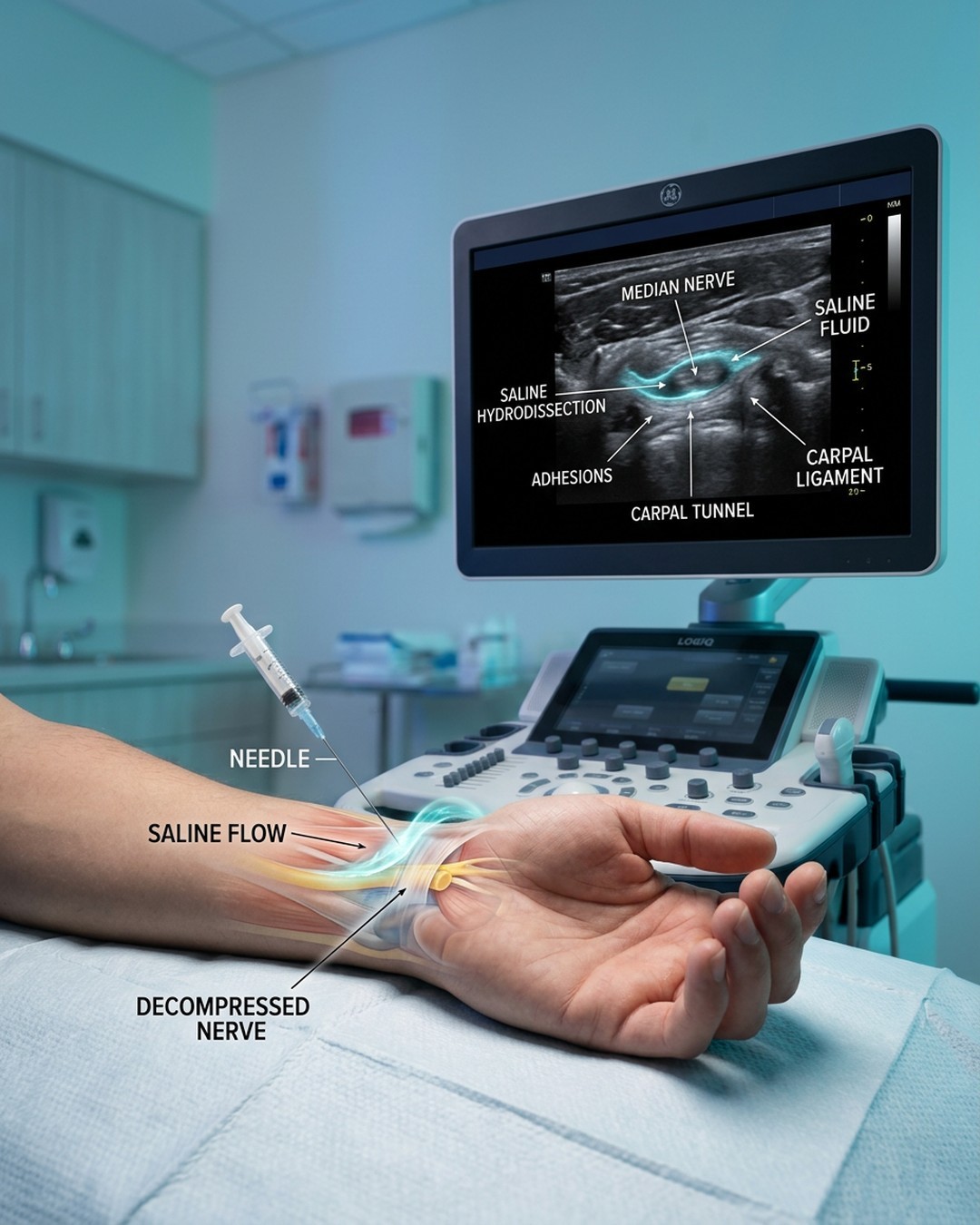
Carpal Tunnel Relief via Saline Hydrodissection

scitechdaily medical-imaging neurology pain-management ultrasound

Resumen

Mind Map Cover Image
Imagen de Portada Generada por IA

Recent clinical research published in Radiology demonstrates that ultrasound-guided nerve hydrodissection using normal saline provides long-term relief for patients suffering from refractory carpal tunnel syndrome. The procedure effectively frees the median nerve from surrounding tissue adhesions without requiring hospitalization, anesthesia, or costly pharmacological interventions. The study investigated 63 patients divided into three distinct groups comparing normal saline hydrodissection, saline combined with corticosteroids, and corticosteroids alone over a six-month follow-up period. Results confirmed that while all treatments yielded initial improvements, patients receiving saline hydrodissection experienced sustained symptom relief and significantly greater reduction in nerve swelling. The fundamental mechanism involves precise mechanical dissection using fluid injection to alleviate compression on the median nerve within the narrow carpal tunnel passage. This approach successfully addresses chronic numbness, tingling, and weakness while avoiding the adverse risks associated with repeated corticosteroid injections such as tendon weakening and skin thinning. Healthcare practitioners can utilize this 15-minute minimally invasive procedure as a safe, low-cost therapeutic option for patients with mild to moderate carpal tunnel syndrome. Implementing routine ultrasound-guided saline hydrodissection can effectively defer or entirely eliminate the need for invasive surgical interventions while allowing rapid patient recovery.

Puntos clave

01

🔹 Clinical Trial Overview and Methodology

【📌 Key Finding】A randomized trial of 63 patients evaluated the effectiveness of ultrasound-guided nerve hydrodissection for stubborn carpal tunnel syndrome. 【🔸 Impact Factors】Participants were divided into three groups receiving normal saline hydrodissection, saline plus corticosteroid, and corticosteroid injection alone. 【⭐ Data Support】Follow-up assessments tracked symptoms, functional status, visual analog scale pain scores, and cross-sectional area of the median nerve over six months.

02

🔸 Mechanism of Action and Hydrodissection

【📌 Key Finding】Hydrodissection uses carefully injected fluid under ultrasound guidance to free the median nerve from surrounding tissue adhesions. 【🔸 Impact Factors】This mechanical separation relieves compression inside the narrow passage of the wrist where the major nerve runs from the forearm. 【⭐ Data Support】The procedure specifically targets the root cause of numbness, tingling, and weakness associated with repetitive hand movements.

03

⭐ Comparative Treatment Outcomes

【📌 Key Finding】All three treatment groups showed initial improvement by four weeks, but outcomes diverged significantly over time. 【🔸 Impact Factors】Patients treated with corticosteroid injection alone experienced a recurrence of symptoms, whereas both hydrodissection groups maintained continuous clinical improvement through 12 weeks and six months.

04

📊 Reduction in Median Nerve Swelling

【📌 Key Finding】Ultrasound measurements confirmed substantial morphological recovery following the hydrodissection procedure. 【🔸 Impact Factors】The cross-sectional area of the median nerve decreased by approximately 43% to 45% after hydrodissection. 【⭐ Data Support】In contrast, steroid injection alone yielded only about a 15% reduction in nerve swelling.

05

💡 Procedure Efficiency and Safety Profile

【📌 Key Finding】Saline hydrodissection is a low-cost, 15-minute procedure that requires neither anesthesia nor hospitalization. 【🔸 Impact Factors】Patients tolerated the intervention exceptionally well with high satisfaction rates and were able to return to work within an hour. 【⭐ Data Support】Avoiding traditional steroids eliminates localized risks such as skin changes, fat thinning, and tendon weakening.

¿Quieres crear tu propio mapa mental?

¡Inicia sesión en Neumap AI y comienza a crear tus propios mapas mentales!

Comenzar