📚 Challenging Inevitable Cognitive Decline: A 3-Year Study on Improving Brain Health at Any Age

SciTechDaily Neuroscience BrainHealth CognitiveDecline Aging ResearchStudy MentalFitness UniversityOfTexas

Resumen

Mind Map Cover Image
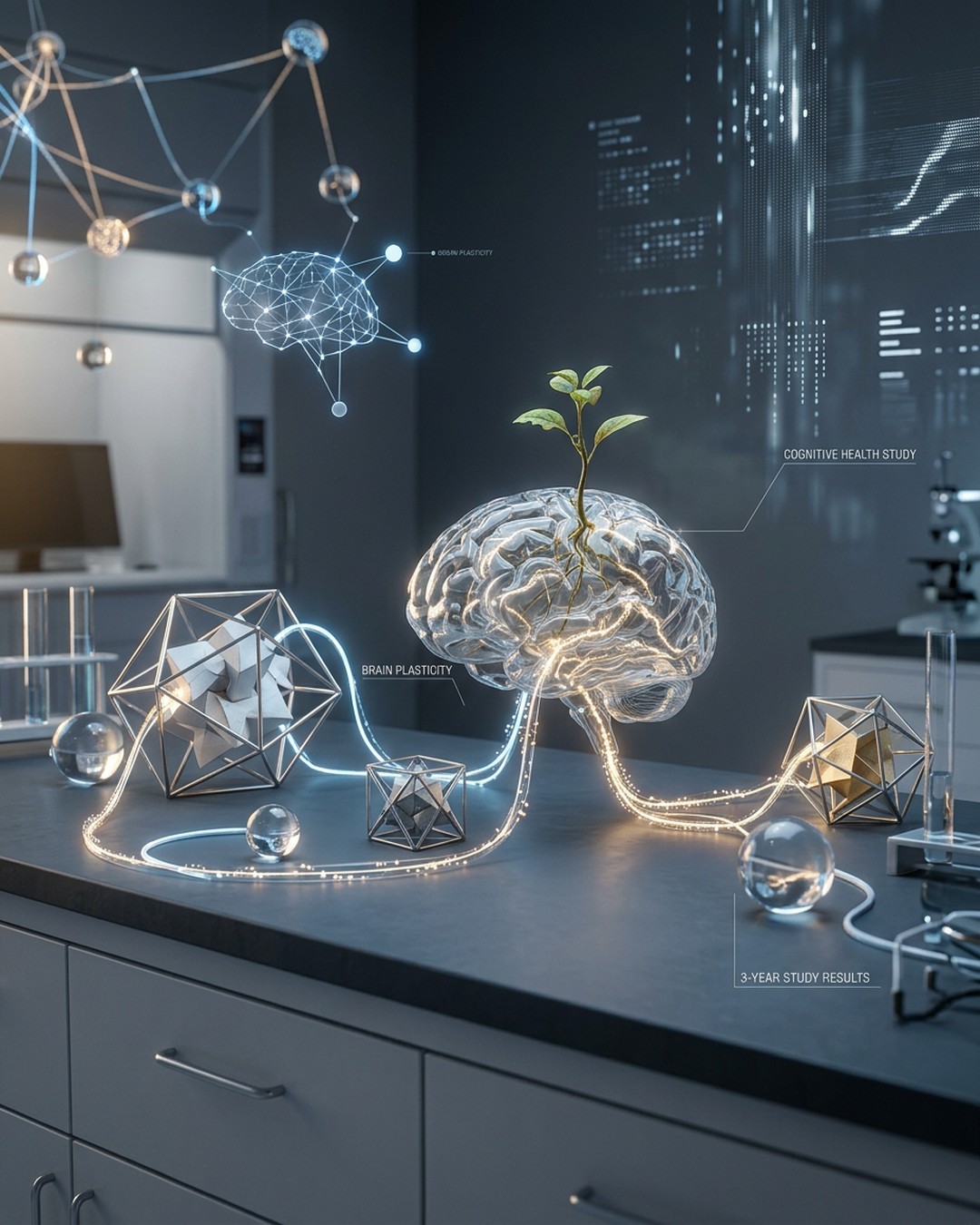
Imagen de Portada Generada por IA

A comprehensive three-year study published on June 18, 2026, by researchers at The University of Texas at Dallas’ Center for BrainHealth (CBH) fundamentally challenges the long-held belief that cognitive decline is an inevitable consequence of aging. The research, involving 3,966 adults aged 19 to 94, demonstrates that mental sharpness can be actively improved throughout life, with significant cognitive gains observed even in participants in their 80s and 90s through brief, daily brain training exercises. The authors, led by Dr. Lori Cook and Dr. Sandra Bond Chapman, strongly advocate for a paradigm shift from a reactive to a proactive approach to brain health. They argue that individuals should not wait for symptoms of decline but should actively cultivate their cognitive abilities at all stages of life. The core message is one of empowerment, asserting that the brain's potential is defined by 'possibility' and proactive engagement rather than being limited by chronological age. The study's essence lies in its methodology, utilizing The BrainHealth Project and a patent-pending assessment tool called the BrainHealth Index (BHI) to measure changes in clarity, emotional balance, and connectedness. The most critical strategic finding is that consistent engagement with the daily 5-15 minute exercises was the single strongest predictor of improvement. This causal link was far more significant than demographic factors like age, gender, or education, highlighting that effort directly translates to results. For users, the practical value of this research is profound and actionable: it is never too late to enhance your brain health. The study provides scientific validation that small, consistent investments of time in targeted mental exercises can yield measurable improvements in cognitive function. This offers a clear path for individuals to take control of their mental longevity, with the most significant gains often seen in those who start with lower cognitive baselines, providing hope and a tangible strategy for all.

Puntos clave

01

🔹 Study Overview & Primary Conclusion

A three-year study from The University of Texas at Dallas’ Center for BrainHealth (CBH), published in 'Scientific Reports' on June 18, 2026, fundamentally refutes the idea of inevitable cognitive decline with age. 【📌 Research Scale】The study tracked 3,966 adults with a wide age range from 19 to 94. 【🔸 Intervention】Participants engaged in brief daily brain training exercises lasting between 5 and 15 minutes. 【⭐ Core Finding】The primary conclusion is that individuals can actively strengthen cognitive abilities throughout their lifespan. Significant improvements in brain health were observed across all age groups, including those in their 80s and 90s, challenging the traditional narrative of aging.

02

🔸 The BrainHealth Index (BHI) as a Measurement Tool

The study's effectiveness was measured using the BrainHealth Index (BHI), a patent-pending, multi-faceted assessment tool developed by CBH scientists. 【📌 Core Components】The BHI is designed to measure and track changes in brain health by focusing on three major domains: 1. Clarity (complex thinking skills), 2. Emotional Balance, and 3. Connectedness (to people and purpose). 【📊 Comprehensive Metric】It synthesizes approximately 20 different metrics, including established gold-standard measures like the Pittsburgh Sleep Quality Index and the Oxford Happiness Questionnaire, alongside custom-designed tasks. 【⚖️ Function】This tool allows for a holistic view of an individual's brain health, enabling researchers to detect both improvements and declines by comparing a participant's results against their own previous scores over time.

03

⭐ Engagement as the Strongest Predictor of Success

The most significant causal relationship identified by the research was the link between participation level and cognitive improvement. 【📌 Causal Link】The study found that the strongest predictor of positive change in BrainHealth Index scores was the level of participant engagement with the daily exercises. 【🔸 Demographics Secondary】Factors that are often considered influential, such as age, gender, and level of education, were not found to be significant drivers of positive change. 【💡 Implication】This finding powerfully suggests that the potential for cognitive growth is not predetermined by demographic status but is instead directly influenced by an individual's commitment and consistency in performing brain-enhancing activities. Effort, not age, is the key to improvement.

04

📊 Greatest Gains for Lowest Initial Scorers

One of the most notable findings was the performance of participants who began the study with the lowest scores on the BrainHealth Index. 【📌 Key Observation】This group experienced the greatest and most significant improvements in their cognitive function over the three-year period. 【🔸 Potential Reasons】Researchers, including Dr. Lori Cook, theorize this may be due to two factors: 1. These individuals had more room for growth, and 2. They may have been more motivated to invest the necessary time and effort due to pre-existing concerns about their cognitive health. 【⚖️ Contrast】Importantly, the study also noted that measurable growth was observed even in participants who started as high performers, indicating that brain training benefits individuals across the entire cognitive spectrum.

05

💡 Study Limitations and Future Research Directions

While groundbreaking, the researchers acknowledged certain limitations in the study's participant pool and outlined future research plans. 【📌 Demographic Limitation】The majority of the 3,966 participants were white, female, and college-educated. The research team recognized the need to increase representation from more diverse demographic groups to ensure the findings can be generalized to the broader population. 【🔬 Future Directions】Research is continuing through The BrainHealth Project, including a significant neuroimaging component. Approximately 400 Dallas-area participants have undergone over 1,200 brain scans. 【🎯 Goal】The objective is to identify the underlying neural mechanisms associated with the observed changes in the BHI, linking behavioral improvements to measurable changes in brain structure and function.

¿Quieres crear tu propio mapa mental?

¡Inicia sesión en Neumap AI y comienza a crear tus propios mapas mentales!

Comenzar