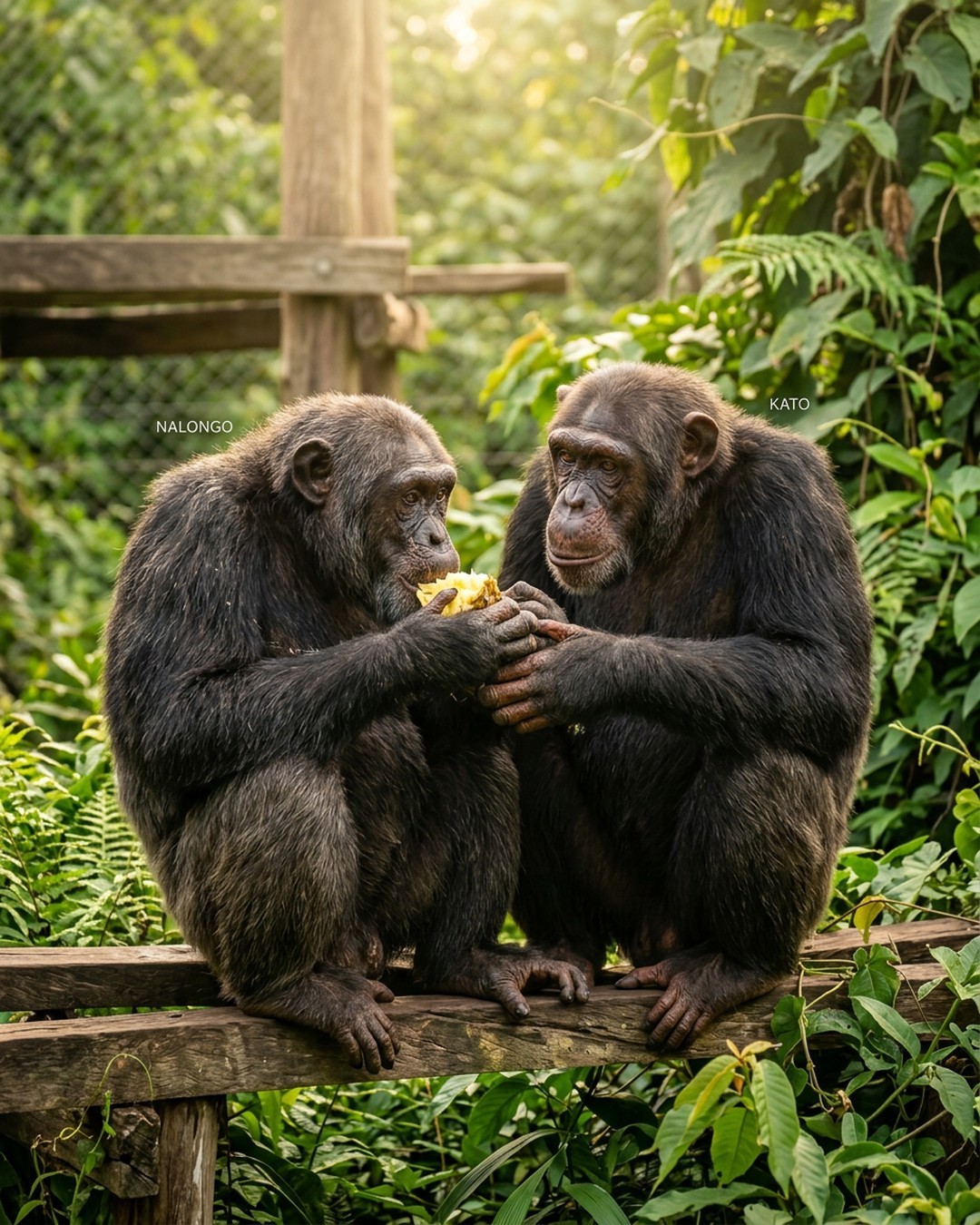
Chimpanzee Friendship and Social Rules

scitechdaily biology evolution animal-behavior uc-berkeley

Resumen

Mind Map Cover Image
Imagen de Portada Generada por IA

A controlled scientific study published on September 1, 2026, in Evolution and Human Behavior by researchers from the University of California, Berkeley, reveals that chimpanzees treat close social companions differently during conflicts over resources. By observing 26 chimpanzees at the Ngamba Island Chimpanzee Sanctuary in Uganda and setting up controlled pineapple theft experiments, researchers discovered that animals were less likely to steal from strongly bonded partners compared to nonfriends. The study authors, including lead author Oded Ritov and principal investigator Jan Engelmann, emphasize that friendship among chimpanzees leads to specific social expectations and restraint regarding antisocial behavior. When thefts did occur between friends, both parties exhibited distinct emotional patterns where agitation subsided more quickly than interactions involving nonfriends. These findings provide groundbreaking evidence that relationship-specific expectations exist outside of human societies, suggesting that the foundational building blocks of human cooperation, friendship, and moral principles evolved from ancient primate social dynamics. Researchers conclude that studying these behavioral nuances helps bridge the evolutionary gap between basic social preferences and large-scale human moral systems, highlighting how mutual expectations within close animal partnerships scaled up into generalized societal norms over evolutionary time.

Puntos clave

01

🔹 Study Overview and Research Team

【📌 Key Finding】Published on September 1, 2026, in Evolution and Human Behavior, researchers from the University of California, Berkeley investigated social dynamics in chimpanzees. 【🔸 Impact Factors】Led by Oded Ritov and Jan Engelmann, the study examined 26 chimpanzees at the Ngamba Island Chimpanzee Sanctuary in Uganda over 800 hours of observation. 【⭐ Data Support】The research provides the first empirical evidence that chimpanzees exhibit restraint in antisocial behavior toward close companions.

02

🔸 Controlled Pineapple Experiment Methodology

【📌 Key Finding】Researchers placed two chimpanzees in adjoining rooms where one animal had access to three trays of pineapple attached to a rope pulley system. 【🔸 Impact Factors】The second chimpanzee could either leave the food untouched or pull the rope to steal the fruit. 【⭐ Data Support】Each animal participated in trials involving both closely bonded partners and nonfriends to compare behavioral differences.

03

⭐ Theft Rates Between Friends and Nonfriends

【📌 Key Finding】Chimpanzees demonstrated a notable capacity to hold back antisocial actions when interacting with favored companions. 【🔸 Impact Factors】Animals stole food in 70 percent of trials involving nonfriends. 【⭐ Data Support】In contrast, theft dropped to 61 percent during trials involving strongly bonded friends.

04

📊 Emotional Fallout and Behavioral Reactions

【📌 Key Finding】Theft incidents triggered distinct emotional responses depending on the strength of the social bond between the two animals. 【🔸 Impact Factors】Victims displayed aggressive behaviors such as stomping, fist pounding, and screeching. 【⭐ Data Support】While friends reacted more intensely initially when food was taken, their agitation subsided faster compared to thefts involving nonfriends.

05

💡 Evolutionary Implications for Human Morality

【📌 Key Finding】The findings suggest that mutual social expectations existed prior to the emergence of advanced human cooperative systems. 【🔸 Impact Factors】Chimpanzees expect and demand special treatment from friends, mirroring human friendship traits. 【⭐ Data Support】Researchers theorize these localized relationship expectations formed the basic building blocks for generalized human moral principles.

¿Quieres crear tu propio mapa mental?

¡Inicia sesión en Neumap AI y comienza a crear tus propios mapas mentales!

Comenzar