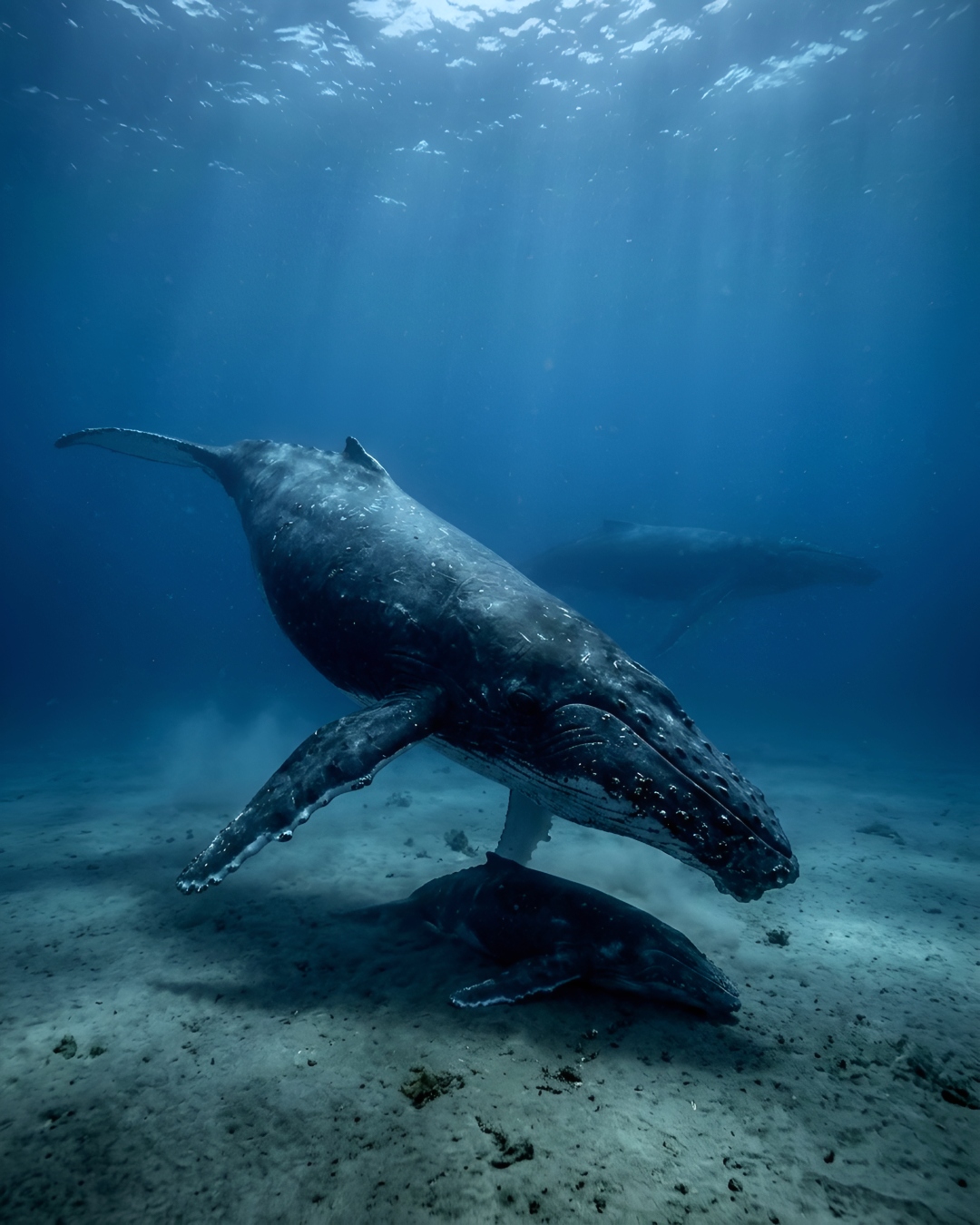
Humpback Whale Mother Post-Mortem Behavior and Maternal Attachment Study

scitechdaily animal-behavior ecology griffith-university whales

Resumen

Mind Map Cover Image
Imagen de Portada Generada por IA

Researchers from Griffith University and the SeaWorld Foundation documented a rare encounter off the southern Gold Coast in 2025, where a humpback whale mother stayed beside her dead calf for hours or possibly days. The female whale, accompanied by an escort whale, repeatedly returned to the seafloor to attend to the stillborn calf beneath the surface. The author highlights how this profound observation sheds light on strong maternal attachment and post-mortem attentive responses in baleen whales. While most documented cases of cetaceans tending to dead offspring involve toothed whales and dolphins (odontocetes), similar rigorous documentations in large filter-feeding whales remain extremely rare. The essence of this study emphasizes that maternal bonding and caregiving behaviors can persist deeply after neonatal mortality occurs. Although researchers cannot definitively establish whether the mother experienced grief, her continuous physical presence and attentive actions provide vital clues regarding the emotional lives and cognitive capacities of marine mammals. This case study underscores the importance of continued systematic documentation for rare neonatal mortality events in large whales. Understanding these complex behaviors deepens scientific knowledge concerning the evolutionary significance, social bonds, and emotional depths of non-human animal species.

Puntos clave

01

🔹 Rare Documentation of Humpback Whale Post-Mortem Behavior

【📌 Key Finding】Researchers from Griffith University and the SeaWorld Foundation recorded a rare encounter off the southern Gold Coast in 2025 involving a humpback whale mother and her stillborn calf. 【🔸 Impact Factors】The female whale was accompanied by an escort whale and remained beneath the surface attending to the deceased newborn for hours or possibly days. 【⭐ Data Support】SeaWorld Foundation Rescue Boat Captain Andrew Mulville and Dr. Olaf Meynecke published these findings on September 16, 2026, in the journal Discover Animals (DOI: 10.1007/s44338-026-00232-9).

02

🔸 Behavioral Contrast Between Baleen and Toothed Whales

【📌 Key Finding】Most previously published observations of cetaceans tending to dead calves involve toothed whales and dolphins (odontocetes), whereas accounts in baleen whales like humpbacks are significantly scarcer. 【🔸 Impact Factors】Unlike toothed whales that have been observed lifting dead calves to the surface, this humpback mother exhibited prolonged post-mortem caregiving entirely beneath the surface. 【⭐ Data Support】The mother maintained continuous eye contact and positioned herself next to the deceased calf on the seafloor over an extended period.

03

⭐ Evidence of Strong Maternal Attachment and Caregiving

【📌 Key Finding】The observed actions of the humpback mother were strictly consistent with caregiving, nurturing, and post-mortem attentive responses. 【🔸 Impact Factors】Such behavioral consistency indicates an inherent and robust maternal attachment that persists even after neonatal mortality. 【⭐ Data Support】Researchers noted that these responses mirror behaviors typically documented in other socially complex mammals.

04

📊 Scientific Value and Insights Into Animal Cognition

【📌 Key Finding】The encounter offers valuable scientific evidence regarding the emotional and cognitive aspects of responses to death in filter-feeding cetaceans. 【🔸 Impact Factors】While researchers cannot definitively prove whether the mother experienced emotional grief, her actions provide valuable clues regarding non-human emotional lives. 【⭐ Data Support】Dr. Meynecke emphasized that studying these rare events helps scientists understand social bonds, cognitive capacities, and evolutionary significance.

05

💡 Future Research Directions and Systematic Documentation

【📌 Key Finding】The study highlights an urgent need for continued systematic documentation of rare neonatal mortality events in large marine mammals. 【🔸 Impact Factors】Expanding this research body will allow marine biologists to draw more accurate conclusions about cetacean behavioral psychology. 【⭐ Data Support】Reference publication: Jan-Olaf Meynecke and Andrew Mulville, Discover Animals, September 16, 2026.

¿Quieres crear tu propio mapa mental?

¡Inicia sesión en Neumap AI y comienza a crear tus propios mapas mentales!

Comenzar