🧪 Nanomaterial Bone Regeneration Breakthrough

SciTechDaily Nanomaterial BoneRegeneration BiomedicalEngineering CleftPalate RegenerativeMedicine

Resumen

Mind Map Cover Image
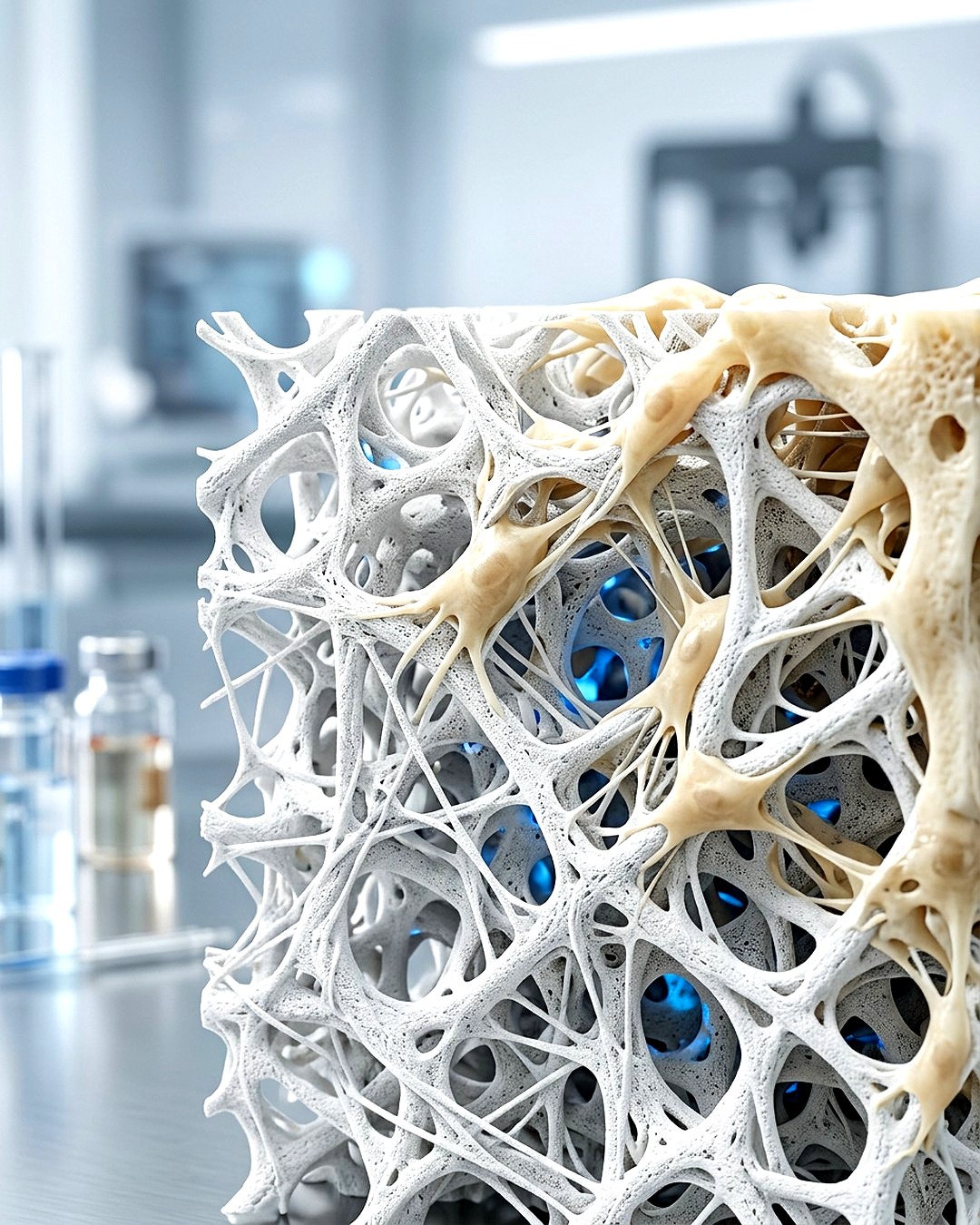
Imagen de Portada Generada por IA

Researchers have developed a biodegradable nanomaterial that stimulates the body's natural bone regeneration without supplying external growth factors. The material could eventually help children born with cleft lip and palate regrow missing jawbone without invasive surgery. Lead researcher Associate Professor Chun Xu and collaborators at the University of Sydney and the University of Queensland argue that activating dormant biological repair signals is safer and more effective than traditional bone harvesting and animal-derived grafts. Published in ACS Nano on September 15, 2026, the study showed the calcium-aluminosilicate nanomaterial activated latent Transforming Growth Factor beta 1 at roughly 10 times conventional levels, promoted blood clotting within 30 seconds, and produced about 80 percent more new bone than controls in a preclinical model after eight weeks. The breakthrough points toward earlier clinical interventions for pediatric patients and paves the way for personalized 3D-printed scaffolds that fit specific bone defects, though further research and human trials are required before medical deployment.

Puntos clave

01

🔬 Novel Biodegradable Nanomaterial

Researchers at the University of Sydney and the University of Queensland developed a biodegradable calcium-aluminosilicate nanomaterial designed to stimulate bone repair. Described in ACS Nano on September 15, 2026, the platform combines rapid hemostasis and growth factor activation to encourage living bone formation without external growth factors.

02

📊 Preclinical Performance Metrics

In preclinical testing, the experimental nanomaterial produced approximately 80 percent more new bone than a control material after eight weeks. Additionally, it activated the latent Transforming Growth Factor beta 1 growth factor at roughly 10 times the level achieved through conventional methods and promoted blood clotting within about 30 seconds.

03

👶 Impact on Cleft Lip and Palate Treatment

Cleft lip and palate affects about one in 700 children, frequently requiring patients to wait until ages 10 to 12 for invasive bone graft surgeries. The new nanomaterial aims to bypass this waiting period, allowing doctors to treat jawbone defects much earlier in childhood and mitigating impacts on speech, breathing, and social development.

04

🧬 Mechanism of Action

The material activates naturally occurring latent Transforming Growth Factor beta 1, an inactive protein that triggers healing cascades once awakened. Activated TGF-beta 1 recruits bone-forming stem cells to damaged areas, after which the biodegradable nanomaterial is gradually replaced by the patient's native bone tissue.

05

🖨️ Future Applications and Personalization

Researchers are investigating the incorporation of the nanomaterial into personalized 3D-printed scaffolds tailored to individual patient geometries under provisional patent application number 2026903515. Beyond cleft lip and palate, potential applications include repairing bone damage caused by traumatic injuries, tooth loss, and other difficult-to-heal defects.

¿Quieres crear tu propio mapa mental?

¡Inicia sesión en Neumap AI y comienza a crear tus propios mapas mentales!

Comenzar