📚 Deep Subsurface Fungi Discovery

scitechdaily.com subsurface-microbiology mycology deep-biosphere antrim-shale carbon-cycle glacial-hydrology extremophiles

Resumen

Mind Map Cover Image
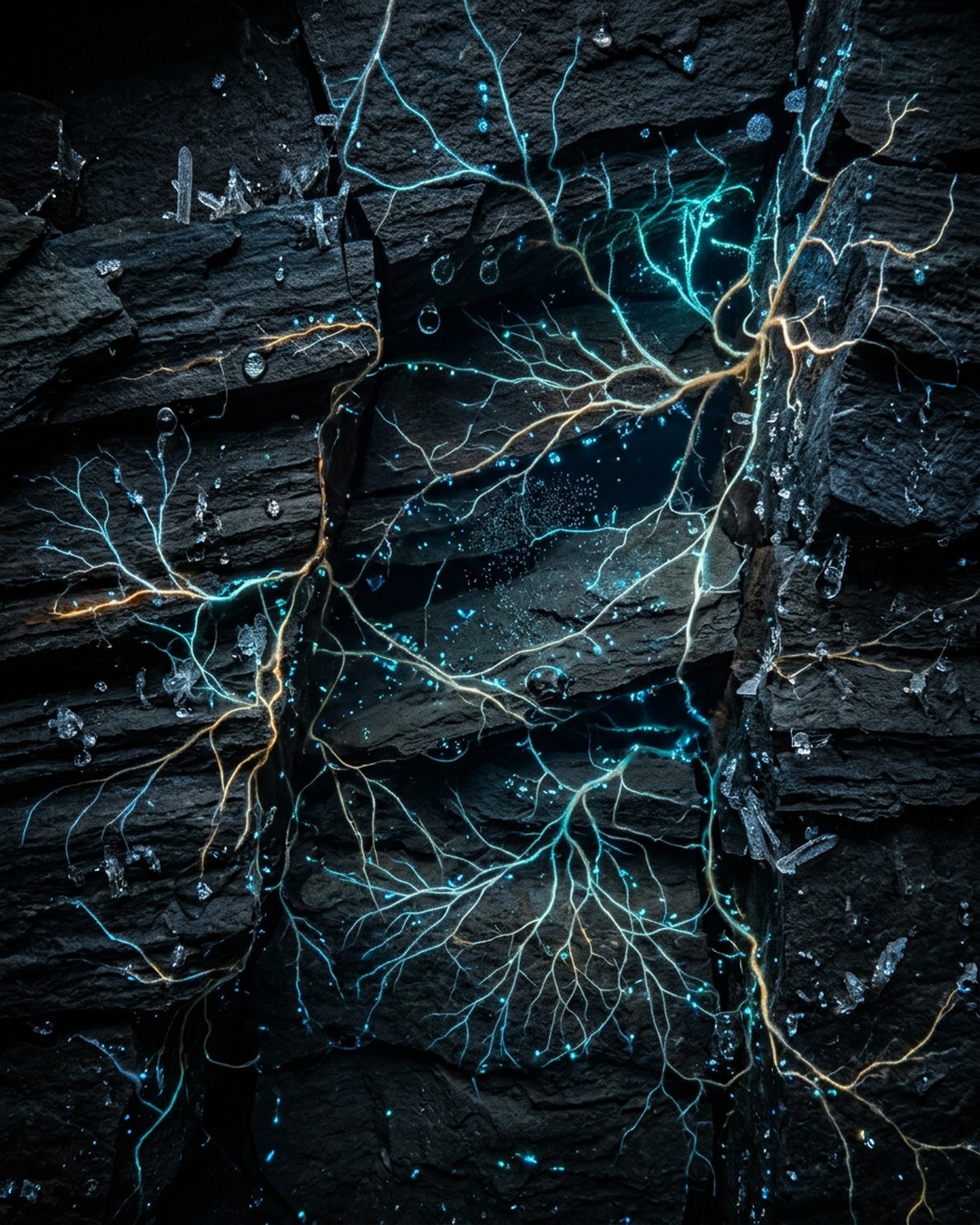
Imagen de Portada Generada por IA

Researchers from the University of Michigan have uncovered an extensive and diverse fungal ecosystem thriving inside ancient groundwater trapped 650 to 1,640 feet beneath Michigan in the Antrim Shale formation. The investigation provides the first concrete quantification of deep subsurface fungal abundance, identifying 689 distinct fungal species, including 13 previously undescribed taxa, with cellular densities reaching approximately 250 cells per drop of water. The study challenges longstanding scientific assumptions that deep continental bedrock is an inhospitable wasteland hosting only dormant or transient microbes. Lead researcher Quinn Moon and senior author Tim James demonstrate that eukaryotic life not only survives in deep geological strata but actively builds complex, metabolically active trophic networks utilizing ancient organic deposits. Isotopic geochemical analyses reveal that this subsurface water originated from melting glacial ice sheets roughly 11,000 years ago at the end of the last Ice Age. Flowing downward through fractured rock networks, meltwater carried surface organisms into organic-rich shale layers, where fungi and bacteria now break down fossilized hydrocarbons into carbon dioxide and methane alongside predatory tardigrades and segmented worms. These discoveries demonstrate that deep subterranean carbon reserves are biologically active rather than permanently sequestered, requiring updates to global carbon cycling and sequestration models. Preserving more than 200 living fungal isolates in the first public deep-subsurface repository at the University of Michigan Herbarium enables future biotechnological research into bioremediation and the degradation of coal, oil, and synthetic plastics.

Puntos clave

01

🔹 Unprecedented Subsurface Biodiversity

【📌 Key Finding】Sampling from gas wells penetrating 650 to 1,640 feet into the Antrim Shale revealed 689 distinct fungal species, with 13 novel taxa completely new to science. 【⭐ Data Support】Microscopy and genetic profiling established a population density of approximately 250 fungal cells per drop of water, which scales to over 12 trillion viable fungal cells in an Olympic-sized swimming pool volume. 【🔸 Impact Factors】Subsurface eukaryotic biomass has been systematically omitted from global biodiversity inventories due to past assumptions of microbial dormancy.

02

🔸 11,000-Year-Old Glacial Water Origin

【📌 Hydrogeology】Stable isotope ratio analyses confirm that trapped groundwater originated from retreating ice sheets at the close of the last Ice Age. 【🔄 Infiltration Process】Melting Glaciers (11,000 years ago) → Meltwater Infiltration → Bedrock Fractures & Pores → Antrim Shale Colonization. 【⭐ Substrate Utilization】Organisms washed into deep cracks survived by metabolizing ancient organic carbon stored inside the Devonian-age shale formation.

03

⭐ Multitrophic Underground Food Web

【📌 Community Structure】The ecosystem extends beyond fungi to incorporate complex multicellular fauna, establishing a fully functional subterranean food web. 【🔵 Trophic Levels】Primary Decomposers: Fungi and Bacteria feeding on shale hydrocarbons / Micro-Predators: Tardigrades ('water bears') and segmented annelid worms feeding on microbial biomass / Parasites: Specialized fungal and micro-eukaryotic lineages. 【⚖️ Ecological Impact】Active predation and parasitism prove the habitat sustains sustained multi-generational biological communities rather than static biological remnants.

04

📊 Revolutionizing Global Carbon Cycling Models

【📌 Carbon Geochemistry】Direct measurements of carbon dioxide and methane gas emissions indicate that subsurface fungi actively convert solid fossil hydrocarbons into gaseous carbon. 【⚠️ Paradigm Shift】Rock-bound deep carbon (previously categorized as permanently inert or sequestered) → Biotic Decomposition by Fungi → Biogenic Gas Release (CO2 and CH4). 【🎯 Model Revision】Climate and geochemical scientists must incorporate subterranean fungal metabolic activity into planetary carbon budgeting and geologic carbon sequestration simulations.

05

💡 Public Subsurface Culture Repository

【📌 Biobanking Milestone】The research team successfully isolated and cultivated more than 200 live fungal strains from deep samples, establishing the world's first publicly available deep-subsurface fungal repository at the University of Michigan Herbarium. 【🚀 Industrial Applications】Cultured strains are currently undergoing active screening for metabolic pathways capable of breaking down complex synthetic and fossil substrates, including petroleum hydrocarbons, coal, raw shale, and recalcitrant plastics.

¿Quieres crear tu propio mapa mental?

¡Inicia sesión en Neumap AI y comienza a crear tus propios mapas mentales!

Comenzar