Strength Training Triggers Fat-Burning Changes in Mice

Scitechdaily Health Fitness WeightLoss ScientificResearch

Résumé

Image de couverture du mindmap
Image de Couverture Générée par IA

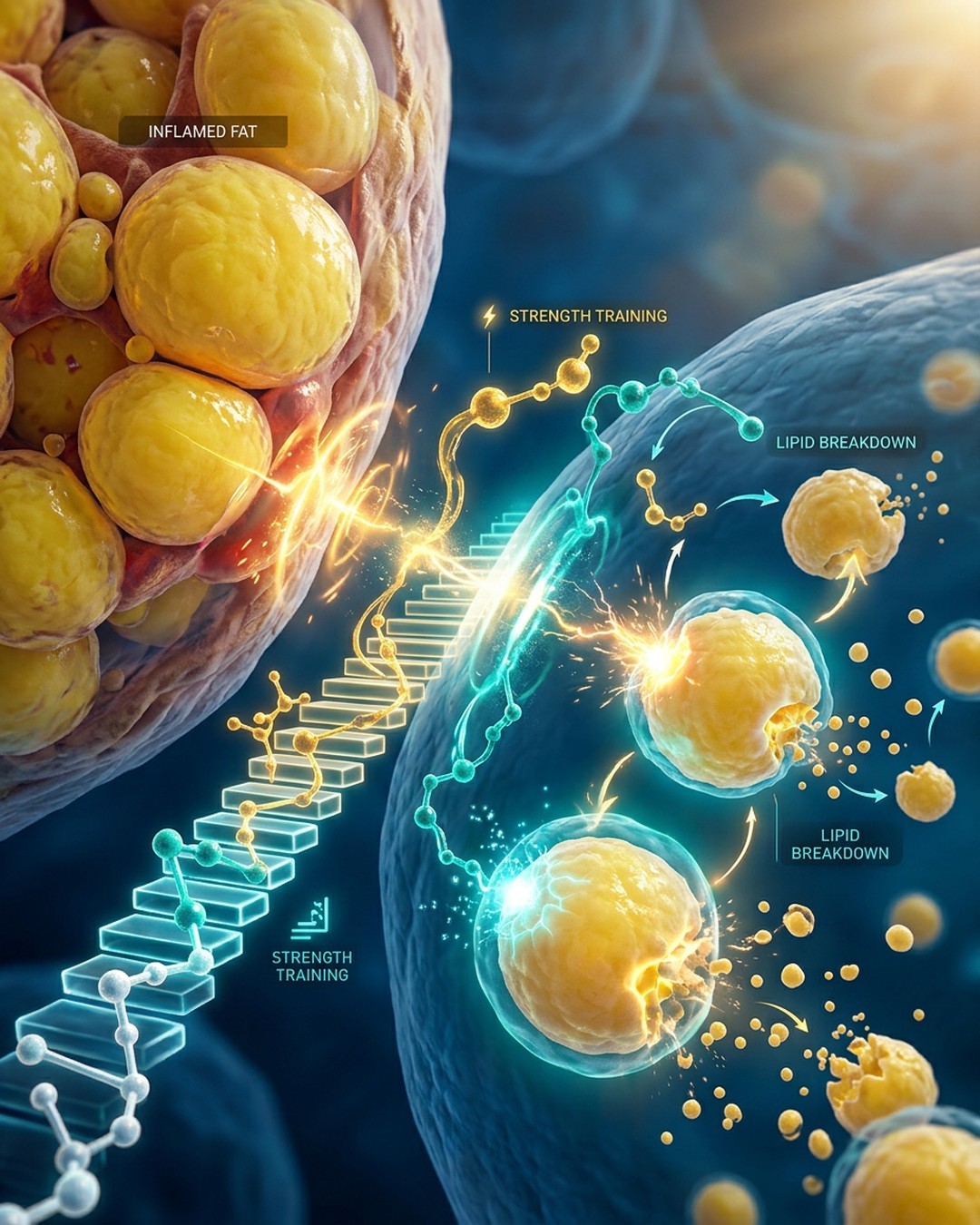
Recent research from the State University of Campinas published in the journal Life Sciences reveals that just seven days of short-term strength training activates vital biological mechanisms to break down visceral fat in obese mice, even before overall body weight changes occur. Researchers induced obesity in male mice using a high-fat diet and simulated weightlifting by having the exercising group climb a 70-centimeter staircase carrying weights attached to their tails at 70% of their maximum carrying capacity, completing 20 climbs per session over seven days. The authors emphasize that physical exercise directly initiates fat breakdown pathways independent of secondary changes linked to dropping pounds. The study highlights that the trained mice exhibited reduced mesenteric adipose tissue and smaller fat-storing cells, known as adipocytes, which indicate lowered chronic stress and diminished inflammation within dangerous internal fat deposits surrounding internal organs. At the molecular level, strength training successfully reactivated stalled fat-clearing proteins by enhancing the interaction between PLIN1 and ABHD5, which subsequently activates the ATGL enzyme responsible for breaking down triglycerides inside cells. Simultaneously, the activity of the Scd1 gene involved in fat molecule creation decreased, indicating that the body becomes less likely to store dietary calories as fat following resistance training. These findings challenge the common misconception that strength training is solely for building muscle while aerobic exercise drives weight loss, suggesting that combining both remains the optimal strategy. For individuals starting new fitness routines, these cellular health improvements occur internally long before visible weight loss appears on the bathroom scale, preventing early discouragement.

Points clés

01

🔹 Short-Term Strength Training Fat Breakdown Findings

Researchers at the State University of Campinas published a study in Life Sciences showing that just seven days of short-term strength training activates visceral fat breakdown mechanisms in obese mice prior to any overall body weight loss. Male mice were fed a high-fat diet to induce obesity, then divided into sedentary and exercising groups while maintaining the high-fat diet to isolate physical exercise impacts.

02

🔸 Methodology and Weighted Staircase Simulation

To simulate human strength training, exercising mice climbed a 70-centimeter (28 inches) staircase carrying weights attached to their tails. They trained at 70% of their maximum carrying capacity, performing 20 climbs per session with 60 to 90 second rest intervals, completing seven total sessions over seven days.

03

⭐ Shrinking Inflamed Abdominal Fat Cells

Exercised mice exhibited less mesenteric adipose tissue and smaller adipocytes (fat-storing cells) compared to sedentary obese mice. Smaller adipocytes indicate reduced chronic stress and lower release of inflammatory substances into the bloodstream, improving metabolic health.

04

📊 Molecular Activation of Fat-Clearing Proteins

Strength training increased the interaction between PLIN1 and ABHD5 proteins, restoring the fat breakdown process impaired by obesity and activating ATGL enzymes to break down stored triglycerides. Additionally, activity of the Scd1 fat-production gene decreased, reducing the likelihood of storing dietary calories as fat.

05

💡 Broader Implications and Combined Exercise Strategy

Lead researcher Leandro Moura notes that these cellular health benefits occur internally long before visible weight loss appears, countering the assumption that strength training is ineffective if scale weight remains unchanged. Combining strength and aerobic training remains the best strategy for sustainable weight loss and health improvement.

Voulez-vous créer votre propre mindmap ?

Connectez-vous à Neumap AI et commencez à créer vos propres mindmaps !

Commencer