Discovery of Four New Chameleon Species in Mozambique

Biology Biodiversity Evolution NewSpecies Mozambique Conservation

Résumé

Image de couverture du mindmap
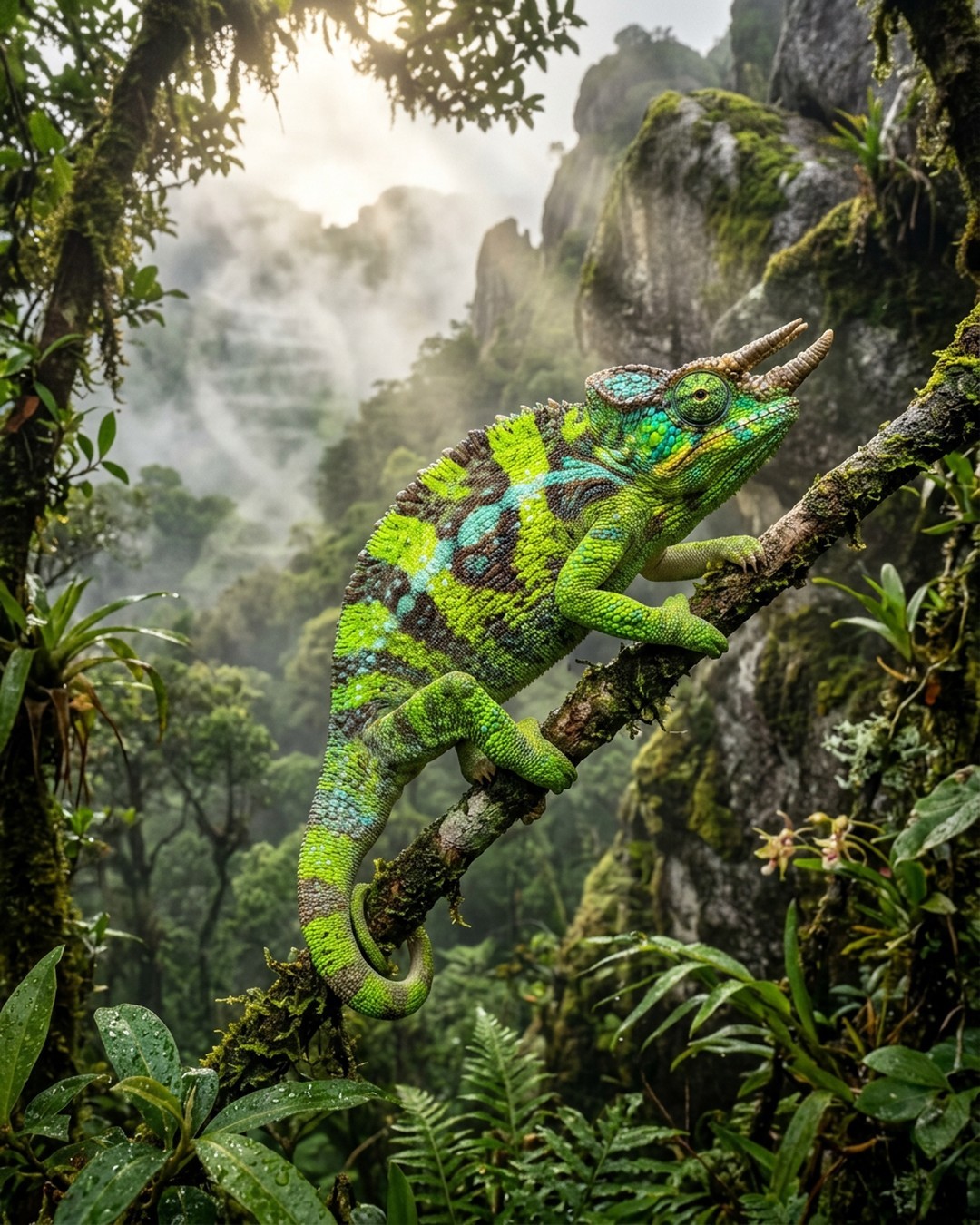
Image de Couverture Générée par IA

Researchers Prof. Krystal A. Tolley and Dr. Werner Conradie have identified four new species of Sylvan Chameleons in the isolated, high-altitude rainforests of northern Mozambique. Published on July 21, 2026, in the journal Vertebrate Zoology, the study highlights how these granite mountains, acting as sky islands, foster unique biodiversity through long-term geographic isolation. The authors emphasize that while these chameleons appear morphologically similar, genetic analysis confirms they are distinct species that have evolved independently for millions of years. The naming of these species serves to honor scientific figures and highlight the urgent conservation risks posed by habitat loss due to agricultural expansion. The research utilized the General Lineage Species Concept, sequencing four specific DNA genes to differentiate the populations. This methodology provides a robust framework for identifying cryptic species that look alike but do not interbreed, underscoring the critical need for protecting these fragile, cloud-dependent ecosystems. The findings demonstrate that community-based conservation, particularly where cultural values protect sacred forests, is essential for preserving these unique habitats. Readers should note that the survival of these species depends on balancing local livelihoods with the protection of these isolated, high-altitude forest patches.

Points clés

01

🔹 Discovery of Four New Chameleon Species

【📌 Key Finding】Researchers identified four new species of Sylvan Chameleons in northern Mozambique. 【🔸 Impact Factors】These species are endemic to specific 'sky islands'—isolated mountain forests separated by savanna. 【⭐ Data Support】The study, published July 21, 2026, in Vertebrate Zoology, confirms these populations have been genetically isolated for millions of years.

02

🔸 Genetic Methodology and Species Identification

【📌 Key Finding】Researchers used the General Lineage Species Concept to distinguish between lookalike populations. 【🔸 Impact Factors】By sequencing four genes, they reconstructed a phylogeny (family tree) that grouped chameleons strictly by their mountain of origin. 【⭐ Data Support】This genetic evidence proves that similar body forms are a result of convergent evolution rather than shared ancestry.

03

⭐ Naming and Conservation Significance

【📌 Key Finding】The new species are named to honor scientific contributions and warn of habitat loss. 【🔸 Impact Factors】Species include Nadzikambia goodallae (honoring Jane Goodall), Nadzikambia franklinae (honoring Rosalind Franklin), and Nadzikambia evanescens (meaning 'vanishing'). 【⭐ Data Support】The name Nadzikambia nubila refers to the 'Ciperoni' cloud-filled conditions essential for the forest's survival.

04

📊 Habitat Threats and Conservation Success

【📌 Key Finding】Tropical forests in Africa are facing rapid clearing for agriculture. 【🔸 Impact Factors】Small, isolated sky islands are particularly vulnerable to slash-and-burn practices. 【⭐ Data Support】Evidence shows that community-led conservation, such as on Mount Mabu and Mount Chiperone, successfully maintains intact forest habitats while supporting local livelihoods.

05

💡 Evolutionary Context of Sky Islands

【📌 Key Finding】Mountains rising from dry savannas capture rainfall, creating cool, damp forest 'islands'. 【🔸 Impact Factors】This geographic separation prevents gene flow between populations on different peaks. 【⭐ Data Support】This isolation drives speciation, resulting in unique organisms found nowhere else on Earth, similar to the evolutionary divergence seen in elephant species.

Voulez-vous créer votre propre mindmap ?

Connectez-vous à Neumap AI et commencez à créer vos propres mindmaps !

Commencer