TAPIR: CRISPR Tool for Controlling Cellular Protein Production

CRISPR Biotechnology ProteinSynthesis CancerResearch Genetics ScienceJournal

Résumé

Image de couverture du mindmap
Image de Couverture Générée par IA

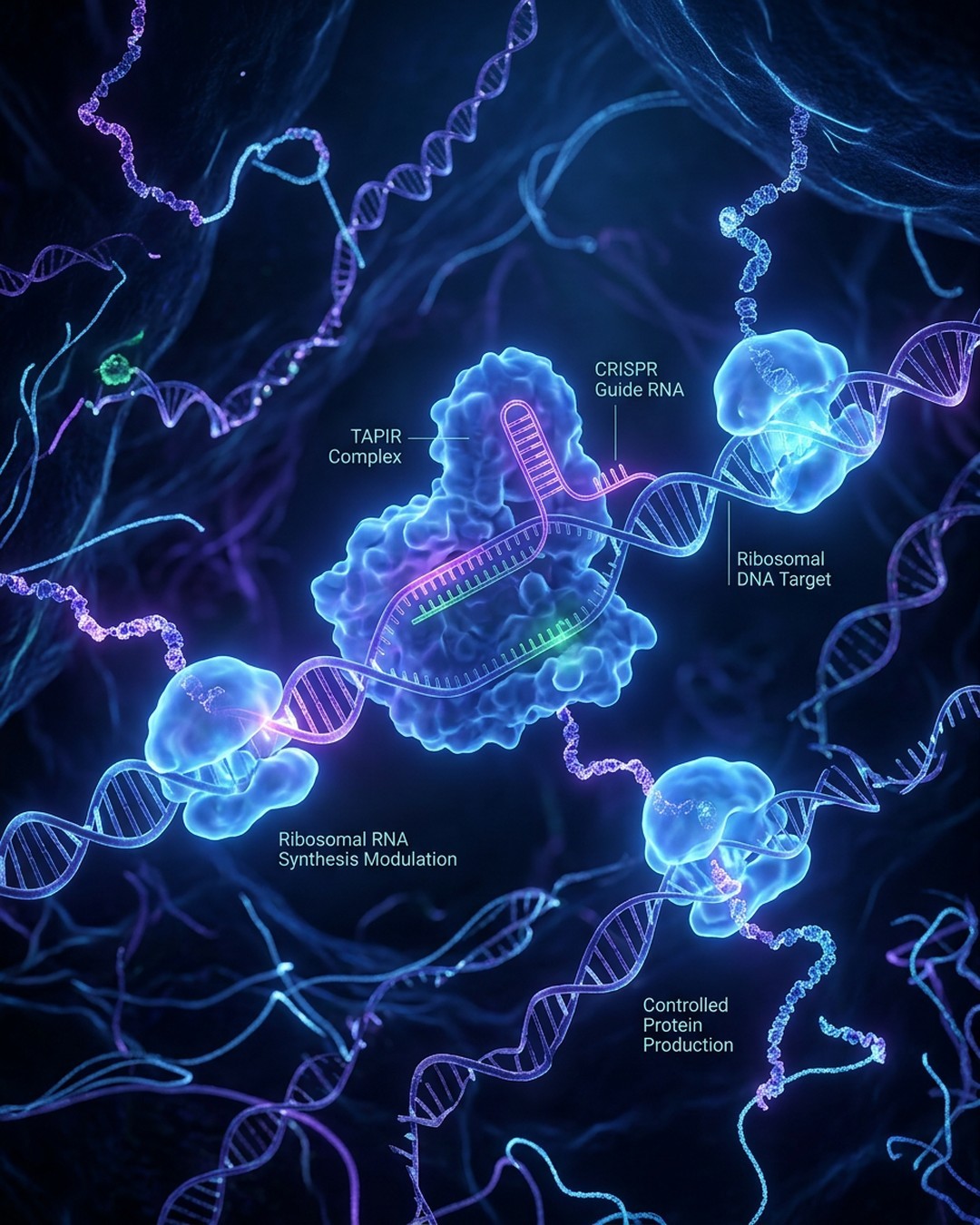
Researchers led by Professor Stefan H. Stricker at LMU Munich have developed a groundbreaking CRISPR-based tool called TAPIR (Targeted Activation of Protein Translation). Published in Science on July 16, 2026, this technology allows scientists to precisely increase ribosomal RNA (rRNA) production, providing a direct method to manipulate cellular protein synthesis and study its causal role in development and disease. The study challenges the traditional view of rRNA as a passive component, demonstrating that it actively drives protein production. By using TAPIR, the team proved that modulating rRNA levels can either compensate for genetic defects in ribosomopathies or accelerate the growth of aggressive tumors, depending on the biological context. This research establishes protein biosynthesis as a critical therapeutic target. The ability to selectively control rRNA activity offers a new platform for investigating cell identity and growth, potentially leading to future treatments for conditions ranging from rare congenital disorders to cancer. For the scientific community, TAPIR serves as a versatile research instrument to dissect the mechanisms of protein translation. Users can apply this tool to explore how specific disease states rely on protein output, helping to identify whether increasing or inhibiting rRNA activity is the appropriate strategy for therapeutic intervention.

Points clés

01

🔹 Introduction of TAPIR (Targeted Activation of Protein Translation)

TAPIR is a novel CRISPR-based technology developed by researchers at LMU Munich and Helmholtz Munich. It functions by directly activating ribosomal genes to increase the production of ribosomal RNA (rRNA). This tool allows scientists to move beyond observation and actively manipulate the rate of protein synthesis within living cells to study its functional consequences.

02

🔸 rRNA as a Driver of Cellular Processes

The study provides direct evidence that rRNA is not merely a passive structural component of ribosomes. By using TAPIR to increase rRNA production, researchers observed a significant rise in protein synthesis. This confirms that rRNA levels actively shape fundamental cellular processes, including cell identity, developmental flexibility, and growth rates.

03

⭐ Therapeutic Potential in Ribosomopathies

In a mouse model of Treacher-Collins syndrome (a rare congenital disorder characterized by facial malformations), the researchers used TAPIR to stimulate rRNA production. This intervention partially compensated for the impaired ribosome function associated with the disease, suggesting that boosting protein-making machinery could be a viable strategy for treating certain ribosomopathies.

04

📊 Impact on Cancer Progression

The study demonstrated that elevated rRNA production directly contributes to the rapid growth of cancer cells. In a mouse model of pancreatic cancer, using TAPIR to increase rRNA levels led to faster tumor growth. This finding identifies protein biosynthesis as a potential therapeutic target, though it highlights the risk that such interventions could inadvertently support tumor proliferation.

05

💡 Future Research and Clinical Implications

The contrasting effects of rRNA modulation—beneficial in ribosomopathies but potentially harmful in cancer—underscore the need for context-specific treatments. TAPIR provides a platform for researchers to investigate these differences, helping to determine when to increase or decrease protein production to treat specific diseases effectively.

Voulez-vous créer votre propre mindmap ?

Connectez-vous à Neumap AI et commencez à créer vos propres mindmaps !

Commencer