Brain Aging Signs Discovered Decades Before Symptoms

scitechdaily ucla-health brain-aging gut-microbiome neuroscience

Résumé

Image de couverture du mindmap
Image de Couverture Générée par IA

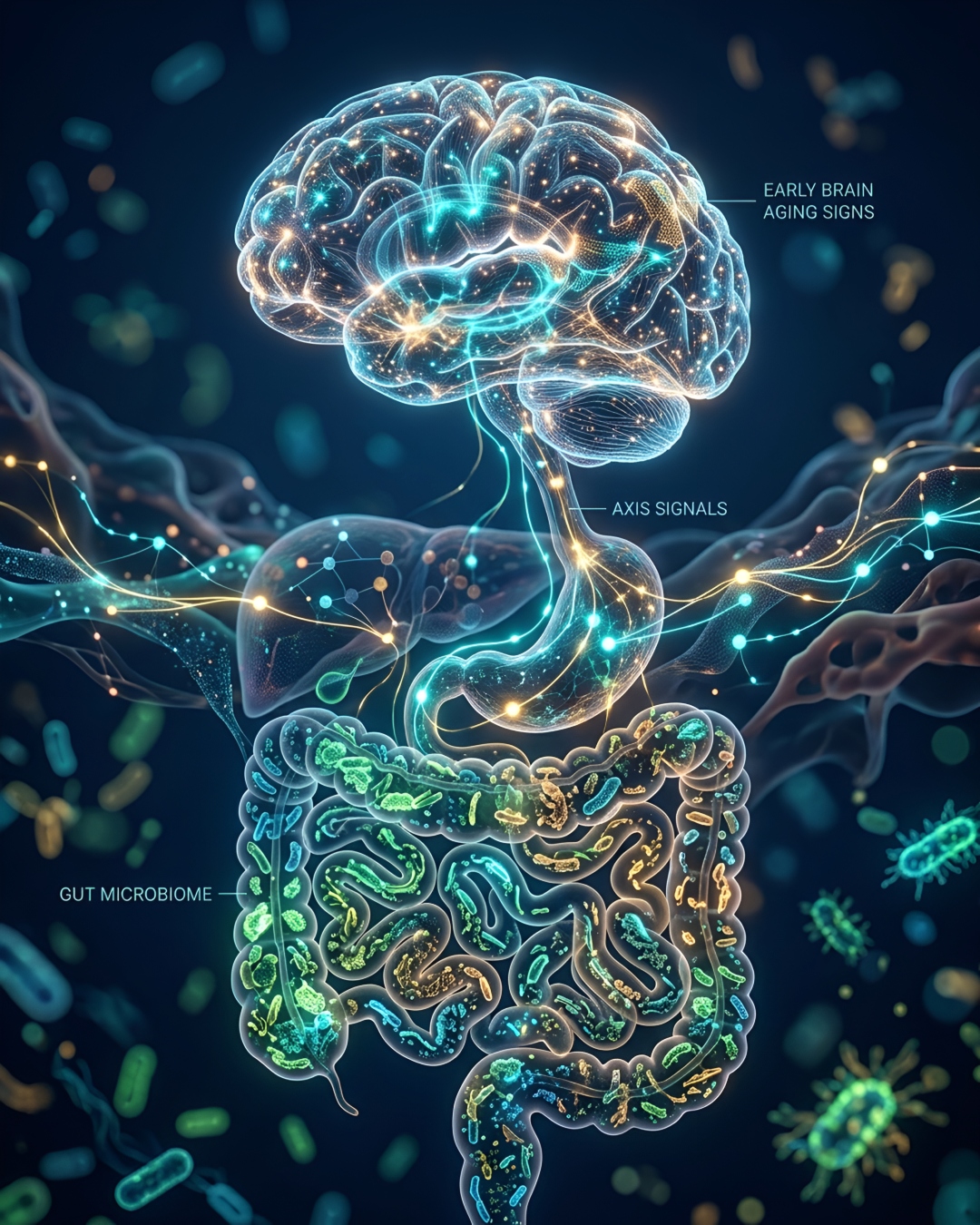
Recent scientific research published on September 9, 2026, reveals that biological signs of brain aging can be detected decades before any noticeable cognitive symptoms develop. Conducted by researchers at UCLA Health and published in the journal eBioMedicine, the study examined resting brain scans from nearly 1,500 adults across three distinct groups to establish a metric called the Brain Aging Index (BAI). The primary viewpoint emphasizes that an individual's estimated brain age frequently differs from their chronological age. Participants exhibiting a higher Brain Aging Index consistently demonstrated poorer performance on tests evaluating working memory, focus, and organization, alongside increased self-reported symptoms associated with depression. Crucially, the study established a direct link between patterns of brain activity and the gut microbiome. Stool sample analyses demonstrated that an elevated Brain Aging Index is strongly associated with specific gut bacteria and metabolic byproducts, including certain fat molecules, a cholesterol-related compound, and reduced levels of the hormone estetrol. These findings open significant pathways for early risk identification and targeted therapeutic interventions. By understanding the intricate crosstalk between the gut and the brain, future medical strategies may utilize gut health management to support healthier cognitive aging long before neurodegenerative decline manifests.

Points clés

01

🔹 Discovery of Early Brain Aging Markers

Scientists found that biological signs of brain aging appear decades before cognitive symptoms arise. A UCLA Health study published in eBioMedicine on September 9, 2026, linked brain activity patterns in healthy adults to gut bacteria and associated metabolic chemicals.

02

🔸 The Brain Aging Index (BAI) Metric

Researchers examined resting brain scans from nearly 1,500 adults across three groups using a computer model to study regional communication rather than lost tissue. The difference between estimated brain age and actual age was designated as the Brain Aging Index (BAI).

03

⭐ Cognitive and Psychological Correlations

Participants with a higher Brain Aging Index consistently performed worse on working memory, focus, and organization tests. Their scans showed specific patterns in memory and self-reflection regions, and they reported more depression-associated symptoms.

04

📊 Gut Microbiome and Metabolic Connections

Analysis of stool samples linked higher BAI scores to specific gut bacteria and metabolites, including distinct fat molecules, a cholesterol-related compound, and lower levels of the hormone estetrol, highlighting pathways involving immune and vascular function.

05

💡 Therapeutic Implications and Future Interventions

Senior author Dr. Arpana Church noted that identifying early brain changes through the gut microbiome could help pinpoint at-risk individuals early in life and guide research toward targeting gut health to support healthier cognitive aging.

Voulez-vous créer votre propre mindmap ?

Connectez-vous à Neumap AI et commencez à créer vos propres mindmaps !

Commencer