Glioblastoma Weak Spot Discovery

SciTechDaily BrainCancer Glioblastoma MedicalResearch CancerTreatment

Résumé

Image de couverture du mindmap
Image de Couverture Générée par IA

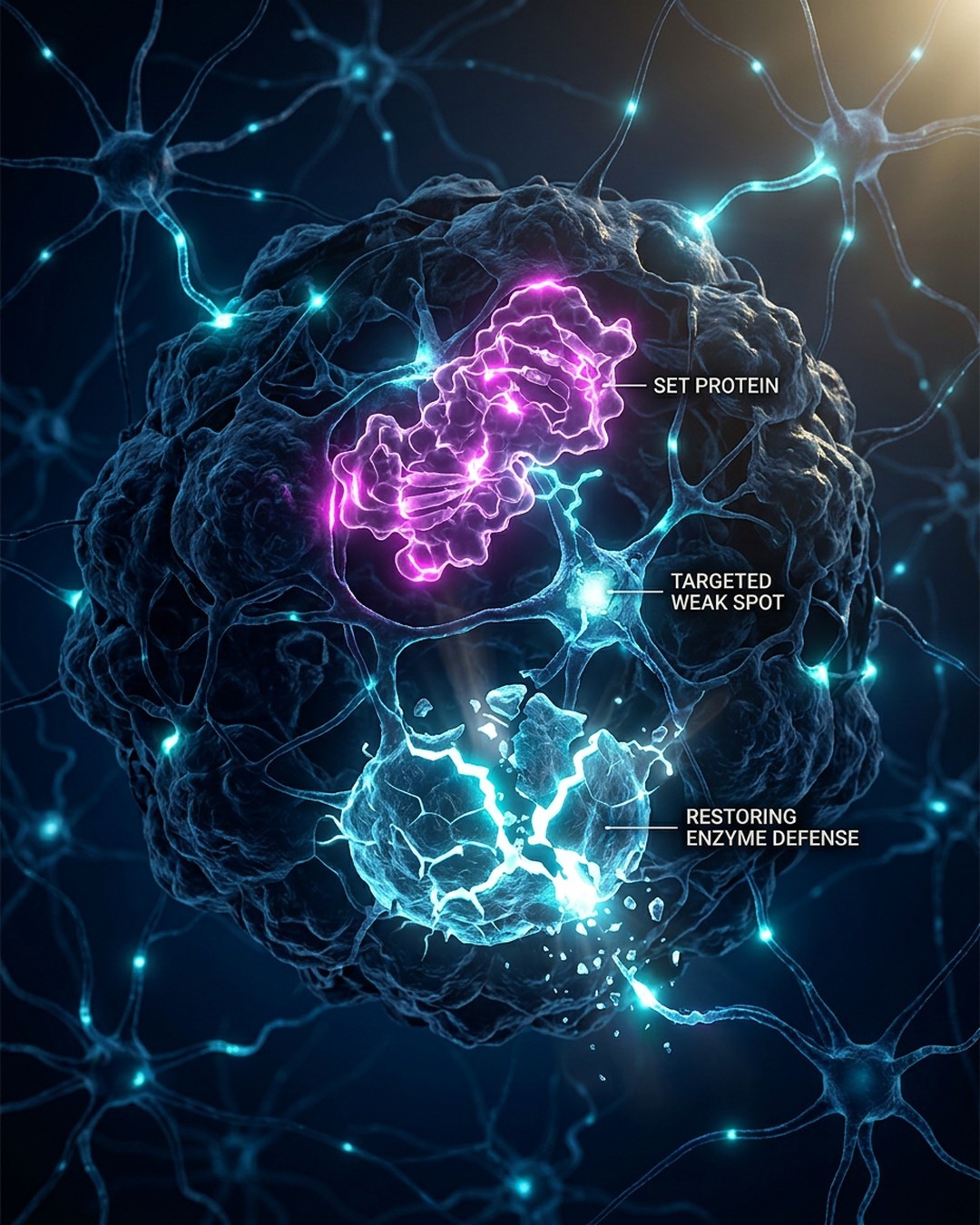
Researchers at The Ohio State University Comprehensive Cancer Center identified a protein named SET as a potential weak spot in glioblastoma, one of the deadliest and most treatment-resistant brain cancers. Published on February 20, 2026, in the journal Cancer Letters, the study reveals that glioblastoma cells use proteins including SET, ANP32A, and CIP2A to suppress an enzyme called PP2A, which normally regulates cancer cell growth, survival, and DNA damage repair. The research team, led by experts such as Arnab Chakravarti, demonstrated that suppressing SET or interfering with related proteins in preclinical laboratory and animal models prevented tumor development and increased the vulnerability of cancer cells to radiation and chemotherapy. By blocking these defensive proteins, researchers aim to restore PP2A activity and make standard treatments significantly more effective against glioblastoma recurrence. Although these findings establish a clear biological pathway for future drug development, the therapeutic strategy remains at a preliminary preclinical stage and has not yet been tested in human patients. Investigators are currently evaluating whether SET and related PP2A inhibitors can be targeted safely, while also noting that an FDA-approved antipsychotic medication known to increase PP2A activity provides a rationale for future clinical trials. Medical professionals and researchers should monitor clinical trial developments targeting the PP2A regulatory pathway to assess future combination therapies for glioblastoma. Patients and practitioners are advised that existing drugs influencing this pathway are not yet approved for brain cancer treatment outside of formal clinical trials.

Points clés

01

🔹 Glioblastoma Treatment Resistance and SET Protein Discovery

【📌 Key Finding】Researchers at The Ohio State University Wexner Medical Center identified the protein SET as a critical vulnerability in glioblastoma, an aggressive brain cancer known for rapid growth and treatment resistance. 【🔸 Impact Factors】Glioblastoma adapts to traditional radiation and chemotherapy, leading to frequent recurrence and poor prognosis. 【⭐ Data Support】Published on February 20, 2026, in Cancer Letters by authors including John Ryan Jacob, Shahid M. Nimjee, J. Bradley Elder, Arnab Chakravarti, and Kamalakannan Palanichamy.

02

🔸 Role of PP2A Enzyme and Inhibitory Proteins

【📌 Key Finding】Glioblastoma cells suppress PP2A, an enzyme regulating growth and DNA repair, using three specific proteins: ANP32A, CIP2A, and SET. 【🔸 Impact Factors】Suppressing these inhibitory proteins disables the cancer cell's defense mechanisms against DNA damage. 【⭐ Data Support】Preclinical models showed that blocking SET prevented tumor development and enhanced cancer cell sensitivity to radiation.

03

⭐ Preclinical Results and Therapeutic Strategy

【📌 Key Finding】The proposed strategy focuses on making glioblastoma more vulnerable to existing treatments rather than replacing radiation or chemotherapy. 【🔸 Impact Factors】Restoring PP2A activity reduces the ability of cancer cells to survive therapeutic attacks. 【⭐ Data Support】Laboratory and animal models demonstrated that fewer cancer cells survived treatment when PP2A-suppressing proteins were blocked.

04

📊 Future Clinical Testing and Pharmacological Insights

【📌 Key Finding】The research remains strictly preclinical and has not yet been tested in human patients. 【🔸 Impact Factors】Investigators are evaluating whether SET and related proteins can be targeted safely in human therapies. 【⭐ Data Support】Researchers also evaluated an FDA-approved antipsychotic medication known to increase PP2A activity, though it is not yet approved to treat glioblastoma outside clinical trials.

05

💡 Expert Perspectives and Research Implications

【📌 Key Finding】Arnab Chakravarti, chair of radiation oncology at the OSUCCC James, emphasized that understanding how SET and related blockers help glioblastoma survive treatment provides a clear path for new combination therapies. 【🔸 Impact Factors】This discovery establishes a fundamental biological pathway that might eventually be targeted with specialized pharmaceutical drugs. 【⭐ Data Support】The study DOI is 10.1016/j.canlet.2026.218325, marking an important first step toward improving patient outcomes.

Voulez-vous créer votre propre mindmap ?

Connectez-vous à Neumap AI et commencez à créer vos propres mindmaps !

Commencer