Vanillin Wound Care Applications

Vanillin WoundHealing Biomaterials Nanotechnology FlindersUniversity

Résumé

Image de couverture du mindmap
Image de Couverture Générée par IA

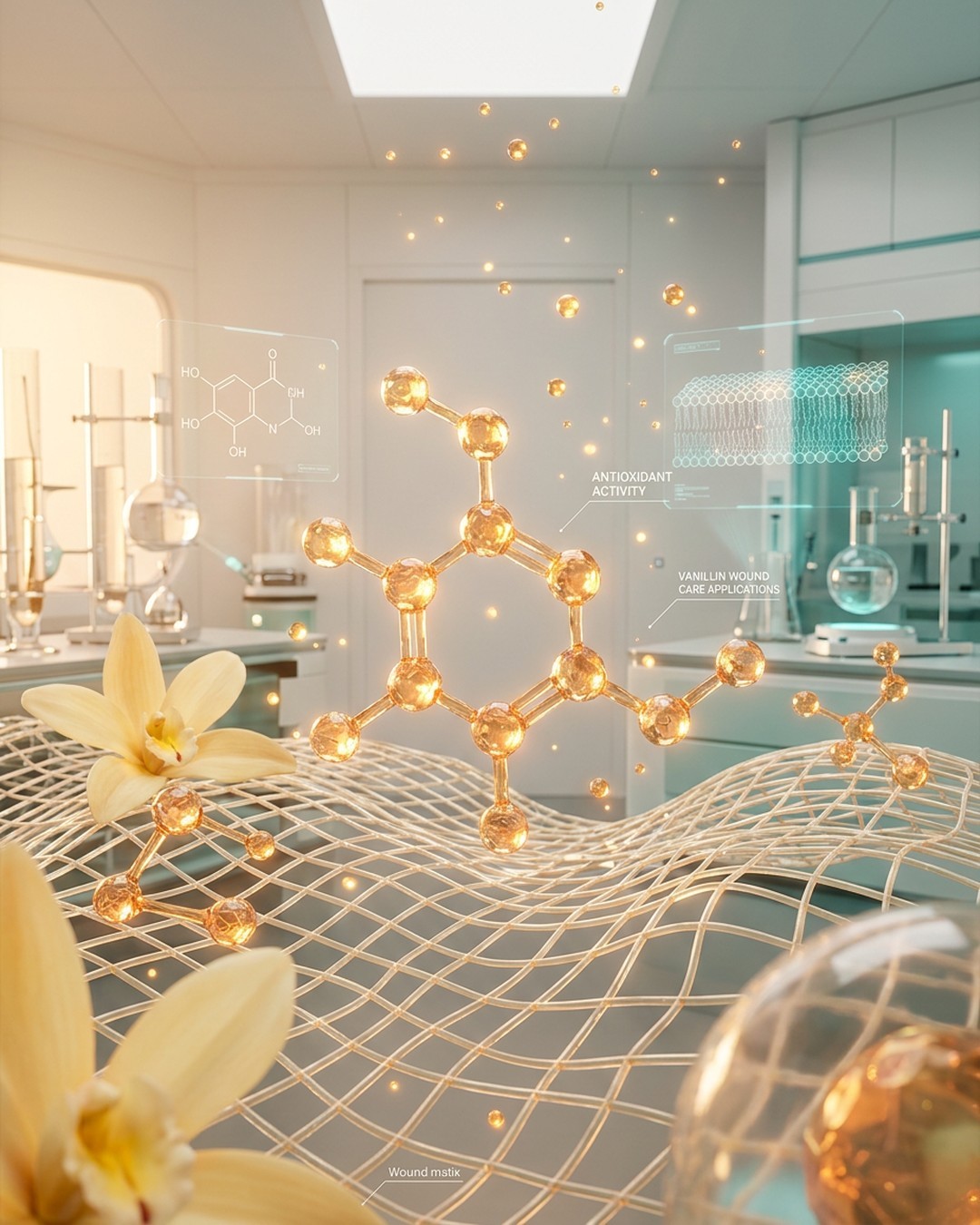
Researchers at Flinders University have discovered that vanillin, the primary chemical component responsible for vanilla's sweet flavor, possesses strong antioxidant, anti-inflammatory, and antibacterial properties that make it an ideal candidate for advanced wound care and chronic ulcer treatment. The Flinders Biomedical Nanoengineering Laboratory team highlights that vanillin's amphiphilic molecular structure allows it to interact effectively with cellular membranes and reactive oxygen species, while also functioning as a dynamic crosslinker to help form stable polymeric matrices for drug delivery. Because synthetic vanillin is abundant, cost-effective, and derived from accessible sources like clove oil or rice, it offers significant manufacturing advantages and supports industrial-scale production for next-generation regenerative therapeutics. This research builds upon previous scientific explorations using food-derived compounds, such as nanoscale coatings derived from peppermint oil, to create biocompatible medical materials that protect against infection and oxidative stress.

Points clés

01

🔹 Vanillin's Therapeutic Properties

Researchers at Flinders University found that vanillin exhibits pronounced antioxidant, anti-inflammatory, and antibacterial properties, making it a promising candidate for formulations designed to treat stubborn chronic wounds and ulcers.

02

🔸 Amphiphilic Structure and Drug Delivery

Vanillin features an amphiphilic molecular structure containing both water-attracting and water-repelling regions, allowing it to interact with reactive oxygen species and cellular membranes while helping deliver difficult-to-dissolve hydrophobic drugs.

03

⭐ Role as a Dynamic Crosslinker

In material design, vanillin serves as a dynamic crosslinker that helps form reversible connections between long molecular chains in polymers, contributing directly to both the structural integrity and biological activity of wound-care materials.

04

📊 Manufacturing and Cost Advantages

Synthetic vanillin can be produced abundantly and cost-effectively from clove oil or rice. Its long history of safety and stability in the global food system provides an affordable, scalable starting point for industrial medical manufacturing.

05

💡 Inspiration from Food-Derived Compounds

This research continues the laboratory's exploration of food-based medical materials, following previous work published in Small in February 2026 that created protective nanoscale coatings derived from peppermint oil.

Voulez-vous créer votre propre mindmap ?

Connectez-vous à Neumap AI et commencez à créer vos propres mindmaps !

Commencer