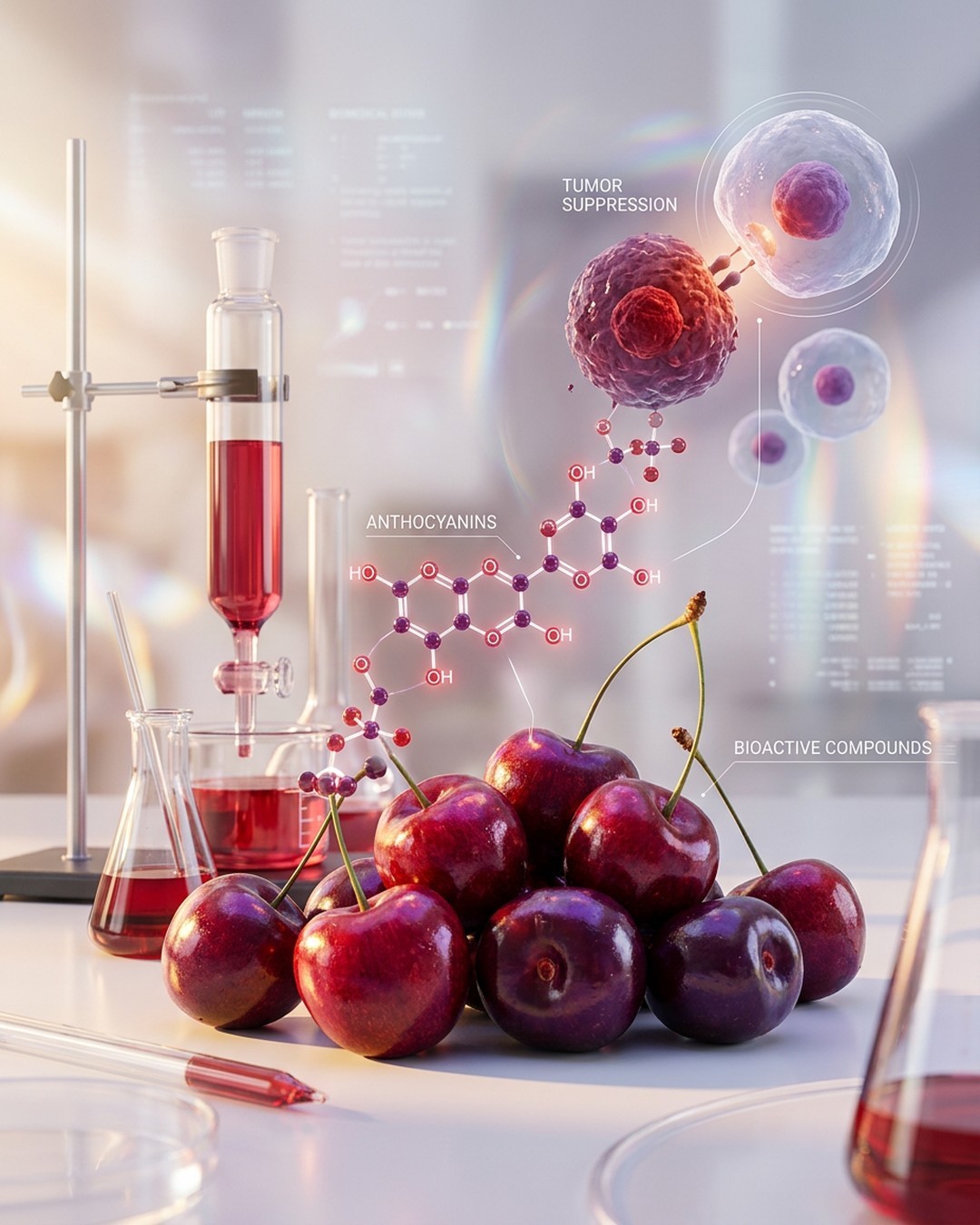
Dark Sweet Cherries Cancer-Fighting Effects

scitechdaily cancer-research nutrition breast-cancer food-science

Résumé

Image de couverture du mindmap
Image de Couverture Générée par IA

Researchers at Texas A&M University published a study on September 2, 2026, in the International Journal of Molecular Sciences revealing that anthocyanins found in dark sweet cherries can reduce tumor growth, metastasis, and treatment resistance in triple-negative breast cancer. The findings demonstrated that mice given anthocyanin-rich extracts before tumor implantation developed tumors more slowly and maintained stable body weight compared to controls. The research team, led by Dr. Giuliana Noratto and Dr. Lauren Stranahan, aimed to evaluate whether natural plant compounds could serve as a preventive approach and improve the efficacy of standard chemotherapy drugs like doxorubicin. Triple-negative breast cancer lacks estrogen receptors, progesterone receptors, and HER2 expression, making it highly aggressive, difficult to treat, and prone to spreading rapidly to organs such as the lungs and brain. Histological analysis of tumor tissues revealed that anthocyanin treatment significantly decreased the activity of genes associated with metastasis and therapy resistance. Furthermore, the combination of dark sweet cherry extracts and chemotherapy slowed tumor progression more effectively than chemotherapy alone, while successfully preventing the weight loss typically induced by standard drug treatments in animal models. These preliminary results suggest that incorporating diet-derived bioactive compounds into multimodal cancer therapies could offer valuable biological pathways for future oncological treatments. Although further clinical investigations regarding safety, absorption, and human efficacy are necessary, the study highlights the critical advantage of interdisciplinary research in tackling complex diseases.

Points clés

01

🔹 Triple-Negative Breast Cancer Characteristics

【📌 Core Definition】Triple-negative breast cancer is classified as the most aggressive form of breast disease due to a high mitotic index and rapid cell division. 【🔸 Molecular Deficits】Cancer cells lack estrogen receptors, progesterone receptors, and HER2 expression, eliminating targeted hormonal therapies. 【⭐ High Metastasis Risk】The absence of molecular targets leaves patients with severely limited treatment options and a high probability of metastasis to critical organs like the lungs and brain.

02

🔸 Study Design and Experimental Groups

【📌 Research Framework】Conducted by Texas A&M University researchers including Dr. Giuliana Noratto and Dr. Lauren Stranahan, published on July 25, 2025. 【🔸 Four Test Groups】Mice were divided into an untreated control group, an anthocyanin-only prevention group, a doxorubicin chemotherapy group, and a combined anthocyanin plus chemotherapy group. 【⭐ Primary Metric】The study design prioritized tracking metastatic spread across multiple organs rather than solely measuring primary tumor size.

03

⭐ Anthocyanin Effects on Growth and Spread

【📌 Slower Tumor Growth】Mice receiving anthocyanin-rich dark sweet cherry extracts before tumor implantation developed tumors significantly more slowly without noticeable side effects. 【🔸 Body Weight Maintenance】Subjects treated with anthocyanins maintained healthy body weights, contrasting with weight loss observed in mice receiving chemotherapy alone. 【⭐ Reduced Metastasis】Anthocyanin treatments decreased cancer cell invasion into the lungs, liver, heart, kidneys, and spleen compared to untreated controls.

04

📊 Gene Expression and Histological Findings

【📌 Downregulated Genes】Anthocyanin treatment suppressed the activity of genes directly linked to metastasis and therapy resistance. 【🔸 Tissue Analysis】Dr. Lauren Stranahan utilized histology to evaluate mitotic rates and necrosis resulting from tumors outgrowing their blood supply. 【⭐ Immune Cell Interaction】The study also evaluated how aggressive tumors evade destruction by modulating infiltrating T lymphocytes.

05

💡 Therapeutic Implications and Future Outlook

【📌 Multimodal Approach】Findings support a broader shift in oncology toward combining multiple treatments rather than relying on a single therapy. 【🔸 Dietary Integration】Diet-derived compounds like anthocyanins provide complementary biological pathways that standard treatments do not fully address. 【⭐ Future Steps】Results remain preliminary, requiring further clinical research to establish safety, human absorption rates, and precise combinatorial protocols.

Voulez-vous créer votre propre mindmap ?

Connectez-vous à Neumap AI et commencez à créer vos propres mindmaps !

Commencer