STRATIFY-StatinMD Risk Calculator

Health Cardiology Statins OxfordUniversity MedicalResearch RiskAssessment

Résumé

Image de couverture du mindmap
Image de Couverture Générée par IA

Researchers at the University of Oxford have developed a new clinical prediction tool, the STRATIFY-StatinMD Risk Calculator, designed to estimate an individual's risk of developing serious muscle disorders from statin therapy. Published in The Lancet Digital Health on June 25, 2026, the study addresses the widespread patient hesitation regarding statins due to fears of side effects, providing a personalized risk assessment that balances potential harms against the significant benefits of preventing heart attacks and strokes. The authors emphasize that for over 98% of eligible patients, the risk of serious muscle-related complications is extremely low. By utilizing data from over 5.6 million health records, the model incorporates 22 distinct health factors to move beyond population averages. This approach aims to bridge the treatment gap, as currently more than 60% of individuals who qualify for statin therapy remain untreated, often due to unfounded concerns about muscle pain. The calculator serves as a strategic decision-support tool for clinicians and patients, intended to be used alongside existing cardiovascular risk assessment tools like QRISK. It provides a transparent, evidence-based framework to facilitate informed discussions about monitoring, alternative treatments, or the safety of proceeding with standard therapy. Users can leverage this tool to gain clarity on their specific health profile, reducing anxiety caused by general misconceptions. It is recommended that patients discuss these personalized results with their healthcare providers to make balanced, data-driven decisions regarding their long-term cardiovascular health and medication adherence.

Points clés

01

🔹 The STRATIFY-StatinMD Risk Calculator

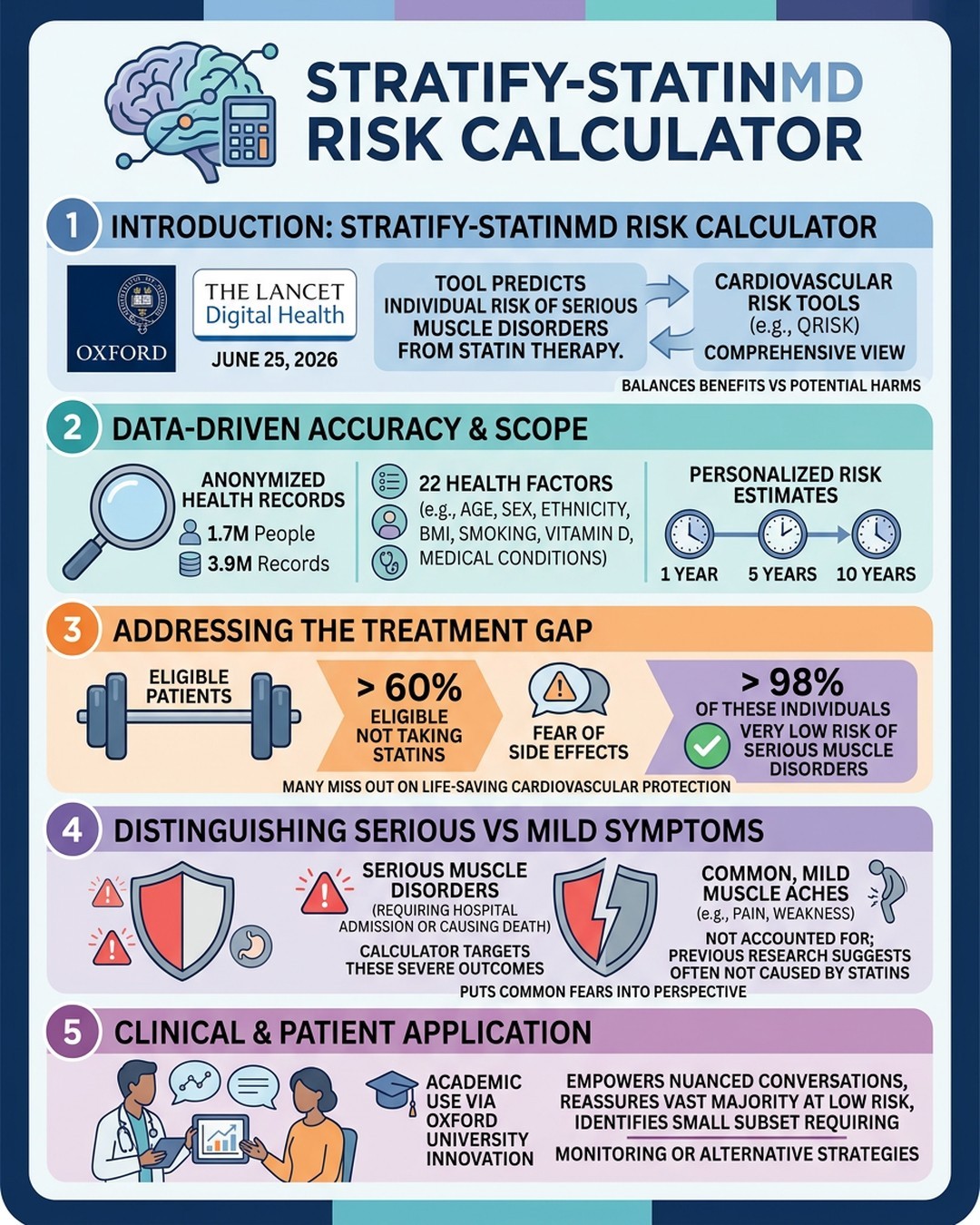
Developed by the University of Oxford and published in The Lancet Digital Health (June 25, 2026), this tool predicts the individual risk of serious muscle disorders (requiring hospital admission or resulting in death) associated with statin use. It is designed to be used alongside cardiovascular risk tools like QRISK to provide a comprehensive view of treatment benefits versus potential harms.

02

🔸 Data-Driven Accuracy and Scope

The model was derived from anonymized health records of 1.7 million people and validated against 3.9 million additional records. It analyzes 22 health factors, including age, sex, ethnicity, BMI, smoking status, vitamin D levels, and existing medical conditions, to generate personalized risk estimates over one, five, and 10-year periods.

03

⭐ Addressing the Treatment Gap

Research indicates that over 60% of patients eligible for statins are not currently taking them, largely due to fear of side effects. However, the study found that more than 98% of these eligible individuals are at a very low risk of serious muscle disorders, suggesting that many patients are missing out on life-saving cardiovascular protection due to misconceptions.

04

📊 Distinguishing Serious vs. Mild Symptoms

The calculator specifically targets serious muscle disorders. It does not account for common, mild muscle aches, which previous research suggests are often not caused by statins. By focusing on severe outcomes, the tool helps patients put common fears into perspective and prevents unnecessary discontinuation of essential medication.

05

💡 Clinical and Patient Application

The tool is available via the Oxford University Innovation software store for academic use. It empowers clinicians to have more nuanced conversations with patients, offering reassurance to the vast majority at low risk while identifying the small subset of patients who may require closer monitoring or alternative therapeutic strategies.

Voulez-vous créer votre propre mindmap ?

Connectez-vous à Neumap AI et commencez à créer vos propres mindmaps !

Commencer