Red Meat Sugar Neu5Gc and Type 2 Diabetes Risk

scitechdaily health diabetes nutrition public-health research

Résumé

Image de couverture du mindmap
Image de Couverture Générée par IA

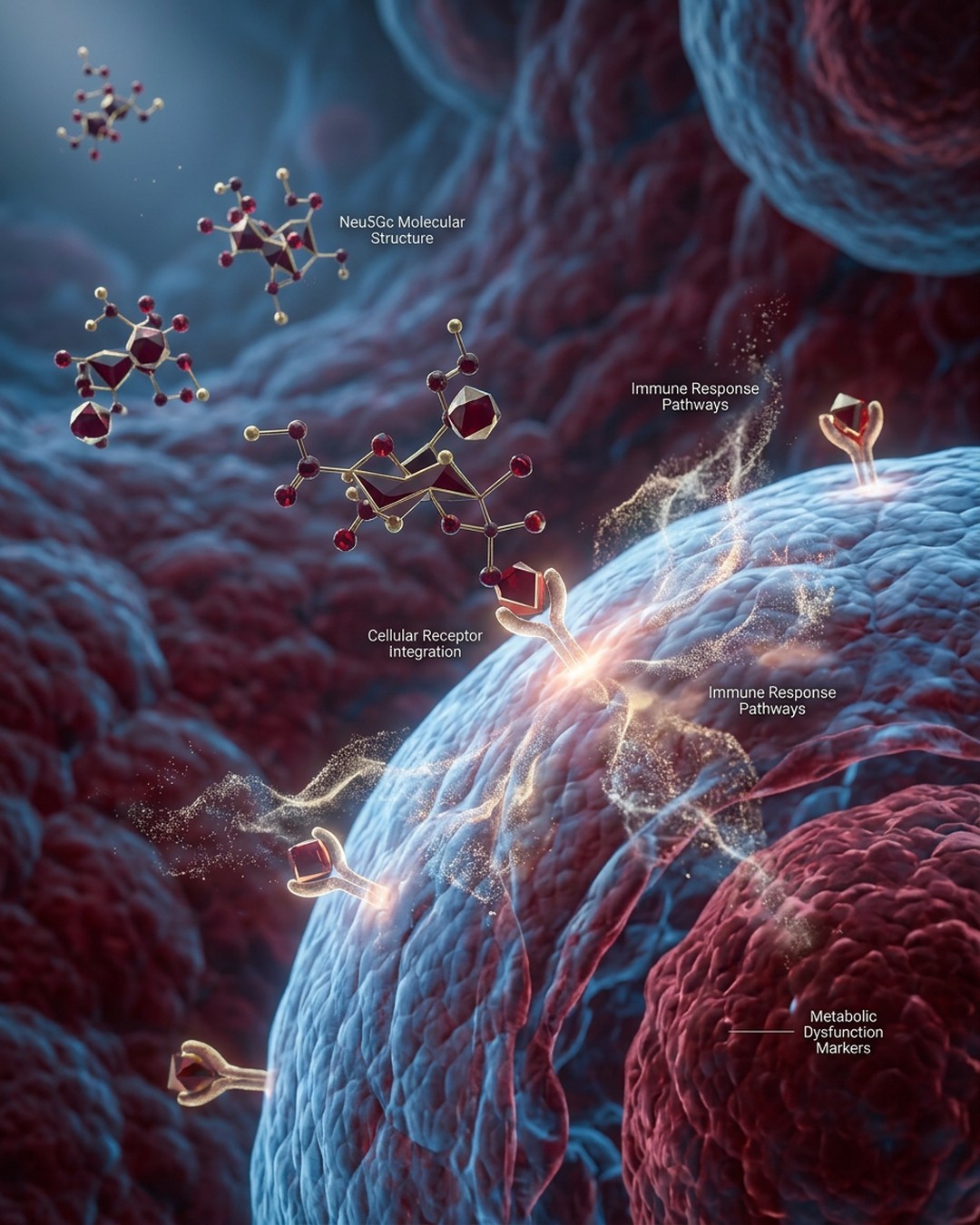
Researchers from the Université Sorbonne Paris Nord investigated the link between dietary intake of N-glycolylneuraminic acid (Neu5Gc), a sugar found in red meat that humans cannot naturally produce, and the risk of developing type 2 diabetes. Analyzing data from nearly 90,000 adult participants in the NutriNet-Santé study over a median follow-up of 7.2 years, the findings indicate that individuals with the highest consumption of meat-derived Neu5Gc faced a 63 percent greater risk of type 2 diabetes compared to those with the lowest intake. The primary scientific hypothesis centers on xenosialitis, a persistent immune response triggered when the human immune system recognizes the foreign animal sugar incorporated into human tissues as an antigen, leading to chronic inflammation. While obesity accounted for approximately 13 percent of the association, adjustments for total red meat consumption attenuated the statistical significance, suggesting that Neu5Gc may be one contributing factor among multiple components or lifestyle characteristics associated with high red meat diets. The study highlights that dairy-derived Neu5Gc showed no association with type 2 diabetes risk, pointing to differing sources and concentrations of the sugar or other confounding variables in red meat. Dr Leopold Fezeu and his colleagues emphasize the need for further research, including direct measurement of anti-Neu5Gc antibodies in large cohorts, to validate the inflammation mechanism and explore preventive dietary shifts. Practical applications of these findings suggest that individuals looking to mitigate type 2 diabetes risk might consider reducing their consumption of beef and lamb, which possess the highest Neu5Gc concentrations, and substituting them with poultry or plant-based protein alternatives.

Points clés

01

🔹 Elevated Diabetes Risk Associated with Meat-Derived Neu5Gc

【📌 Key Finding】Preliminary findings presented at the European Association for the Study of Diabetes (EASD) annual meeting show a 63 percent higher risk of type 2 diabetes among adults with the highest intake of meat-derived Neu5Gc. 【⭐ Data Support】The observational analysis included 89,953 French adults from the NutriNet-Santé study tracked over a median follow-up of 7.2 years, during which 966 new cases of type 2 diabetes were identified.

02

🔸 The Xenosialitis Hypothesis and Human Immune Response

【📌 Mechanism】Humans lost the ability to produce Neu5Gc naturally due to an ancient mutation disabling the CMAH gene. 【🔸 Impact Factors】When Neu5Gc from red meat such as beef and lamb is ingested and incorporated into human tissues, the immune system recognizes it as a foreign xeno-autoantigen, potentially generating persistent immune activity and chronic inflammation linked to metabolic disorders.

03

⭐ Statistical Adjustments and Confounding Variables

【📌 Analysis】The association between Neu5Gc and type 2 diabetes persisted after adjusting for age, sex, physical activity, overall diet, smoking, and existing health conditions, though it weakened slightly after accounting for body mass index (BMI). 【⚖️ Key Differences】When researchers further adjusted for total red meat consumption, the statistical significance diminished, indicating that Neu5Gc may partially explain the red meat link alongside other dietary or lifestyle factors.

04

📊 Contrasting Findings for Dairy-Derived Neu5Gc

【📌 Observation】Unlike red meat, Neu5Gc derived from dairy products showed no association with type 2 diabetes risk in the cohort analysis. 【⭐ Data Support】Cow milk generally contains lower concentrations of Neu5Gc and smaller serving sizes result in reduced overall exposure, suggesting that the diabetes risk may depend heavily on the specific dietary source.

05

💡 Future Research Directions and Dietary Implications

【📌 Action Items】Researchers plan to measure anti-Neu5Gc antibodies directly and examine other components like haem iron to validate the inflammation hypothesis. 【🎯 Recommendations】Public health insights suggest exploring whether favoring poultry or plant-based proteins over beef and lamb could help prevent type 2 diabetes.

Voulez-vous créer votre propre mindmap ?

Connectez-vous à Neumap AI et commencez à créer vos propres mindmaps !

Commencer