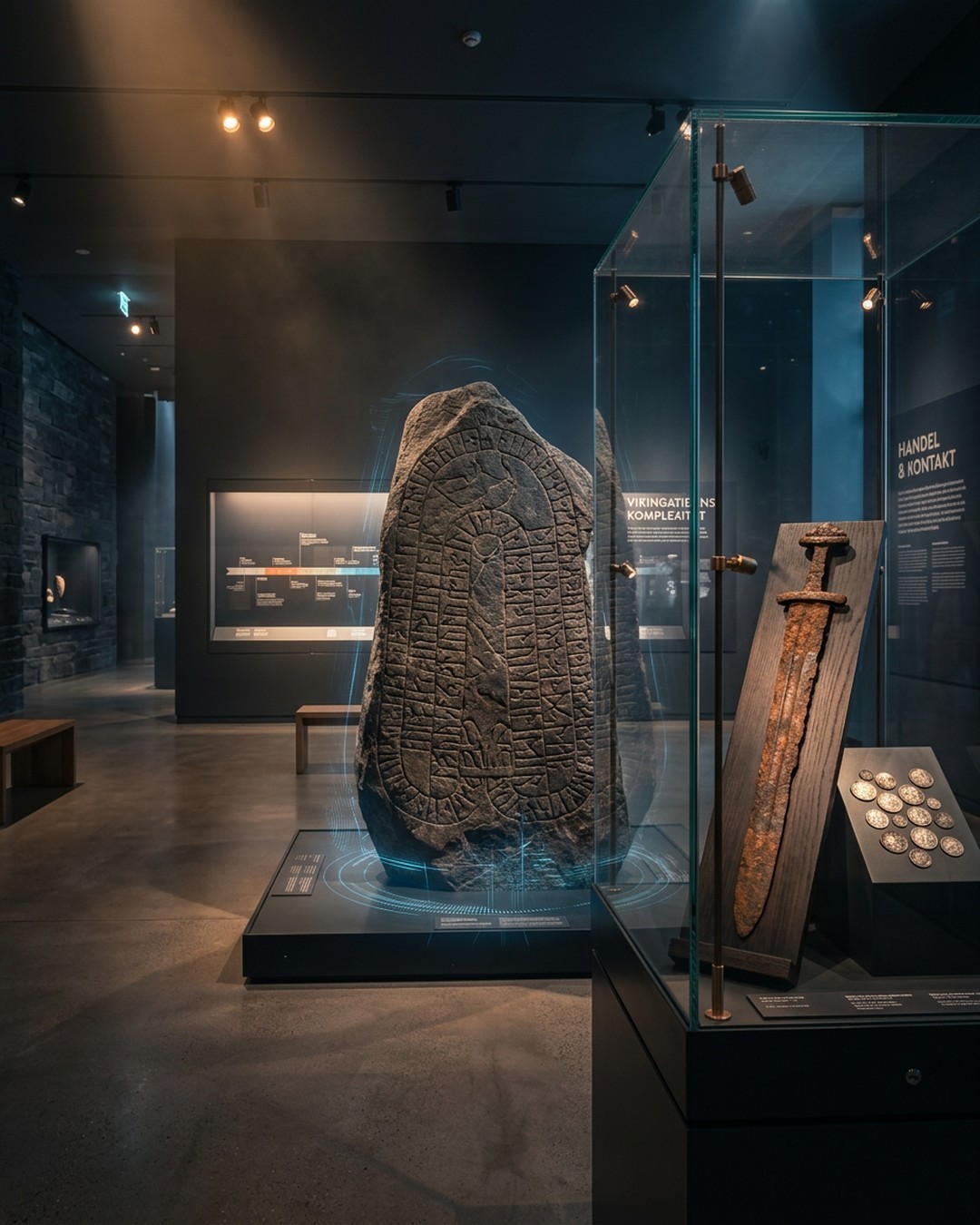
The Complex Truth About Vikings in Museums

ScitechDaily VikingHistory Archaeology MuseumStudies NationalIdentity

Résumé

Image de couverture du mindmap
Image de Couverture Générée par IA

Scandinavian museums such as the National History Museum in Copenhagen, the Swedish History Museum in Stockholm, and the Norwegian Museum of the Viking Age in Oslo use Viking history to negotiate tension between popular myths, archaeological evidence, and modern national identity. While museums acknowledge that Vikings were a diverse agrarian and mercantile society, they frequently foreground popular warrior tropes to draw crowds. The author analyzes how historical presentations are shaped by contemporary societal values, dating back to 19th-century nation-building projects when the Viking Age became a central Scandinavian symbol. The dominant narrative often centers on an all-male warrior culture and national unification under Christian kings like Harald Bluetooth, while marginalizing ordinary women or limiting them to exceptional figures or domestic stereotypes. Exhibitions also reflect modern sociopolitical priorities, such as highlighting archaeological finds that demonstrate past cultural encounters between Scandinavians and Muslims to counter contemporary nationalist narratives. Curators face an ongoing delicate balance between fulfilling audience expectations rooted in popular imagination and presenting accurate historical representations. Readers and researchers should recognize that museum exhibitions of ancient history often serve as mirrors for modern identity and values rather than purely objective windows into the past. Maintaining critical awareness of how cultural heritage is curated helps visitors separate sensationalized popular myths from verified archaeological findings.

Points clés

01

🔹 Museum Exhibitions and National Identity

【📌 Major Institutions】Institutions such as the National History Museum in Copenhagen, the Swedish History Museum in Stockholm, and the upcoming Norwegian Museum of the Viking Age in Oslo feature major Viking exhibitions. 【🔸 National Identity】Scandinavian national museums use Viking history to negotiate tension between popular myths, archaeological evidence, and modern national identity. 【⭐ Historical Roots】The Viking Age became central to Scandinavian nation-building during the 1800s when widespread identity projects established Vikings as internationally recognized symbols.

02

🔸 The Persistence of the Warrior Myth

【📌 Dominant Tropes】Popular culture portrays Vikings as tall, broad-shouldered men carrying swords with tattoos or modern haircuts, creating an invented image that stubbornly lingers. 【🔸 Agricultural Reality】While exhibitions acknowledge that Vikings were also farmers, seafarers, and merchants, curators persistently foreground ships, swords, and warrior culture to draw crowds. 【⭐ Historical Nuance】Although many free men and women owned weapons, only a small fraction truly operated as active warriors.

03

⭐ Marginalization and Stereotyping of Women

【📌 Limited Depictions】Museums attempt to insert women into the male-dominated Viking narrative, but descriptions of female social and cultural influence remain restricted. 【🔸 Exceptional Figures】Exhibitions traditionally focus only on exceptional female figures like noble mistresses or shieldmaidens, rendering ordinary women largely invisible. 【⭐ Domestic Roles】Representations of ordinary women frequently rely on traditional gender stereotypes focusing exclusively on household management and clothing.

04

📊 National Founding Narratives and Christianity

【📌 Unification Story】Exhibitions across Scandinavia emphasize that the Viking Age was a pivotal moment when decentralized pagan tribes transformed into distinct unified Christian kingdoms. 【🔸 Harald Bluetooth】Denmark's national identity is heavily bolstered by the nation-building legend of Harald Bluetooth, grandfather to Canute the Great. 【⭐ Conversion Legends】Historical narratives incorporate pivotal religious milestones, such as Harald Bluetooth being baptized around 960 by Bishop Poppo after surviving a trial by burning coal.

05

💡 Modern Values Reshaping Historical Narratives

【📌 Contemporary Priorities】Since the 1980s, the Viking Age has been utilized to create convenient contemporary narratives reflecting current societal states rather than purely historical facts. 【🔸 Cultural Encounters】Exhibitions highlight archaeological finds testifying to historical cultural encounters between Scandinavians and Muslims. 【⭐ Counterweight to Nationalism】In Sweden and Norway, emphasizing these peaceful historical interactions serves as a counterweight to modern nationalist use of Viking heritage directed against Muslims.

Voulez-vous créer votre propre mindmap ?

Connectez-vous à Neumap AI et commencez à créer vos propres mindmaps !

Commencer