Nanodisc Platform for Viral Vaccine Research

ScrippsResearch Virology VaccineDevelopment NanodiscTechnology AntibodyResearch HIV Ebola Biotechnology

Résumé

Image de couverture du mindmap
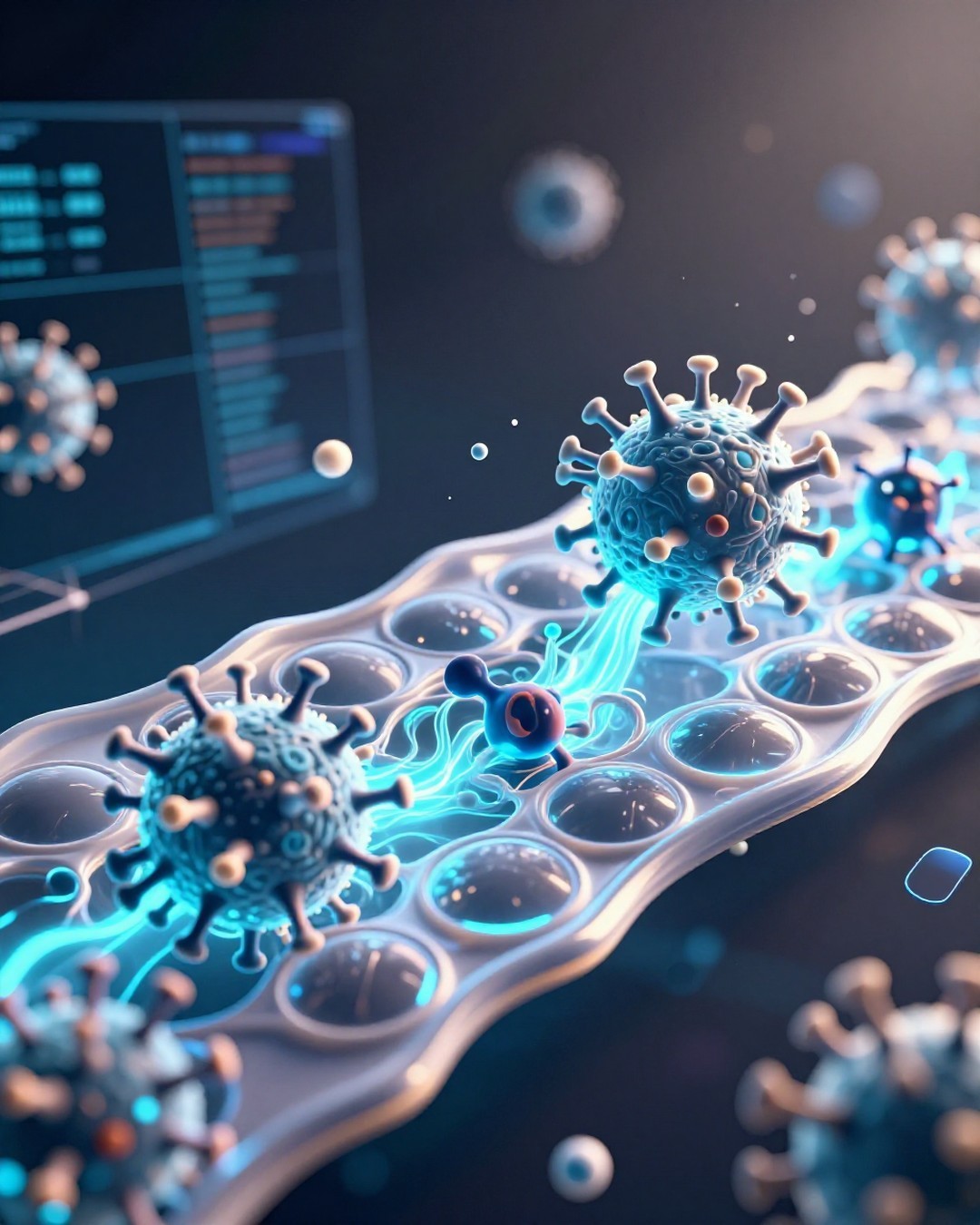
Image de Couverture Générée par IA

Researchers at Scripps Research have developed a groundbreaking nanodisc platform that enables the study of viral surface proteins in a state that closely mimics their natural environment. By embedding these proteins into lipid-based nanodiscs, scientists can observe how antibodies interact with viruses, including previously hidden regions near the membrane interface. This methodology provides a more accurate representation of viral structure than traditional lab-made protein versions, which often omit critical membrane-anchoring components. The research team, led by William Schief and Kimmo Rantalainen, emphasizes that this platform is essential for understanding how protective antibodies recognize and neutralize challenging pathogens. By preserving the natural membrane context, the system reveals structural details that were previously inaccessible, offering new insights into antibody function and viral vulnerability. This approach is particularly significant for developing vaccines against highly mutable or difficult-to-target viruses like HIV, Ebola, influenza, and SARS-CoV-2. Beyond structural analysis, the nanodisc platform serves as a versatile tool for vaccine development, acting as molecular bait to isolate immune cells and evaluate vaccine candidates more efficiently. The system significantly accelerates research timelines, reducing processes that previously took a month to approximately one week. This increased speed and reproducibility allow for more rapid comparison of multiple vaccine candidates, ultimately advancing the design of next-generation vaccines. For the scientific community and vaccine developers, this platform represents a strategic shift toward more realistic, high-resolution viral modeling. Researchers can utilize this system to map conserved viral regions, optimize antibody binding, and refine vaccine candidates early in the development cycle. This innovation provides a robust framework for tackling global health threats by bridging the gap between simplified laboratory models and the complex reality of viral infection.

Points clés

01

🔹 Nanodisc Platform Innovation

【📌 Core Finding】Researchers at Scripps Research developed a nanodisc platform that embeds viral surface proteins into lipid particles to mimic the natural viral membrane environment. 【🔸 Impact Factors】Traditional lab-made proteins often lack membrane-anchoring sections, leading to inaccurate structural representations. This new method preserves the natural shape and function of proteins, allowing for more precise observation of antibody-virus interactions.

02

🔸 Enhanced Structural Insights

【📌 Key Finding】The platform revealed previously unseen interactions between antibodies and viral proteins, specifically at the membrane interface. 【⭐ Data Support】By studying HIV surface proteins, the team captured high-resolution images showing how antibodies neutralize viruses by targeting conserved regions that remain stable despite viral mutations, providing a blueprint for more effective vaccine design.

03

⭐ Efficiency and Scalability

【📌 Process Improvement】The nanodisc system acts as molecular bait to isolate immune cells that recognize viral proteins. 【📊 Performance Data】The platform significantly accelerates research, reducing the time required for complex vaccine analysis from one month to approximately one week, enabling faster comparison and iteration of vaccine candidates.

04

📊 Broad Applicability

【📌 Versatility】While tested extensively with HIV and Ebola, the platform is designed to study any virus with membrane-bound surface proteins. 【🔸 Future Outlook】The researchers confirmed the system works for influenza and SARS-CoV-2, suggesting it will become a standard tool for analyzing immune responses across a wide range of challenging pathogens.

05

💡 Strategic Vaccine Development

【📌 Research Goal】The platform is not a vaccine itself but a critical analytical tool to improve vaccine candidate selection. 【💡 Application】By providing a more realistic testing environment, it allows scientists to identify which vaccine designs are most likely to trigger protective immune responses, ultimately advancing the development of next-generation vaccines against global health threats.

Voulez-vous créer votre propre mindmap ?

Connectez-vous à Neumap AI et commencez à créer vos propres mindmaps !

Commencer