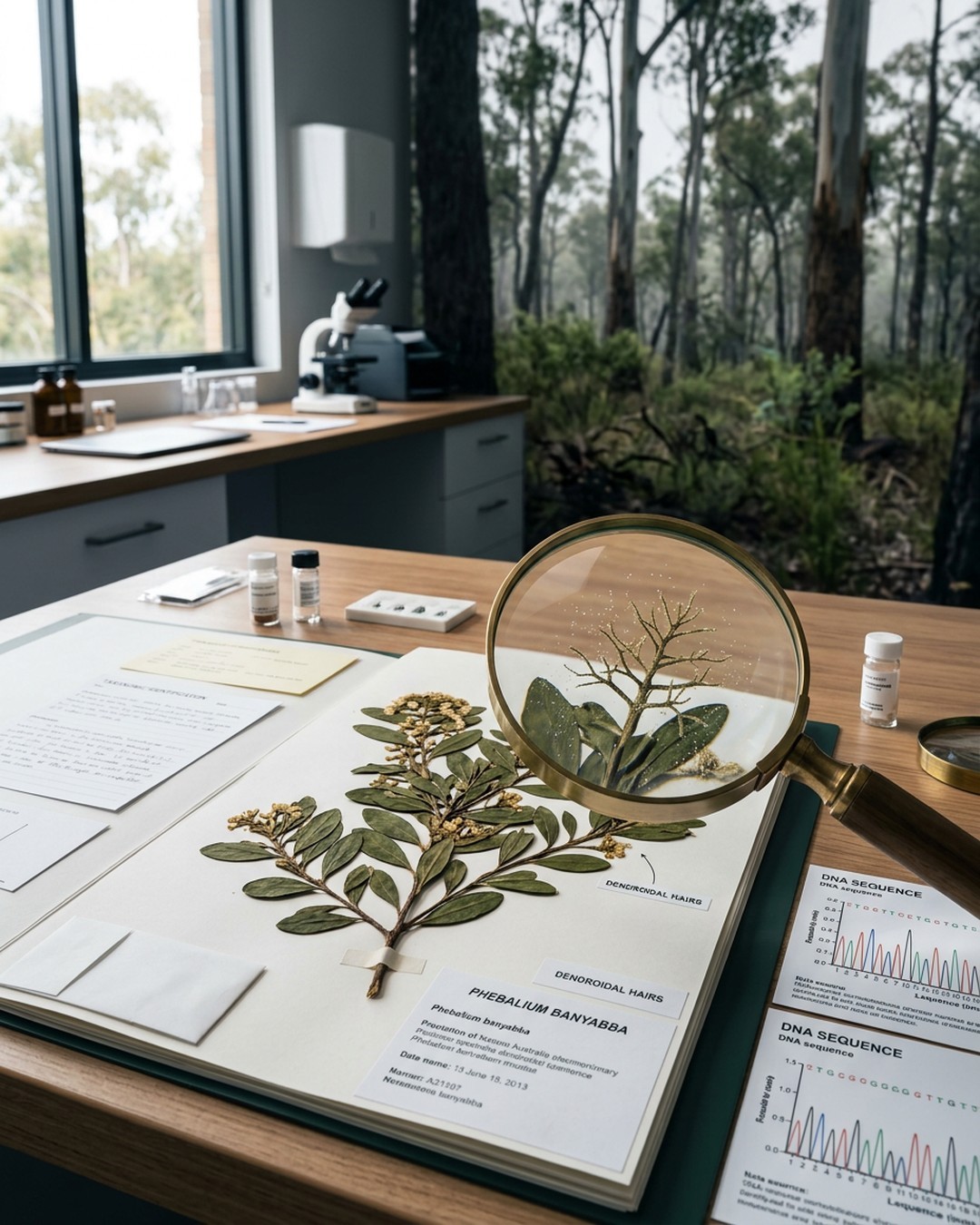
Discovery of Phebalium banyabba

botany biodiversity conservation new-species plant-biology scientific-discovery

Résumé

Image de couverture du mindmap
Image de Couverture Générée par IA

Botanists at the University of New England have identified a new plant species, Phebalium banyabba, which had been misclassified as Phebalium nottii for over a century. This discovery, published on March 31, 2026, highlights the critical importance of accurate taxonomic identification for effective biodiversity conservation and legal protection of threatened species. The research team, led by Emeritus Professor Jeremy Bruhl and Dr. Ian Telford, utilized both morphological analysis and DNA sequencing to confirm the distinctiveness of the species. The plant is characterized by specific physical traits, including densely hairy calyces with dendroidal hairs, larger calyx lobes, and larger seeds compared to its relatives. Field surveys conducted in northeastern New South Wales revealed a highly restricted population of fewer than 1,000 mature individuals across two locations. The species faces significant environmental pressures, including frequent fire cycles, drought, and cattle grazing, which are exacerbated by its reliance on seed regeneration rather than resprouting. This formal classification enables the species to be listed under New South Wales legislation for protection. Conservation efforts are already underway, involving the propagation of the species at the Australian National Botanic Gardens to ensure its survival and potentially reduce pressure on wild populations through horticultural trade.

Points clés

01

🔹 Taxonomic Correction and Discovery

For over 100 years, the plant now identified as Phebalium banyabba was misidentified as Phebalium nottii. Researchers at the University of New England (UNE) N.C.W. Beadle Herbarium confirmed it as a distinct species through molecular DNA analysis and morphological examination of specimens collected north of Grafton, NSW.

02

🔸 Distinctive Morphological Features

The identification of Phebalium banyabba is supported by specific physical characteristics that differentiate it from related species. Key features include densely hairy calyces (the outer whorl of a flower) with unique dendroidal (tree-like) hairs, significantly larger calyx lobes, and larger seed structures.

03

⭐ Population Status and Environmental Threats

Fieldwork identified fewer than 1,000 mature plants across only two locations. The species is highly vulnerable due to a restricted distribution and specific ecological sensitivities, including a reliance on seed regeneration rather than resprouting, making it susceptible to overly frequent fire cycles, drought, and cattle grazing.

04

📊 Conservation and Legal Implications

Formal scientific description allows for the listing of Phebalium banyabba as a Threatened Species under New South Wales legislation. This status provides a legal framework for protection and integrates the species into government programs like Saving our Species, ensuring targeted management of its habitat.

05

💡 Strategic Preservation Efforts

The Australian National Botanic Gardens (ANBG) has successfully propagated the species as part of a living collection. Future strategies include introducing the plant to the horticultural trade, which aims to reduce the incentive for illegal collection from the wild and bolster the species' long-term survival.

Voulez-vous créer votre propre mindmap ?

Connectez-vous à Neumap AI et commencez à créer vos propres mindmaps !

Commencer