Ancient Europe Fern Savannah Wildfires

scitechdaily paleoclimatology paleobiology fossils utrecht-university

Résumé

Image de couverture du mindmap
Image de Couverture Générée par IA

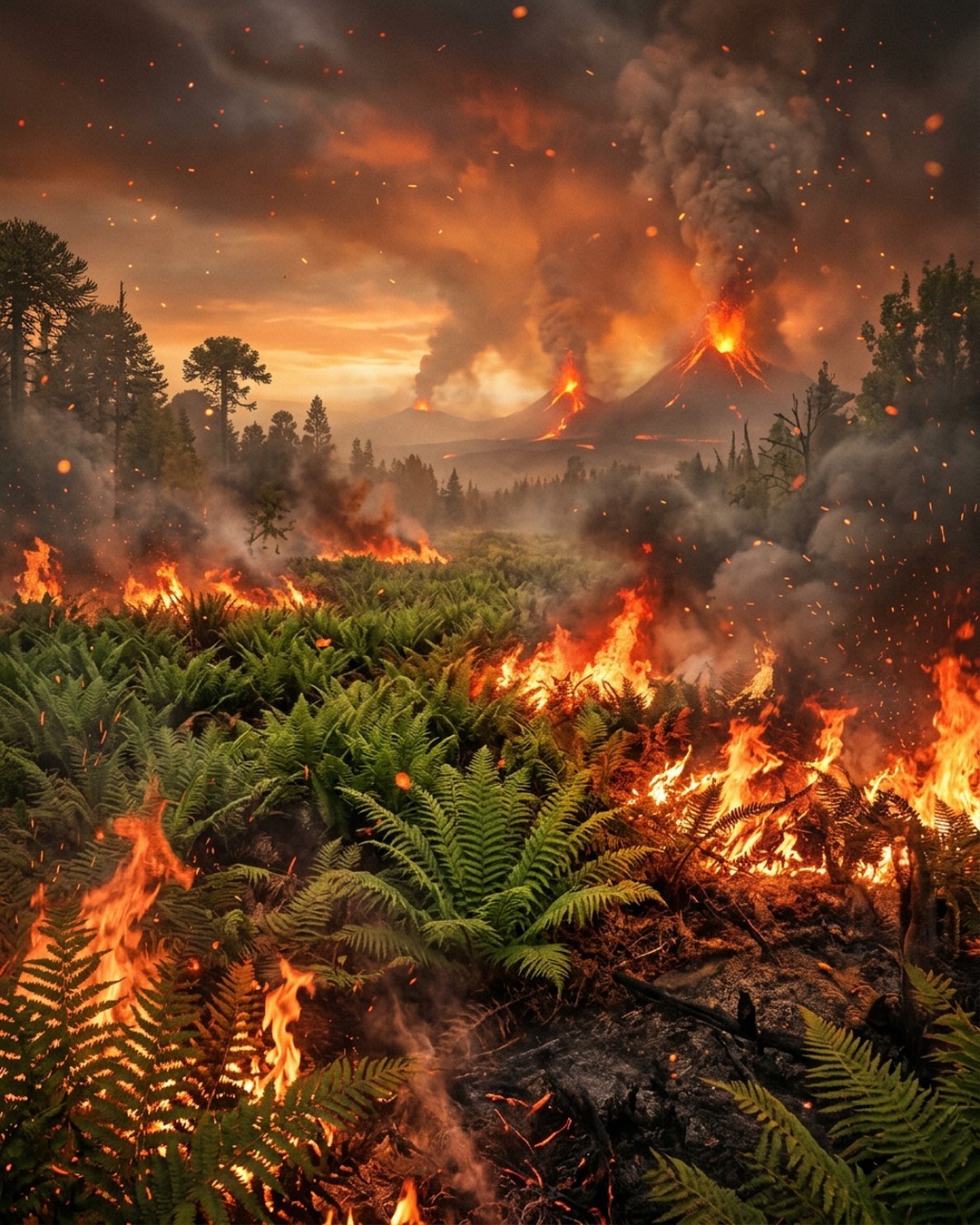
Around 201 million years ago, Earth experienced the end-Taxian mass extinction driven by massive volcanic activity from the breakup of Pangea, which released massive amounts of CO2 and increased global temperatures by 5 to 10 degrees Celsius. As forest trees collapsed, vast savannahs dominated by ferns spread across Northwest Europe, creating an environment highly vulnerable to wildfire. Researchers from Utrecht University and international collaborators analyzed four drill cores, including a 640-meter-long core from the United Kingdom, using a novel low-cost technique called the Palynomorph Darkness Index to track ancient fire activity. By measuring the RGB color spectrum and converting it to average grey scale values for 15,000 fossil pollen and spores, scientists uncovered a mysterious Dark Zone reflecting intense wildfire activity overlapping with the fern spike interval. The study published in Nature Geoscience revealed that ferns acted as both disaster species that rapidly colonized disturbed ground and providers of combustible fuel that sustained wildfires for periods ranging from 40,000 to 300,000 years. This created a destructive ecological feedback loop where fires disturbed terrain, ferns rapidly regrew from underground root systems to form flammable mats, and subsequent fires were continually fueled. This ancient crisis serves as a critical modern warning regarding how compounding environmental pressures like climate change, deforestation, and opportunistic species expansion can create a catastrophic perfect storm. Scientists emphasize that understanding these deep-time ecological cycles helps evaluate modern vulnerabilities to widespread habitat destruction and prolonged fire regimes.

Points clés

01

🔹 End-Triassic Mass Extinction and Global Warming

Around 201 million years ago, massive volcanic activity associated with the breakup of Pangea released colossal quantities of carbon dioxide into the atmosphere. This drove global temperatures up by an estimated 5 to 10 degrees Celsius, collapsing forest-dominated ecosystems and setting the stage for rapid landscape transformation across Northwest Europe.

02

🔸 Expansion of Pioneer Ferns Across Disturbed Landscapes

Following the collapse of tree-dominated forests, hardy ferns rapidly spread across damaged soils and formed vast savannahs. These disaster species were uniquely adapted to extreme environments and could quickly regenerate from underground root systems after fires, giving them a competitive advantage over other vegetation.

03

⭐ Innovation of the Palynomorph Darkness Index

To overcome limitations of traditional fire indicators like fragile charcoal and mobile smoke-related polycyclic aromatic hydrocarbons, researchers developed the Palynomorph Darkness Index. By measuring the RGB color spectrum of 15,000 fossil pollen and spores using light microscopy, scientists quantified fossil darkening to accurately trace intense ancient wildfire activity.

04

📊 The Mysterious Dark Zone and Prolonged Fire Regimes

Fossil samples from the extinction interval progressively grew to an extremely dark brown color across four separate basins, creating a Dark Zone that persisted for at least 40,000 and potentially up to 300,000 years. This prolonged period of burning directly overlapped with the fern spike, charcoal abundance, and smoke-related organic compounds.

05

💡 Ecological Feedback Loop and Modern Warnings

Dried fern mats acted as ideal fuel that triggered massive wildfires, while pioneer ferns functioned as fire ladders that fanned the flames and created new disturbed terrain for rapid recolonization. Dr. Bas van de Schootbrugge notes that this ancient hellish world demonstrates how climate change, deforestation, and opportunistic species can combine to form a catastrophic environmental perfect storm.

Voulez-vous créer votre propre mindmap ?

Connectez-vous à Neumap AI et commencez à créer vos propres mindmaps !

Commencer