Hidden Force Accelerating Sea-Level Rise

ClimateChange SeaLevelRise LandSubsidence UrbanPlanning EnvironmentalScience GroundwaterManagement

Résumé

Image de couverture du mindmap
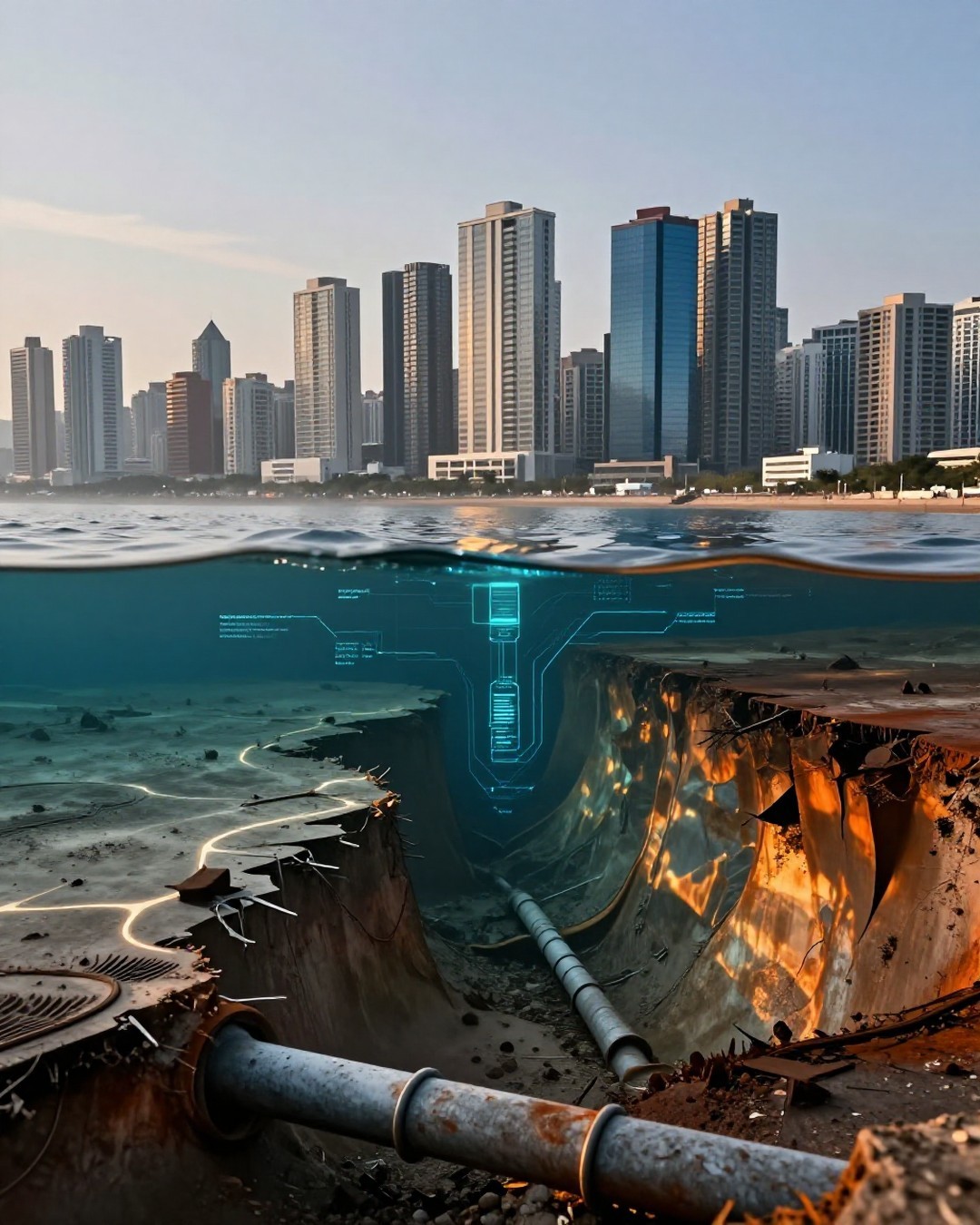
Image de Couverture Générée par IA

New research published in Nature Communications on July 2, 2026, by the Technical University of Munich and Tulane University reveals that land subsidence is a critical, often overlooked factor accelerating relative sea-level rise in coastal cities. While global climate change drives ocean levels upward, the sinking of land due to human activities and geological processes is causing coastal regions to experience relative sea-level rise at nearly double the rate of climate-driven factors alone. The study emphasizes that human-induced land subsidence, primarily driven by groundwater extraction, resource production, and the immense weight of urban infrastructure, significantly amplifies flood risks. The authors argue that while climate change is a global challenge, land subsidence is a localized phenomenon that can be effectively mitigated through targeted policy interventions and improved water management strategies. Quantitative data indicates that densely populated coastal regions face an average relative sea-level rise of approximately 6 millimeters per year. In extreme cases, such as Jakarta, specific areas are sinking by as much as 42 millimeters annually. These findings highlight the urgent need for coastal urban planning to incorporate land-level monitoring alongside oceanographic data to develop comprehensive flood defense strategies. Practical application of these findings suggests that cities can successfully slow or halt subsidence through strict regulation of groundwater withdrawals and the development of alternative water supplies. Successful historical precedents in Tokyo and the Harris-Galveston region of Texas demonstrate that proactive governance can decouple urban growth from land sinking, providing a viable roadmap for other vulnerable coastal municipalities.

Points clés

01

🔹 Relative Sea-Level Rise Dynamics

【📌 Core Finding】Coastal regions are experiencing relative sea-level rise at an average of 6 millimeters per year. 【🔸 Impact Factors】This rate is nearly double the climate-driven sea-level rise and three times the global coastline-weighted average. 【⭐ Data Support】The study, published May 16, 2026, identifies land subsidence as a primary driver of this acceleration, particularly in densely populated urban areas.

02

🔸 Primary Drivers of Land Subsidence

【📌 Human-Driven Factors】Excessive groundwater extraction, oil and gas production, and the structural load of heavy buildings/infrastructure are the main contributors. 【🔸 Geological Factors】Compaction of young sediments in deltas, tectonic movements, and post-glacial adjustments (isostatic rebound) also play significant roles in land elevation changes.

03

⭐ Global Subsidence Hot Spots

【📊 Regional Data】Countries with the highest relative sea-level rise include Thailand, Bangladesh, Nigeria, Egypt, China, and Indonesia, with population-weighted averages of 7-10 mm/year. 【📍 City-Specific Examples】Jakarta (13.7 mm/year), Tianjin (13.5 mm/year), Bangkok (8.5 mm/year), Lagos (6.7 mm/year), and Alexandria (4 mm/year). In Jakarta, localized sinking reaches up to 42 mm/year.

04

📊 Mitigation Through Policy

【📌 Success Stories】Tokyo and the Harris-Galveston region (Texas) successfully reduced subsidence through government intervention. 【💡 Strategy】Tokyo reduced subsidence from over 10 cm/year (peaking at 24 cm/year) by switching to alternative water supplies. The Harris-Galveston Subsidence District (est. 1975) regulated groundwater withdrawals, proving that local policy can effectively halt land sinking.

05

💡 Research Implications

【📌 Strategic Shift】Effective coastal defense requires monitoring both the ocean and the land. 【🎯 Conclusion】Because subsidence is often human-driven, it is a manageable risk. Local governments must prioritize groundwater management, aquifer recharge, and stricter building regulations to mitigate the compounding effects of climate-driven sea-level rise.

Voulez-vous créer votre propre mindmap ?

Connectez-vous à Neumap AI et commencez à créer vos propres mindmaps !

Commencer