Gut Microbe R. inulinivorans and Muscle Strength

microbiome sarcopenia aging health muscle-strength probiotics gut-muscle-axis

Résumé

Image de couverture du mindmap
Image de Couverture Générée par IA

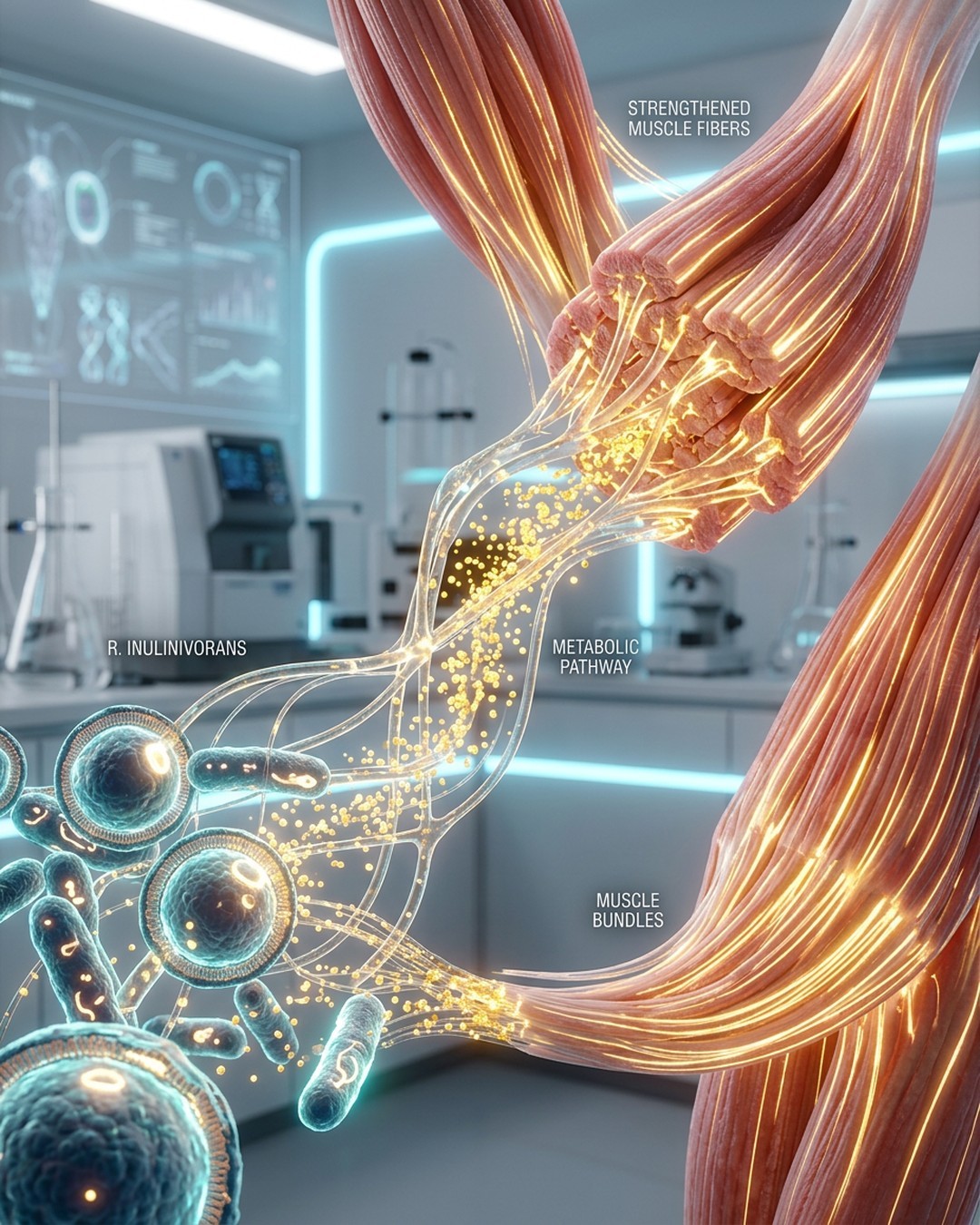
Recent research published in the journal Gut on July 6, 2026, identifies the gut bacterium Roseburia inulinivorans as a significant factor in maintaining muscle strength and physical performance. The study highlights a clear correlation between the presence of this microbe and improved muscle function, particularly in older adults, suggesting a potential 'gut-muscle axis' that could be targeted to combat sarcopenia, the age-related loss of muscle mass and strength. The researchers observed that levels of R. inulinivorans naturally decline with age, which aligns with the onset of frailty in older populations. By conducting experiments on mice, the team demonstrated that this specific bacterium promotes the development of fast-twitch (type II) muscle fibers, which are essential for explosive movements and overall physical power, providing a causal link between gut health and musculoskeletal integrity. This discovery positions R. inulinivorans as a promising candidate for future nutraceutical or probiotic interventions aimed at preserving independence and mobility in aging individuals. While the study acknowledges that human-to-mouse colonization was not fully achieved, the findings provide a robust framework for understanding how microbial metabolism influences muscle energy production and fiber composition. For practical application, these findings underscore the importance of gut health in long-term physical fitness. While direct probiotic supplements are not yet available, maintaining a diverse microbiome through diet remains a foundational strategy for supporting the gut-muscle axis and mitigating the effects of aging on physical performance.

Points clés

01

🔹 Discovery of the Gut-Muscle Axis

Researchers identified that the gut bacterium Roseburia inulinivorans is positively associated with muscle strength and mass. This finding supports the existence of a gut-muscle axis, where specific microbial species influence muscle metabolism and fiber composition, potentially offering a new therapeutic target for age-related muscle wasting (sarcopenia).

02

🔸 Impact on Muscle Fiber Composition

【📌 Key Finding】R. inulinivorans promotes the development of fast-twitch (type II) muscle fibers. 【🔸 Impact Factors】These fibers are specialized for short, powerful bursts of movement like jumping or lifting. 【⭐ Data Support】Mice treated with this bacterium showed a 30% increase in forelimb grip strength and larger muscle fiber sizes compared to control groups.

03

⭐ Age-Related Decline and Correlation

The study analyzed 90 young adults (18-25) and 33 older adults (65+). Results showed that older adults with detectable R. inulinivorans had 29% higher handgrip strength than those without it. Crucially, the relative abundance of this bacterium is significantly lower in older populations, correlating with the natural decline in physical function associated with aging.

04

📊 Comparative Analysis of Roseburia Species

【🔵 R. inulinivorans】Positively linked to muscle strength and type II fiber growth. / 【🟠 R. faecis & R. hominis】Showed no significant association with muscle strength measures. / 【⚖️ Key Differences】Not all species within the Roseburia genus provide the same physiological benefits, indicating that specific microbial strains are required for muscle-related health outcomes.

05

💡 Future Therapeutic Potential

The researchers suggest that R. inulinivorans could be developed as a probiotic candidate to treat sarcopenia. Although the study is in early stages and requires long-term human trials, the findings provide a scientific basis for using targeted microbial interventions to preserve physical independence and mobility in the elderly.

Voulez-vous créer votre propre mindmap ?

Connectez-vous à Neumap AI et commencez à créer vos propres mindmaps !

Commencer