Psilocybin Brain Rewiring and Hallucination Separation

scitechdaily neuroscience psilocybin depression uc-santa-cruz

Riepilogo

Immagine Copertina Mappa Mentale
Immagine Copertina Generata da AI

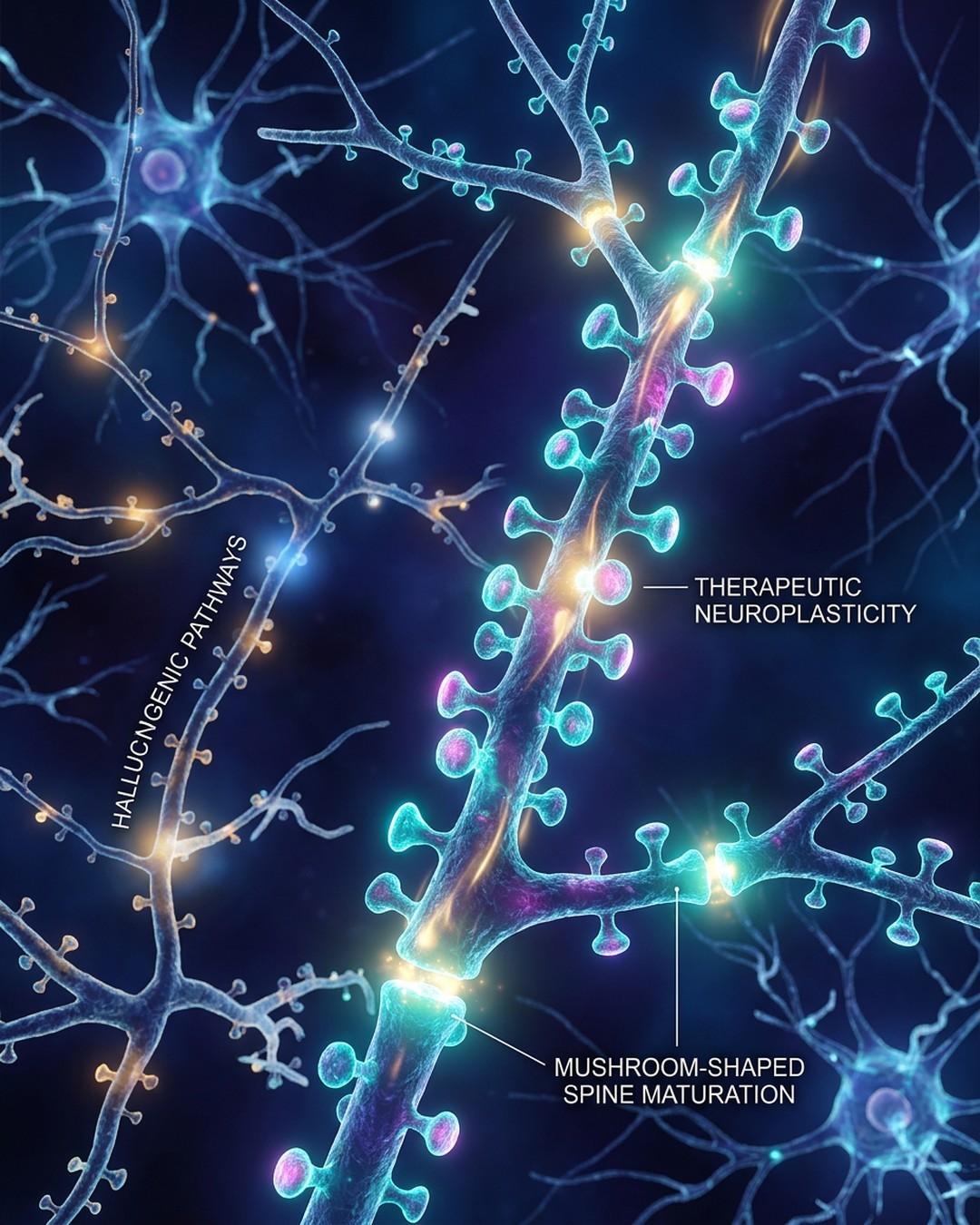
Researchers at the University of California, Santa Cruz published a study on October 15, 2026, in Nature Neuroscience demonstrating that psilocybin's brain-rewiring structural plasticity can be separated from its hallucinogenic effects. Using two-photon microscopy on mouse models, the team discovered that administering psilocybin rapid-fires new dendritic spine formation, particularly in subjects undergoing unpredictable mild stress, effectively repairing damaged neural circuits without necessarily triggering behavioral proxies for hallucinations. The senior author Yi Zuo and lead author Jacob Baker emphasized that psilocybin's therapeutic neuroplasticity relies specifically on serotonin 2A receptors located on Layer 5 pyramidal neurons. By selectively restoring or deleting these receptors, the scientists successfully isolated structural synapse remodeling from the head-twitch response, proving that these dual biological outcomes operate through distinct cellular pathways. This groundbreaking discovery provides a promising pharmacological blueprint for designing non-hallucinogenic drug analogs. Such targeted therapeutics aim to deliver the fast-acting, lasting antidepressant benefits traditionally associated with psychedelics while entirely eliminating hallucinogenic side effects, thereby making treatments significantly safer, more scalable, and accessible for broader patient populations suffering from depression and PTSD. Medical researchers and healthcare stakeholders can leverage these findings as regulatory bodies like the FDA evaluate psychedelic-assisted therapies. Future drug development should prioritize compounds that selectively activate Layer 5 pyramidal neuron signaling pathways to achieve neuroplasticity without altering consciousness, opening new avenues for mainstream psychiatric care.

Punti Chiave

01

🔹 Separation of Rewiring and Hallucinations

【📌 Key Finding】Scientists at UC Santa Cruz successfully separated psilocybin's neural rewiring power from its hallucinogenic side effects. 【🔸 Impact Factors】Published in Nature Neuroscience on October 15, 2026, the study shows that therapeutic circuit remodeling and hallucinations operate through distinct cellular pathways. 【⭐ Data Support】Targeted manipulation of serotonin 2A receptors proved that neuroplasticity can occur without inducing the rodent head-twitch response proxy for hallucinations.

02

🔸 Role of Layer 5 Pyramidal Neurons

【📌 Key Finding】Serotonin 2A receptors (5-HT2ARs) on Layer 5 pyramidal neurons drive psilocybin's structural effects. 【🔸 Impact Factors】Restoring these receptors exclusively in Layer 5 pyramidal neurons triggered new synapse formation and structural stabilization without the head-twitch response. 【⭐ Data Support】Conversely, selectively deleting these receptors prevented structural synapse growth while leaving the hallucinogenic behavior fully intact.

03

⭐ Impact of Prior Stress on Neuroplasticity

【📌 Key Finding】Psilocybin's restorative effects depend heavily on the brain's underlying condition and prior exposure to stress. 【🔸 Impact Factors】Mice subjected to unpredictable mild stress exhibited a significantly larger surge in new dendritic spines compared to healthy controls, alongside halted excessive loss of existing connections. 【⭐ Data Support】In healthy mice, growth spurts were temporary, returning toward baseline over three weeks to maintain structural stability.

04

📊 Structural Changes in Dendritic Spines

【📌 Key Finding】Two-photon microscopy revealed rapid increases in new dendritic spine formation within 24 hours of psilocybin administration. 【🔸 Impact Factors】Untreated mice typically formed immature stubby spines that were unstable, whereas psilocybin accelerated development into mature, stable mushroom-shaped structures. 【⭐ Data Support】These mature structures feature abundant neurotransmitter receptors that sustain strong signals vital for memory and mood regulation.

05

💡 Therapeutic Implications for Psychiatry

【📌 Key Finding】The discovery provides a blueprint for engineering non-hallucinogenic psychiatric medications. 【🔸 Impact Factors】Such novel drug analogs could deliver fast, lasting antidepressant and anti-PTSD benefits of psychedelics while eliminating hallucinogenic side effects. 【⭐ Data Support】Eliminating hallucinations makes neuroplasticity treatments safer, more scalable, and accessible to a broader patient demographic as the FDA reviews psychedelic therapies.

Vuoi creare la tua mappa mentale?

Accedi a Neumap AI e inizia a creare le tue mappe mentali!

Inizia Ora