🩺 Long-Term Effects of Heart Stents

SciTechDaily Cardiology HeartDisease MedicalResearch Stents Angioplasty Health

Riepilogo

Immagine Copertina Mappa Mentale
Immagine Copertina Generata da AI

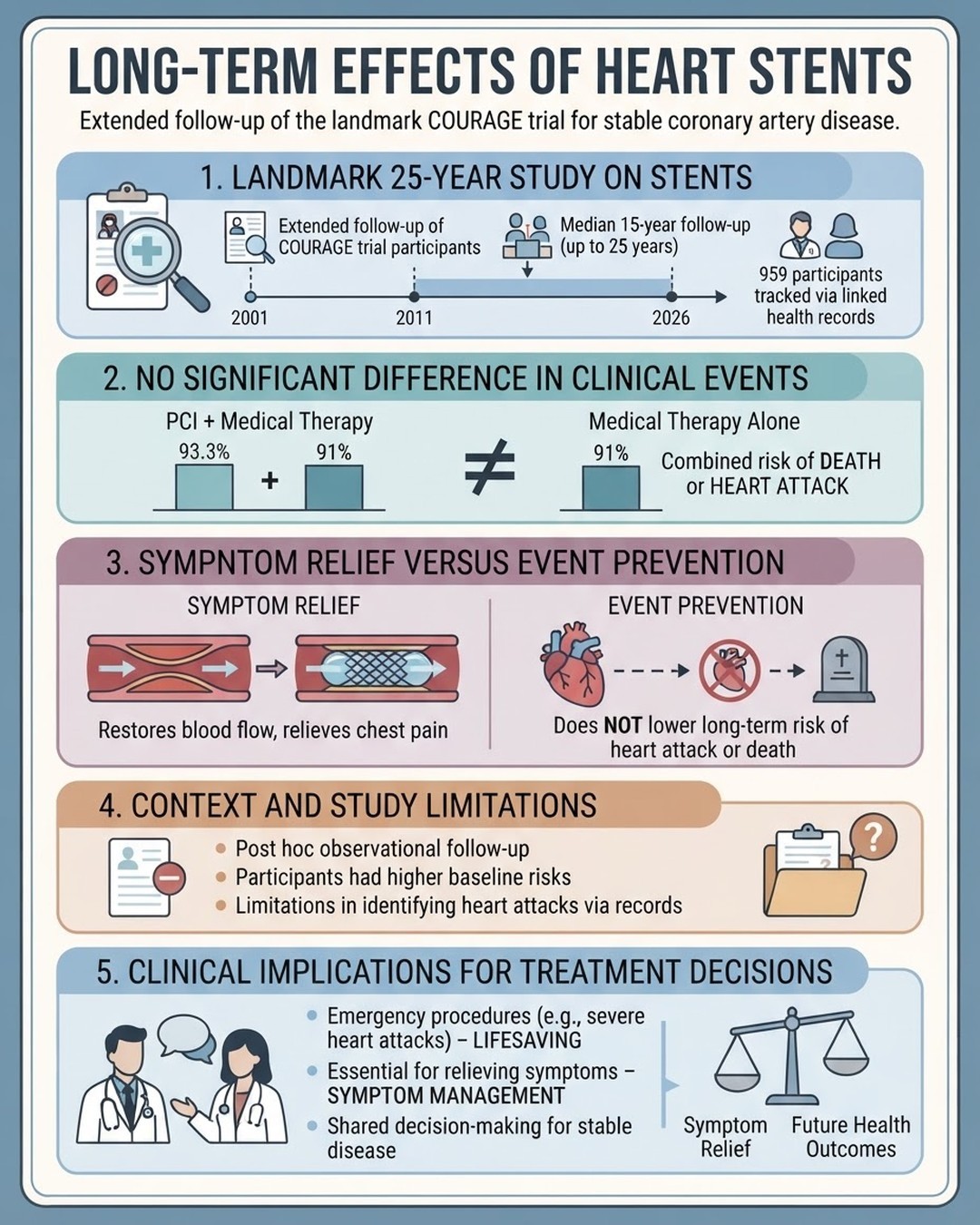
Recent research examining long-term outcomes for patients with stable coronary artery disease reveals that percutaneous coronary intervention (PCI), commonly known as angioplasty with stents, may not reduce the combined risk of death or heart attack compared with medical therapy alone. Researchers analyzed extended data from participants in the landmark COURAGE trial, tracking individuals for up to 25 years through linked health records. The study's authors, led by Neel Butala of the University of Colorado Anschutz Medical Campus, emphasize that while opening a blocked artery successfully restores blood flow and relieves symptoms like chest pain, improving local hemodynamics and preventing future systemic cardiovascular events are distinct physiological goals that do not automatically overlap. Specifically, the extended follow-up of 959 participants demonstrated an estimated 25-year cumulative incidence of death or heart attack of 93.3% in the group assigned to PCI plus medical therapy compared to 91% in the group assigned to medical therapy alone, a difference that was not statistically significant. For patients and clinicians, these findings underscore the importance of distinguishing between immediate symptom management and long-term event prevention when deciding how to treat stable coronary artery disease, clarifying that while stents remain valuable for relief and emergency care, they may not offer added survival protection.

Punti Chiave

01

📊 Landmark 25-Year Study on Stents

Researchers led by Neel Butala at the University of Colorado Anschutz Medical Campus conducted an extended follow-up of participants from the original COURAGE trial to evaluate the long-term effectiveness of percutaneous coronary intervention (PCI). The analysis tracked 959 participants through linked health records with a median follow-up of 15 years and some patients followed for up to 25 years. The findings were published in JAMA and presented at the 2026 American Heart Association Scientific Sessions.

02

⚡ No Significant Difference in Clinical Events

The study found no statistically significant difference in the combined risk of death or heart attack between patients initially assigned to an artery-opening procedure plus medical therapy and those assigned to medical therapy alone. The estimated 25-year cumulative incidence of death or heart attack reached 93.3% in the PCI plus medical therapy group and 91% in the medical therapy alone group.

03

🎯 Symptom Relief Versus Event Prevention

While angioplasty restores blood flow by inflating a small balloon and placing a tiny metal tube called a stent to keep a narrowed artery open, improving blood flow and preventing future health problems are separate goals. Opening a blocked artery effectively relieves symptoms such as chest pain, but the study did not find evidence that an initial PCI strategy lowers the long-term risk of heart attack or death.

04

🏛️ Context and Study Limitations

The analysis was a post hoc observational follow-up of a randomized trial rather than a new randomized trial. It included veterans whose health records could be linked, representing a group with higher baseline health risks than the full original COURAGE trial population. Researchers also noted limitations in identifying heart attacks through routinely collected health records, though findings remained consistent with events independently verified during the trial.

05

📌 Clinical Implications for Treatment Decisions

The results do not render angioplasty and stents unnecessary, as they remain essential tools for relieving symptoms and can be lifesaving during emergency procedures for certain types of heart attacks. The study specifically examined an initial PCI strategy for stable coronary disease, suggesting that considering both immediate symptom relief and future health outcomes will support more informed treatment decisions between doctors and patients.

Vuoi creare la tua mappa mentale?

Accedi a Neumap AI e inizia a creare le tue mappe mentali!

Inizia Ora