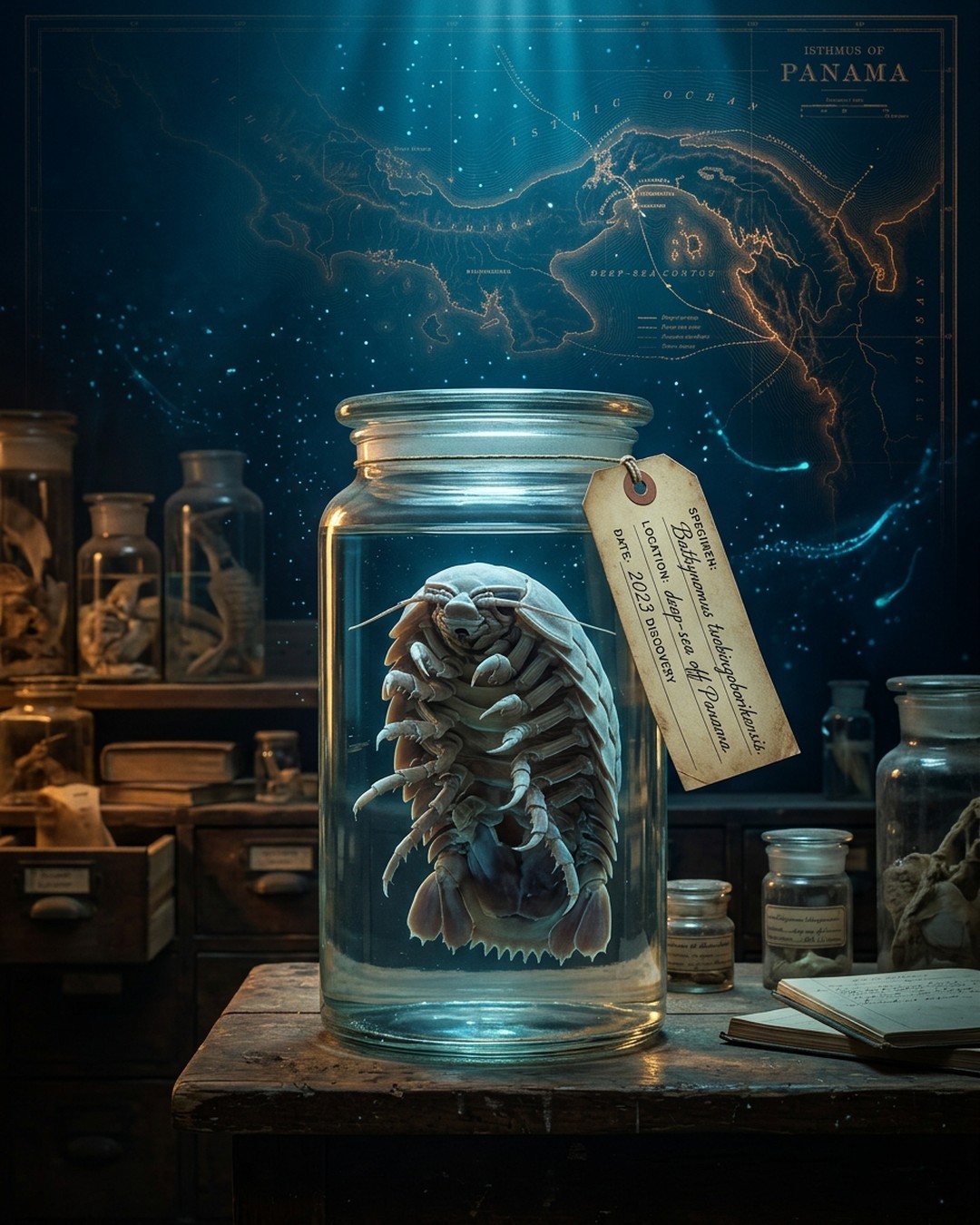
Discovery of Bathynomus tuebingoborikensis

ScitechDaily Biology DeepSea MarineBiology Taxonomy Zoology

Riepilogo

Immagine Copertina Mappa Mentale
Immagine Copertina Generata da AI

Scientists from the University of Tübingen discovered a new species of giant isopod named Bathynomus tuebingoborikensis, measuring 32.2 centimeters in length. The dried specimen was originally acquired in Puerto Rico in the 1980s by paleontologist Dolf Seilacher and rediscovered in storage by researcher Benedikt Kästle and curator Ingmar Werneburg. Phylogenetic analysis reveals that Bathynomus originated in the Gulf of Mexico during the Miocene epoch over 15 million years ago when the Isthmus of Panama was open. The marine creatures spread westward through an open seaway into the Pacific and Indian Oceans, eventually diversifying into giant and supergiant species. As Earth cooled during the Miocene-Pliocene boundary 5.333 million years ago, larger colossogiants exceeding 25.2 centimeters emerged in the Indo-Pacific. These creatures subsequently migrated from Australia via Antarctica to South and Central America, establishing a close evolutionary relationship with species found off the Yucatán Peninsula in Mexico. This discovery highlights the critical importance of natural history collections as global archives for biodiversity research. The findings, published in Scientific Reports on October 8, 2026, provide essential clues into the evolutionary history and global migration patterns of deep-sea crustaceans.

Punti Chiave

01

🔹 Discovery of Bathynomus tuebingoborikensis

【📌 Key Finding】Researchers Benedikt Kästle and Ingmar Werneburg identified a new species of giant isopod from a specimen acquired in Puerto Rico in the 1980s. 【🔸 Specimen Details】The colossogiant measures 32.2 centimeters in length and was rediscovered in storage at the University of Tübingen Paleontological Collection. 【⭐ Publication Date】The species description was published in Scientific Reports on October 8, 2026.

02

🔸 Evolutionary Origins in the Miocene

【📌 Geographic Origin】Phylogenetic analysis indicates that Bathynomus originated in the modern Gulf of Mexico more than 15 million years ago during the Miocene epoch. 【🔸 Migration Route】Animals spread westward into Japan through the open Isthmus of Panama seaway before continental plate shifts closed the passage. 【⭐ Diversification】This early migration led to the development of various giant and supergiant isopod species across the Indian and Pacific Oceans.

03

⭐ Emergence of Colossogiants via Antarctica

【📌 Climate Driver】Veritable colossi exceeding 25.2 centimeters in length emerged in the Indo-Pacific as Earth cooled at the Miocene-Pliocene boundary 5.333 million years ago. 【🔸 Southern Migration】These larger isopods spread from Australia through Antarctica to reach South and Central America. 【⭐ Regional Connection】The new Puerto Rican species shows close phylogenetic relationships with another giant species located off the Yucatán Peninsula in Mexico.

04

📊 Physical Characteristics and Habitat

【📌 Biological Classification】Bathynomus species belong to marine crustaceans possessing an exoskeleton made of calcium-rich, scale-like segments resembling woodlice. 【🔸 Depth and Diet】They act as omnivores inhabiting ocean depths reaching down to 2,500 meters or 8,200 feet. 【⭐ Size Categories】They grow up to 50 centimeters or nearly 20 inches long and weigh several kilograms, making them among the largest invertebrates.

05

💡 Value of Natural History Archives

【📌 Archival Importance】Curator Ingmar Werneburg emphasizes that museum collections serve as crucial global archives for uncovering unknown biodiversity. 【🔸 Historical Context】The specimen sat unexamined for 40 years before modern advanced imaging techniques revealed its true taxonomic identity. 【⭐ Scientific Impact】The study aids researchers in understanding the broader evolutionary adaptations and historical biogeography of deep-sea organisms.

Vuoi creare la tua mappa mentale?

Accedi a Neumap AI e inizia a creare le tue mappe mentali!

Inizia Ora