Aging Changes Memory Study

scitechdaily aging memory neuroscience psychology university-of-east-anglia

Riepilogo

Immagine Copertina Mappa Mentale
Immagine Copertina Generata da AI

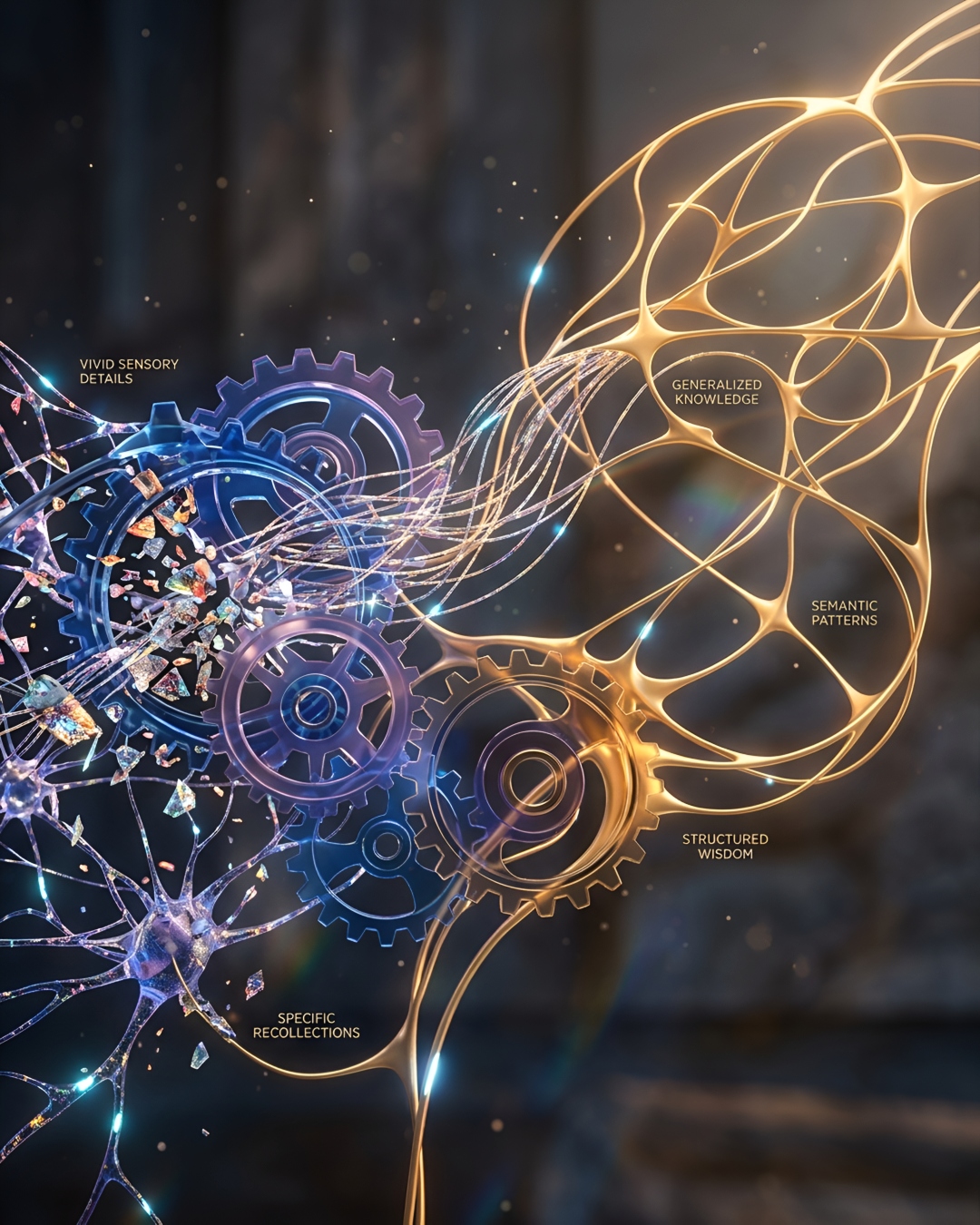
A September 2026 study published in Psychology and Aging by researchers at the University of East Anglia reveals that aging fundamentally alters memory rather than simply causing forgetting. Led by Prof. Louis Renoult and published on September 3, 2026, the study demonstrates that older adults retain the broad story or meaning of past experiences while losing vivid contextual details such as sights, sounds, and emotions. The research involved 37 students and 37 older adults who responded to cue words like market to retrieve specific autobiographical memories, such as a birthday party, and categoric memories, representing repeated experiences like commuting to work. When participants were required to rapidly switch between these memory types, older adults experienced greater difficulty accurately recalling routine repetitive memories, indicating that cognitive control during task-switching is uniquely vulnerable to aging. Analysis of the retrieved content showed that older adults naturally shift toward relying more heavily on semantic details, general knowledge, and interpretations. This shift means that while detailed episodic recall diminishes, the reliance on broader knowledge structures can support wisdom, pattern recognition, and efficient communication in everyday life. Understanding this cognitive transition has practical implications for supporting healthy cognitive aging and addressing challenges in tasks that require rapid thinking adaptation, storytelling, decision-making, or problem-solving. Researchers hope these insights will inform future approaches to cognitive health and help manage age-related changes in memory retrieval systems.

Punti Chiave

01

🔹 Study Overview and Core Finding

Published on September 3, 2026, by researchers at the University of East Anglia including Prof. Louis Renoult, a study in Psychology and Aging involving 37 students and 37 older adults discovered that aging changes the nature of memory rather than simply causing information loss, shifting recollections from vivid moments to general narratives.

02

🔸 Autobiographical Memory Categories

The research examined two distinct forms of personal experiences using cue words like market: specific one-time memories (such as a birthday party) and categoric memories representing general or repeated experiences (such as commuting to work).

03

⭐ Task-Switching Vulnerability in Aging

While memory performance declined across all age groups when switching between memory types, older adults were disproportionately affected in recalling mundane repetitive memories under switching conditions, whereas specific memories remained relatively resilient to multitasking demands.

04

📊 Shift Toward Semantic Knowledge

Content analysis revealed that older adults included fewer contextual details like sights, sounds, and emotions in their recollections, replacing them with greater amounts of semantic details, general knowledge, and personal interpretations of past events.

05

💡 Practical Implications and Wisdom

This cognitive shift explains why tasks requiring rapid adaptation or shifting recall modes become challenging with age, yet the increased reliance on generalized knowledge can actively support wisdom, pattern recognition, and efficient communication.

Vuoi creare la tua mappa mentale?

Accedi a Neumap AI e inizia a creare le tue mappe mentali!

Inizia Ora