Ancient Dog Skulls and Canine Evolution

archaeology canine-evolution genomics domestication neolithic-history

Riepilogo

Immagine Copertina Mappa Mentale
Immagine Copertina Generata da AI

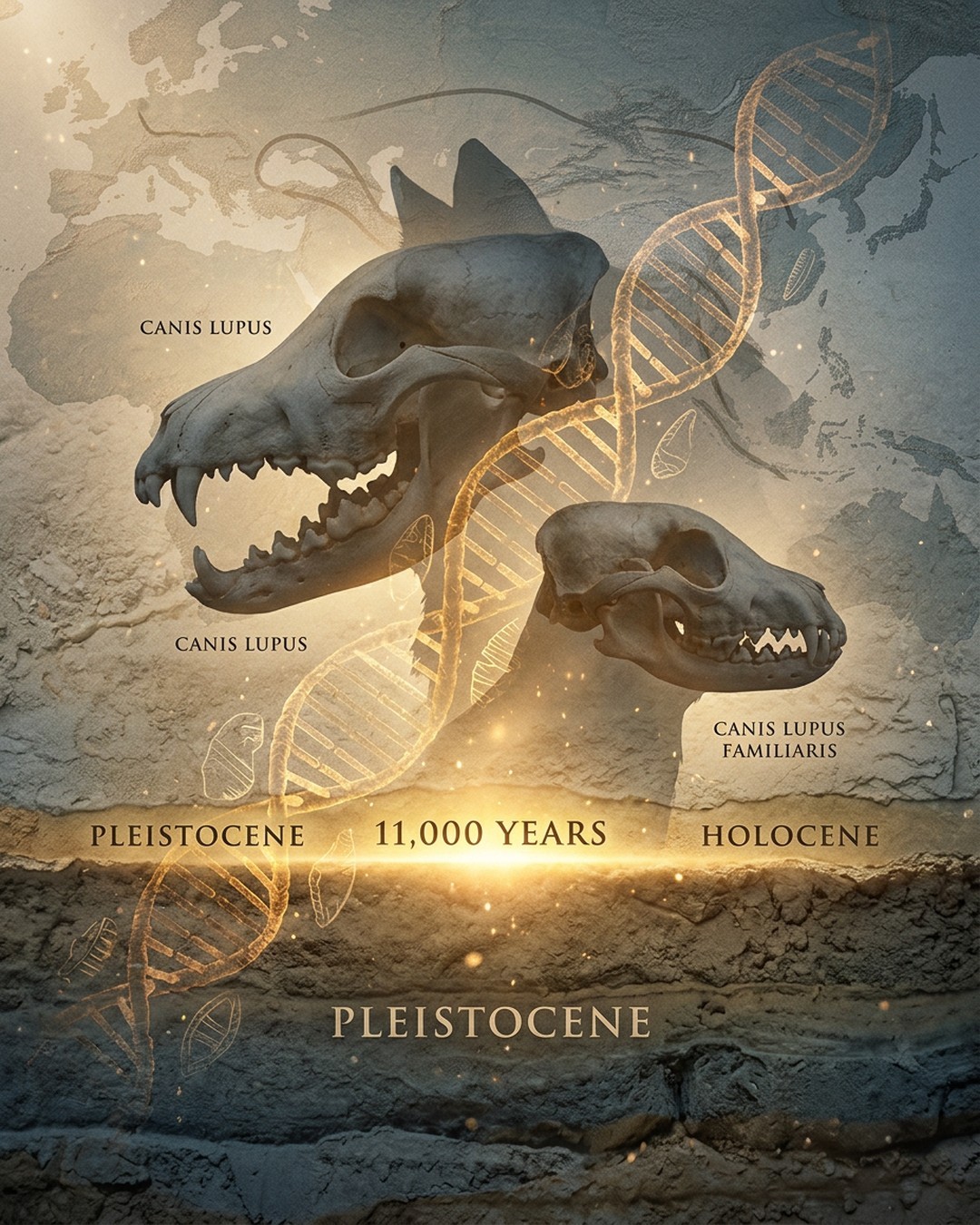
Recent scientific research published in Science on July 20, 2026, reveals that the physical diversity of dogs and their deep-rooted connection with humans originated thousands of years earlier than previously assumed. By analyzing 643 ancient dog and wolf skulls spanning 50,000 years, researchers determined that distinct dog-like skull shapes emerged approximately 11,000 years ago during the Holocene epoch, rather than being solely a result of modern selective breeding. The authors emphasize that while the evolutionary split between wolves and dogs likely occurred during the Late Pleistocene, early dogs retained wolf-like features for millennia. This suggests that the foundation for modern canine morphological variety was established long before the structured breeding programs of the last few centuries, driven by a combination of natural selection, environmental factors, and human influence. Complementary genomic analysis of 73 ancient dog genomes from Eastern Eurasia demonstrates that dogs served as essential biocultural packages that migrated alongside human groups. The genetic signatures of these ancient dogs correlate with the movements of hunter-gatherers, farmers, and pastoralists, indicating that humans actively transported their canine companions during migrations and cultural exchanges. These findings provide a new framework for understanding the co-evolution of humans and dogs. The research highlights that the bond between the two species is a complex, long-term partnership that has acted as a living record of human history, trade, and migration patterns for over 10,000 years.

Punti Chiave

01

🔹 Morphological Evolution (11,000 Years Ago)

【📌 Key Finding】The characteristic dog-like skull shape first appeared approximately 11,000 years ago during the Holocene epoch. 【⭐ Data Support】Researchers analyzed 643 dog and wolf skulls covering a 50,000-year period. 【🔸 Impact Factors】This confirms that the wide range of modern dog sizes and shapes is not exclusively the result of recent selective breeding, but has roots in much older evolutionary processes.

02

🔸 Pleistocene Continuity

【📌 Key Finding】All dog and wolf skulls from the Late Pleistocene (129,000 to 11,700 years ago) were essentially wolf-like in shape. 【🔸 Impact Factors】While the genetic split between wolves and dogs occurred during the Pleistocene, the physical transformation into distinct dog morphologies did not manifest until the transition into the Holocene.

03

⭐ Biocultural Migration Patterns

【📌 Key Finding】Dogs acted as biocultural packages that moved alongside human populations. 【⭐ Data Support】Analysis of 73 ancient dog genomes across Eastern Eurasia shows genetic shifts that correlate with the movements of specific human groups, including hunter-gatherers, farmers, and pastoralists.

04

📊 Genetic Evidence of Human Exchange

【📌 Key Finding】Discrepancies between human and dog ancestry in certain Asian regions suggest that dogs were traded or exchanged between different human cultures. 【🔸 Impact Factors】This indicates that humans did not simply acquire new dogs upon arriving in new territories but instead maintained and transported their existing canine companions.

05

💡 Long-term Co-evolutionary Bond

【📌 Key Finding】The relationship between humans and dogs is a complex, intertwined history spanning over 10,000 years. 【⭐ Data Support】Genetic ancestry in dogs serves as a living record of ancient human migration, trade networks, and cultural exchanges, providing researchers with a tool to map human history through canine evolution.

Vuoi creare la tua mappa mentale?

Accedi a Neumap AI e inizia a creare le tue mappe mentali!

Inizia Ora