3.7-Billion-Year-Old Secret of Early Life

scitechdaily astrobiology biochemistry evolution nasa

Riepilogo

Immagine Copertina Mappa Mentale
Immagine Copertina Generata da AI

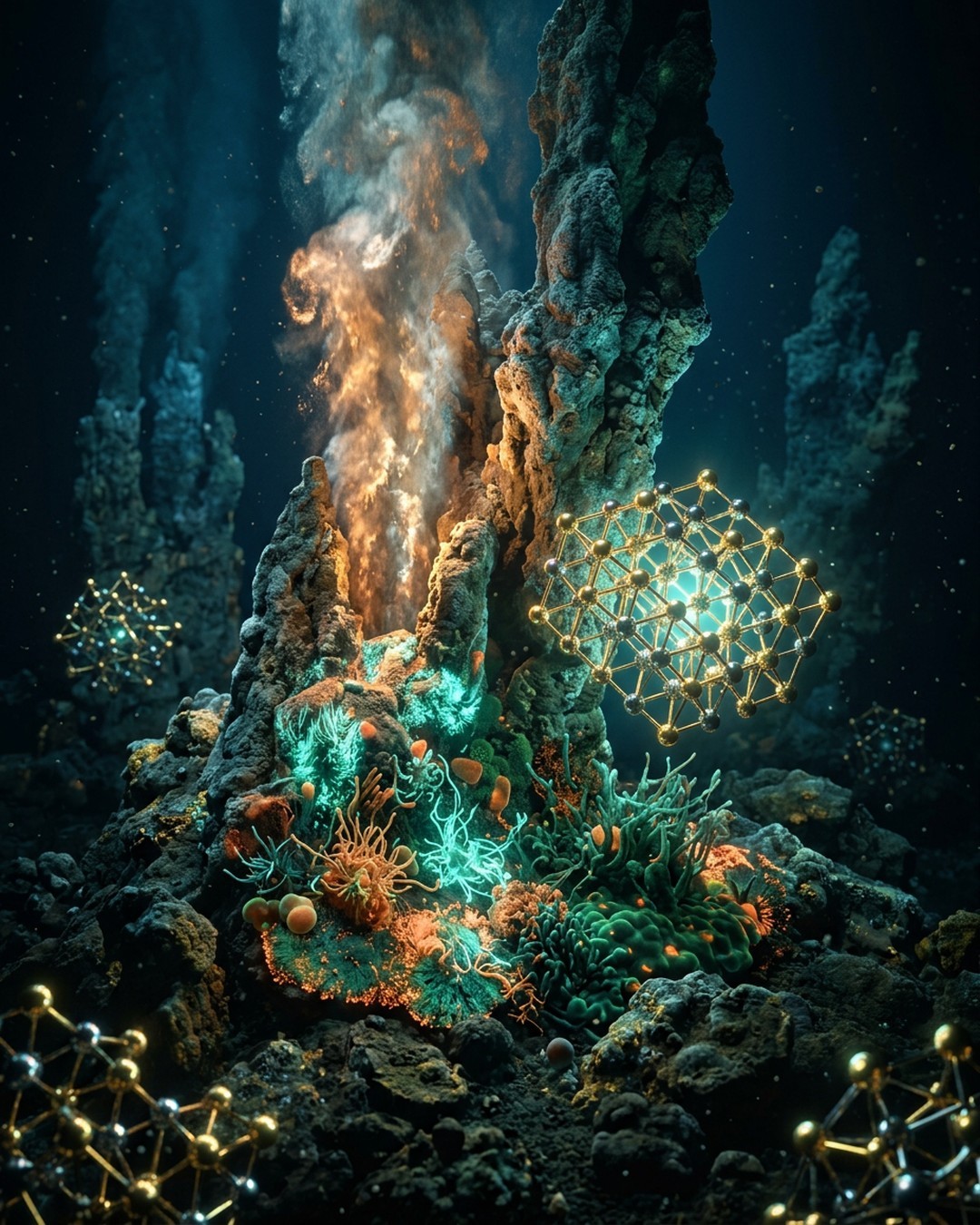
NASA-funded scientists discovered that ancient microbes on Earth were already utilizing molybdenum as far back as 3.7 billion years ago, despite the metal being extremely rare in early global oceans. Published in Nature Communications on August 21, 2026, the research overturns the previous hypothesis that early life depended exclusively on tungsten before transitioning to molybdenum as environmental levels rose after the Great Oxidation Event. The author Betül Kaçar and her research team at the University of Wisconsin Madison emphasize that life successfully evolved mechanisms to exploit scarce elements because of molybdenum's distinct catalytic advantages in driving critical biochemical reactions like carbon, nitrogen, and sulfur cycles. Localized environments such as deep-sea hydrothermal vents likely supplied the necessary trace metals to sustain these primitive biological pathways. This study establishes that molybdenum utilization dates back to the Eoarchean to Mesoarchean eras, specifically 3.7 to 3.1 billion years ago, proving that early organisms worked with both molybdenum and tungsten simultaneously. These findings highlight that early life possessed sophisticated metabolic strategies capable of acquiring scarce bio-essential elements long before atmospheric oxygenation enriched ocean chemistry. The findings expand the methodological framework for astrobiologists searching for extraterrestrial life, indicating that biosignature detection must be metal-aware and redox-aware rather than solely focused on modern Earth-like conditions. By mapping the evolutionary history of essential elements, scientists can better predict alternative biochemical strategies that might emerge on worlds with different geological and atmospheric histories.

Punti Chiave

01

🔹 Discovery of Ancient Molybdenum Use

【📌 Key Finding】NASA-funded research published in Nature Communications on August 21, 2026, reveals that ancient microbes utilized molybdenum between 3.7 and 3.1 billion years ago. 【🔸 Impact Factors】This timeline places molybdenum utilization in the Eoarchean to Mesoarchean periods, long before the Great Oxidation Event occurred around 2.45 billion years ago. 【⭐ Data Support】The study contradicts the traditional model that early life relied exclusively on tungsten before transitioning to molybdenum when oceanic abundance increased.

02

🔸 Simultaneous Co-Use of Metals

【📌 Key Finding】Reconstructed evolutionary history across the tree of life shows that early organisms worked with both molybdenum and tungsten concurrently. 【🔸 Impact Factors】Rather than a simple transition from tungsten to molybdenum, early biological systems integrated both metals into crucial enzyme structures. 【⭐ Data Support】Both molybdenum- and tungsten-using enzyme systems trace their roots back to the Archean eon, demonstrating early life's metabolic adaptability.

03

⭐ Role of Hydrothermal Vents in Metal Supply

【📌 Key Finding】Localized geological systems provided essential trace metals even when global seawater concentrations were extremely low. 【🔸 Impact Factors】Deep-sea hydrothermal vents released necessary elements including iron, zinc, copper, nickel, manganese, vanadium, molybdenum, cobalt, and tungsten. 【⭐ Data Support】These localized environments compensated for overall oceanic scarcity, allowing primitive organisms to access vital catalytic metals.

04

📊 Catalytic Advantages Driving Selection

【📌 Key Finding】Molybdenum was selected by early life due to its exceptional biochemical utility rather than environmental abundance. 【🔸 Impact Factors】The metal sits at the catalytic center of enzymes driving major carbon, nitrogen, and sulfur cycles, including essential processes like the nitrogen cycle. 【⭐ Data Support】Molybdenum enables rapid catalysis across a broad range of substrates and redox conditions, making the evolutionary cost of acquiring the scarce metal worthwhile.

05

💡 Implications for Astrobiology and Life Detection

【📌 Key Finding】The discovery reshapes how astrobiologists search for extraterrestrial life by expanding known biochemical possibilities. 【🔸 Impact Factors】Planetary life detection frameworks must be metal-aware, redox-aware, and evolution-aware to account for differing planetary histories. 【⭐ Data Support】Different abiotic inventories on alien worlds could lead to alternative biological element choices, requiring scientists to look beyond modern Earth-like biological templates.

Vuoi creare la tua mappa mentale?

Accedi a Neumap AI e inizia a creare le tue mappe mentali!

Inizia Ora