JUNO Neutrino Observatory First Results

Physics Neutrinos JUNO ParticlePhysics ScientificResearch ChineseAcademyOfSciences

Riepilogo

Immagine Copertina Mappa Mentale
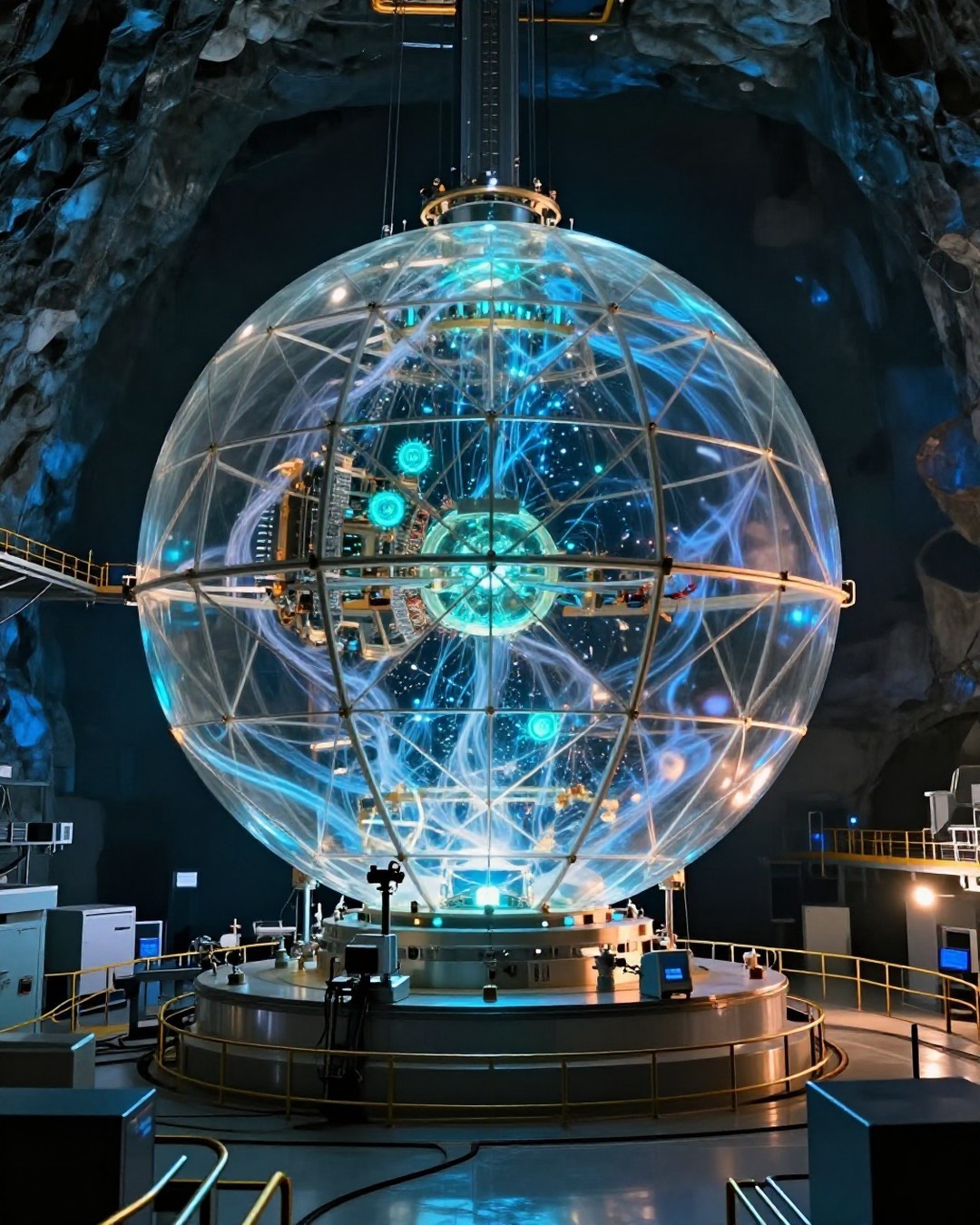
Immagine Copertina Generata da AI

The Jiangmen Underground Neutrino Observatory (JUNO) has achieved a significant milestone in particle physics, publishing its first major scientific results in Nature on June 10, 2026. By analyzing 59 days of high-quality data collected between August 26 and November 2, 2025, the collaboration successfully measured two fundamental neutrino oscillation parameters with unprecedented precision, reducing measurement uncertainties by a factor of 1.6 compared to previous decades of research. The research team, led by the Institute of High Energy Physics of the Chinese Academy of Sciences, aims to resolve the long-standing mystery of neutrino mass ordering. This initial success validates the detector's performance, including its exceptional radiopurity and energy resolution, establishing JUNO as a central facility for future precision neutrino oscillation studies and investigations into physics beyond the Standard Model. Located 700 meters underground, the JUNO detector utilizes a 20,000-ton liquid scintillator sphere monitored by 45,600 photomultiplier tubes (PMTs). These sensors capture light flashes from neutrino interactions, allowing scientists to extract precise oscillation data. The experiment is designed to function as a multipurpose observatory, capable of detecting neutrinos from various sources including the Sun, supernovae, and the Earth's interior. These findings mark the beginning of a new era in neutrino physics, with researchers expecting a continuous stream of data and discoveries in the coming months. The project provides a robust framework for testing the three-flavor neutrino paradigm and offers critical insights into the fundamental properties of matter and forces at the smallest scales.

Punti Chiave

01

🔹 JUNO First Scientific Milestone

On June 10, 2026, the JUNO Collaboration published its debut physics results in Nature. The study utilized 59 days of data (August 26 to November 2, 2025) to measure two fundamental neutrino oscillation parameters, achieving a 1.6-fold reduction in measurement uncertainty compared to historical data.

02

🔸 Detector Specifications and Performance

The JUNO detector is situated 700 meters underground and features a 20,000-ton liquid scintillator sphere. It is equipped with 20,000 20-inch PMTs and 25,600 3-inch PMTs. The system has demonstrated exceptional radiopurity, energy resolution, and stability, meeting all design objectives for precision measurements.

03

⭐ Scientific Objectives

The primary goal is to determine the neutrino mass ordering (NMO). Secondary objectives include measuring three of the six neutrino mixing parameters with better than 1% precision and observing neutrinos from diverse sources such as supernovae, the Sun, the atmosphere, and the Earth's interior.

04

📊 Significance of Neutrino Research

Neutrinos are elusive particles with extremely small masses and no electric charge. Understanding their behavior is essential for completing the description of matter and forces at the smallest scale and testing the Standard Model for Elementary Particles.

05

💡 Future Outlook

Having operated successfully for nine months as of June 2026, JUNO is expected to provide a steady stream of new scientific results. These future measurements will be critical for global oscillation fits and exploring physics beyond the current Standard Model.

Vuoi creare la tua mappa mentale?

Accedi a Neumap AI e inizia a creare le tue mappe mentali!

Inizia Ora