Scientists Discover an Impossible Way Muscle Filaments Can Grow

scitechdaily emory-university cell-biology molecular-biology muscle-research

Riepilogo

Immagine Copertina Mappa Mentale
Immagine Copertina Generata da AI

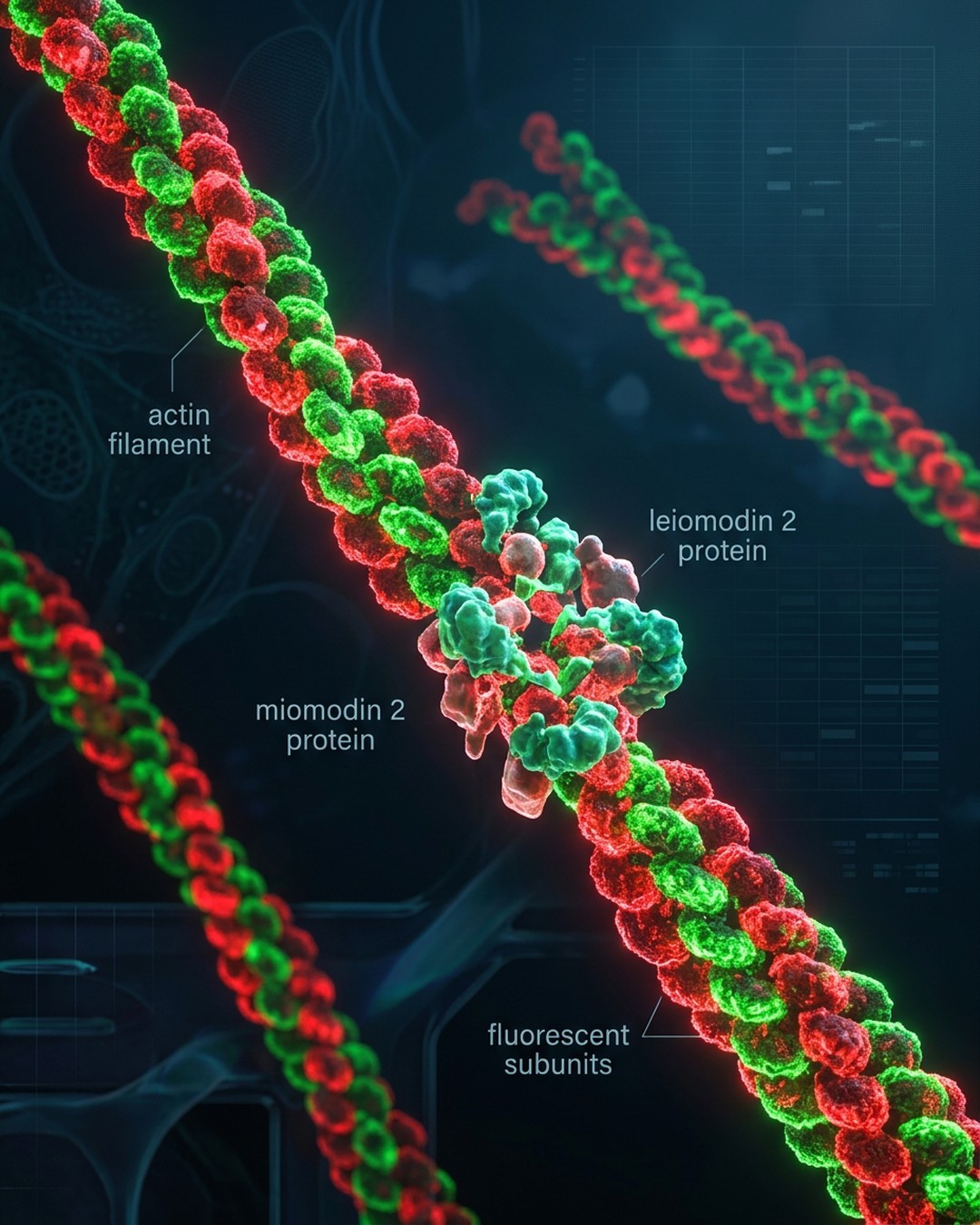
Biophysicists at Emory University published a study in Nature Communications on July 20, 2026, revealing that muscle actin filaments can grow from their pointed minus ends, overturning a 40-year-old scientific dogma. Led by Shashank Shekhar and PhD candidate Sudipta Biswas, the research demonstrated that the protein leiomodin 2 acts as a processive pointed-end elongator, solving the long-standing paradox of how muscle sarcomeres maintain fixed lengths while continuously replacing aging proteins. The authors emphasize that while actin filaments in muscle sarcomeres maintain strict overall length control during constant protein turnover, they defy the traditional treadmilling model where growth happens exclusively at barbed plus ends. By utilizing microfluidic-assisted total internal reflection fluorescence microscopy mf-TIRF, the team visually tracked individual protein assemblies to prove that new actin subunits attach at the pointed ends anchored by leiomodin 2. This fundamental cellular discovery explains the precise structural maintenance of heart and skeletal muscle cytoskeletons. Furthermore, the findings provide a crucial molecular mechanism for understanding how genetic mutations in leiomodin 2 disrupt contractile machinery assembly, directly linking to human pathologies such as dilated cardiomyopathy, a leading cause of heart failure. The research opens new therapeutic pathways for diagnosing and treating genetic muscle disorders by clarifying how protein regulation affects filament length. Researchers can now target these specific elongation mechanisms to explore interventions for heart failure and other debilitating myopathies associated with cytoskeletal defects.

Punti Chiave

01

🔹 Core Discovery of Pointed-End Filament Growth

【📌 Key Finding】Emory University biophysicists discovered that muscle actin filaments can grow from their pointed minus ends, overturning a dogma held for over 40 years. 【🔸 Impact Factors】This challenges the traditional treadmilling model where actin assembly was thought to occur exclusively at the barbed plus ends. 【⭐ Data Support】Published on July 20, 2026, in Nature Communications by lead researchers Shashank Shekhar and Sudipta Biswas.

02

🔸 Role of Leiomodin 2 in Sarcomere Maintenance

【📌 Protein Function】Leiomodin 2 acts as a processive pointed-end elongator of actin filaments located near the pointed ends in cardiac muscle cells. 【🔸 Structural Control】It shares structural domains with a Vibrio cholerae toxin, explaining how it promotes actin assembly from the minus end. 【⭐ Physiological Significance】Deletions or overexpressions of leiomodin 2 directly result in abnormally short or excessively long actin filaments within sarcomeres.

03

⭐ Advanced Microscopy and Experimental Methodology

【📌 Technology Used】Researchers employed microfluidic-assisted total internal reflection fluorescence microscopy mf-TIRF to observe single protein molecules. 【🔸 Visual Tracking】Individual actin molecules were dual-labeled with red and green fluorescence to directly record subunit addition at the pointed ends. 【⭐ Precision Imaging】This specialized technique allows the Shekhar Lab to track real-time spatial dynamics of actin assembly and disassembly under fluid flow.

04

📊 Implications for Heart Disease and Cardiomyopathy

【📌 Disease Link】Genetic mutations affecting leiomodin 2 are directly linked to dilated cardiomyopathy, a progressive disease causing heart failure. 【🔸 Mechanism Explored】The research provides the first molecular explanation for how defects in leiomodin 2 disrupt the contractile machinery of the heart. 【⭐ Therapeutic Potential】Understanding these precise assembly pathways offers foundational knowledge for developing future treatments for severe cardiac muscle disorders.

05

💡 Resolution of the Muscle Turnover Paradox

【📌 The Paradox】Muscle actin filaments maintain precise and constant overall length from birth to death while continually degrading and replacing aging proteins. 【🔸 Resolution】The discovery of pointed-end elongation explains how protein turnover occurs without disrupting the strict structural length required for muscle contraction. 【⭐ Broader Impact】Advances the fundamental understanding of cellular cytoskeleton assembly across both cardiac and skeletal muscle tissues.

Vuoi creare la tua mappa mentale?

Accedi a Neumap AI e inizia a creare le tue mappe mentali!

Inizia Ora