CAR T-Cell Therapy for Rheumatoid Arthritis

ScitechDaily RheumatoidArthritis CARTCellTherapy MedicalResearch AutoimmuneDisorders

Riepilogo

Immagine Copertina Mappa Mentale
Immagine Copertina Generata da AI

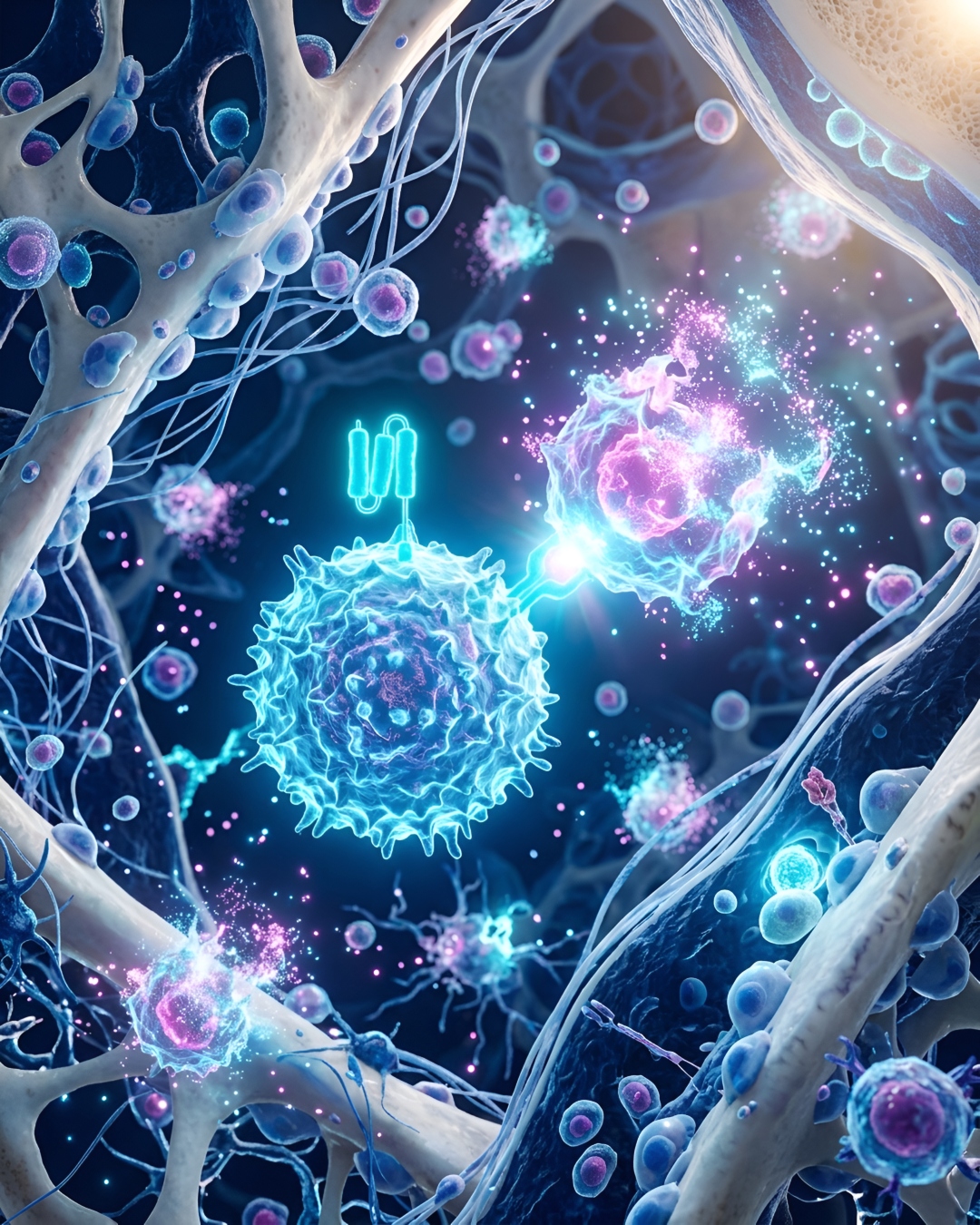
Researchers at Charité - Universitätsmedizin Berlin have successfully utilized CD19 CAR T-cell therapy, originally developed for cancer treatment, to reset the immune system in patients with severe, treatment-refractory rheumatoid arthritis. Published on September 13, 2026, a phase 1 clinical trial named COMPARE evaluated six adults aged 31 to 69 who had exhausted up to eight prior targeted or biologic therapies over a decade without relief. The investigators sought to determine whether genetically reprogramming a patient's own T cells to target CD19-positive B cells could eliminate disease-driving memory cells hidden deep within tissues like bone marrow, lymph nodes, and joint linings. A single infusion preceded by a brief course of preparatory chemotherapy led to marked clinical improvements and sustained medication-free remission in three of the six participants during a one-year follow-up period. The mechanism centers on erasing pathological immune memory by depleting harmful B cells and allowing the immune system to rebuild predominantly from naive B cells that lack disease-shaping experiences. While adverse events were limited to a temporary, mild-to-moderate cytokine release syndrome with no severe neurological complications or infections, the small sample size necessitates broader validation. Phase 2 of the trial will expand to ten additional patients and compare the engineered cell therapy directly against approved B-cell-targeting rheumatoid arthritis medications to confirm whether deep, durable disease modification can safely replace lifelong conventional immune suppression.

Punti Chiave

01

🔹 Clinical Trial Overview and Patient Demographics

【📌 Key Finding】A phase 1 clinical trial named COMPARE evaluated the safety and efficacy of CD19 CAR T-cell therapy in severe rheumatoid arthritis patients. 【🔸 Impact Factors】Six adult participants consisting of three women and three men aged 31 to 69 were enrolled after failing up to eight targeted or biologic therapies over a ten-year period. 【⭐ Data Support】Published on September 13, 2026, by researchers at Charité - Universitätsmedizin Berlin, marking the world's first clinical evaluation of this cancer treatment strategy for rheumatoid arthritis.

02

🔸 Mechanism of Action and Immune Reset

【📌 Key Finding】The therapy uses a patient's own T cells genetically modified with a chimeric antigen receptor to target CD19, a surface marker on disease-driving B cells. 【🔸 Impact Factors】Preparatory chemotherapy creates space for engineered T cells to multiply and reach deep immune reservoirs including bone marrow, lymph nodes, and joint tissues. 【⭐ Data Support】Following B-cell depletion, the recovering immune system predominantly produces naive B cells while eliminating autoantibodies and resetting pathological immune memory.

03

⭐ Treatment Efficacy and Remission Outcomes

【📌 Key Finding】All six participants experienced a marked decrease in disease activity following a single infusion of CAR T cells. 【🔸 Impact Factors】Three out of the six patients achieved sustained, medication-free remission during a follow-up period of up to one year. 【⭐ Data Support】Protective antibodies against previous vaccinations such as chickenpox and tetanus remained detectable, indicating that specific historical immunity can persist.

04

📊 Safety Profile and Side Effects

【📌 Key Finding】The most consistent adverse event observed was cytokine release syndrome, an inflammatory reaction triggered by rapid immune activation. 【🔸 Impact Factors】All participants experienced only temporary, mild-to-moderate cytokine release syndrome that was readily manageable by clinical staff. 【⭐ Data Support】The trial reported no severe neurological complications, rare infections, or other serious adverse events during the observation period.

05

💡 Future Research and Phase 2 Plans

【📌 Key Finding】The initial trial size was too small to establish long-term efficacy rates, duration of benefits, or patient response predictors. 【🔸 Impact Factors】A planned phase 2 trial will enroll ten additional patients to compare CAR T-cell therapy directly against an approved B-cell-targeting rheumatoid arthritis drug. 【⭐ Data Support】The upcoming comparison aims to definitively prove whether engineered cell therapy provides superior, durable disease control over standard biological medications.

Vuoi creare la tua mappa mentale?

Accedi a Neumap AI e inizia a creare le tue mappe mentali!

Inizia Ora