Natural Compounds Against Sarcoma Study

scitechdaily cancer-research pharmacology cell-biology oncology

Riepilogo

Immagine Copertina Mappa Mentale
Immagine Copertina Generata da AI

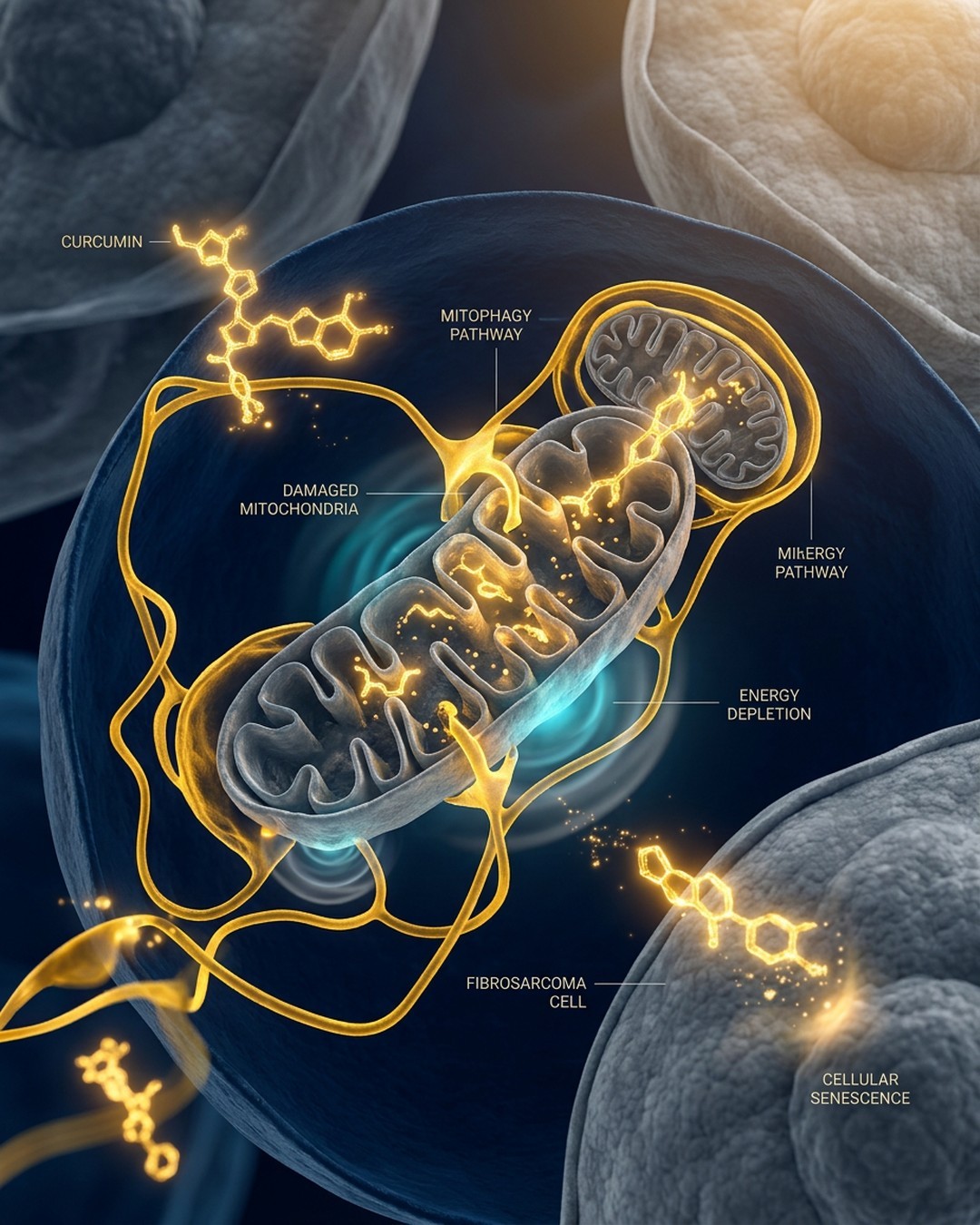
A recent laboratory study conducted by researchers at Wroclaw Medical University and published on July 27, 2026, investigated five natural plant compounds—curcumin, berberine, biochanin A, cucurbitacin E, and caffeic acid phenethyl ester (CAPE)—to evaluate their anticancer activity and selectivity against fibrosarcoma cells compared to healthy muscle cells. The investigation focused on the NF-κB signaling pathway, which controls inflammation, cell survival, and cellular metabolism, revealing that all tested substances interfered with mitochondrial function and significantly reduced cellular energy production. The researchers discovered that fibrosarcoma cells experienced an 83 to 92 percent drop in adenosine triphosphate (ATP) levels, whereas healthy muscle cells saw a smaller decline of 23 to 73 percent, demonstrating that cancer cells are considerably more sensitive to metabolic disruptions. Furthermore, compounds such as berberine, cucurbitacin E, and CAPE triggered PINK1/PARKIN-dependent mitophagy, an overwhelmed adaptive cellular response that ultimately drives cellular senescence and cell death in the malignant tissue. Among all tested natural substances, curcumin emerged as the most promising candidate, successfully driving the proportion of senescent cancer cells from approximately 16.5 percent to over 75 percent while maintaining a relatively favorable safety profile. Initial toxicity assessments using greater wax moth (Galleria mellonella) larvae further confirmed that curcumin and berberine were the best tolerated, whereas CAPE and cucurbitacin E caused higher mortality and biochanin A proved to be the most toxic. While these laboratory findings offer valuable direction for future oncological research, the study authors emphasize that these results remain unproven for human treatment and require advanced in vivo models, optimal dosing strategies, and precise delivery methods. The research underscores the critical necessity of evaluating natural anticancer agents based on both their potency against tumor cells and their safety for surrounding healthy tissues.

Punti Chiave

01

🔹 Natural Compound Screening Against Fibrosarcoma

Researchers at Wroclaw Medical University evaluated five natural plant compounds—curcumin, berberine, biochanin A, cucurbitacin E, and caffeic acid phenethyl ester (CAPE) derived from propolis—to assess their effectiveness against fibrosarcoma cells versus healthy muscle cells. The study specifically investigated the NF-κB signaling pathway, a central control switch regulating cellular stress, metabolism, and inflammation, which cancer cells often exploit to survive under harsh conditions.

02

🔸 Severe Energy Deprivation in Cancer Cells

All five natural compounds disrupted mitochondrial function, leading to a massive decline in adenosine triphosphate (ATP) levels ranging from 83 to 92 percent in fibrosarcoma cells. In contrast, healthy muscle cells experienced a much lower ATP reduction of 23 to 73 percent, demonstrating that malignant cells possess a heightened vulnerability to targeted metabolic disruptions.

03

⭐ Induction of Mitophagy and Cellular Senescence

Treatment with berberine, cucurbitacin E, and CAPE stimulated PINK1/PARKIN-dependent mitophagy in fibrosarcoma cells, pushing them past an adaptive threshold into cellular senescence where cells permanently stop dividing. Curcumin produced the most potent response, increasing the proportion of senescent cancer cells from 16.5 percent to more than 75 percent.

04

📊 In Vivo Toxicity and Safety Evaluation

An initial toxicity screening utilizing greater wax moth (Galleria mellonella) larvae revealed clear variations in safety profiles among the tested substances. Curcumin and berberine demonstrated the highest tolerance levels in the organism model, whereas CAPE and cucurbitacin E caused increased mortality rates, and biochanin A exhibited the highest overall toxicity.

05

💡 Clinical Implications and Future Research Directions

Led by corresponding author Prof. Julita Kulbacka, the study highlights that anticancer potency must be balanced against systemic toxicity on healthy tissue. Because current findings are strictly limited to laboratory cell lines and invertebrate models, future investigations require advanced in vivo testing, precise mechanism analysis, and standardized dosing protocols before human treatments can be considered.

Vuoi creare la tua mappa mentale?

Accedi a Neumap AI e inizia a creare le tue mappe mentali!

Inizia Ora