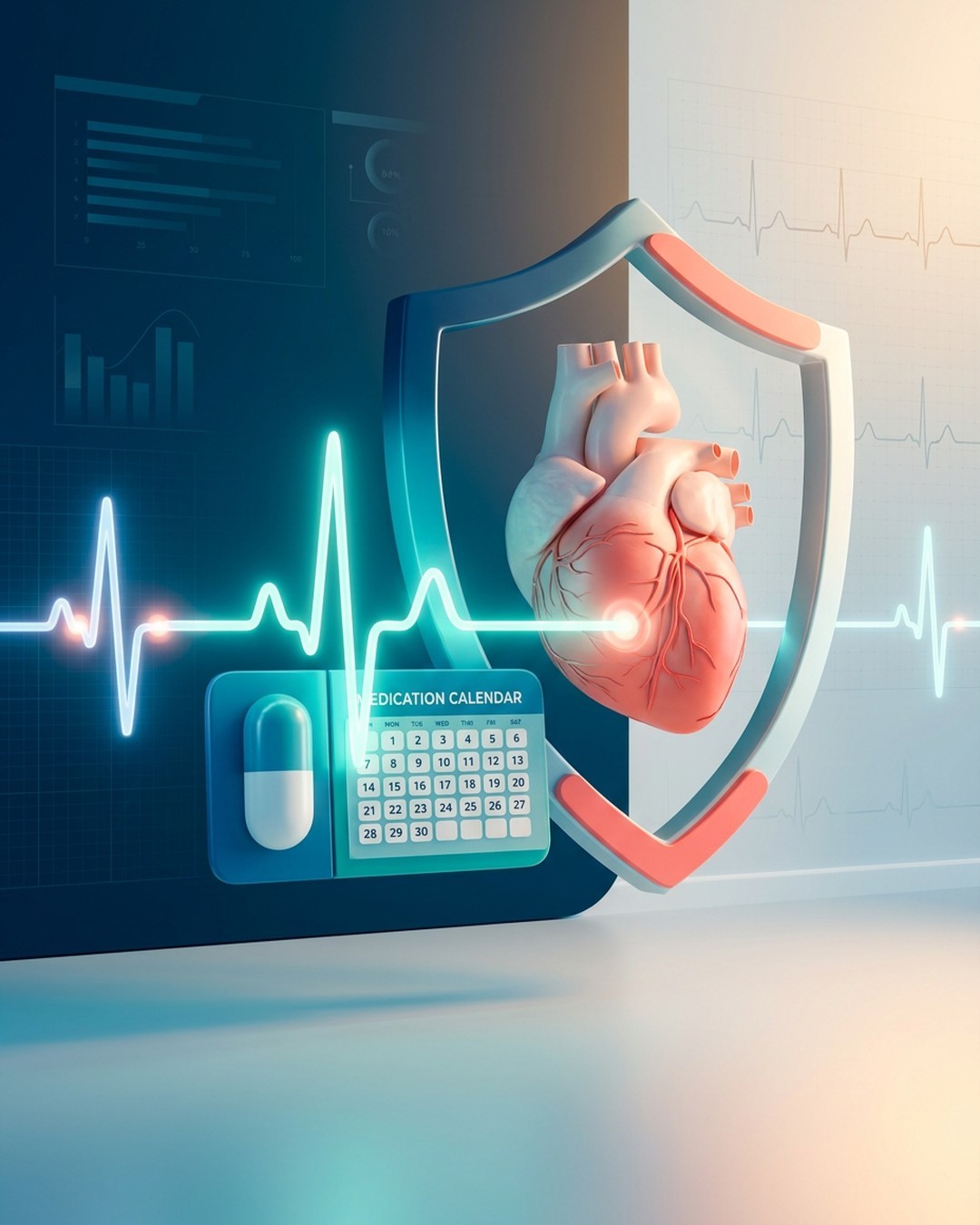
Blood Pressure Medication Adherence and Heart Protection Benefits

ScitechDaily Cardiology BloodPressure Hypertension MedicalResearch

要約

マインドマップカバー画像
AI生成カバー画像

A large analysis of randomized trials presented at ESC Congress 2026 reveals that cardiovascular protection from blood pressure medication heavily depends on consistent usage. Researchers evaluated data from 91,339 participants across nine clinical trials, defining higher adherence as taking at least 80 percent of assigned treatment. The study demonstrated that consistent adherence significantly declined over time, dropping from 88 percent in the first year to 79 percent by the fifth year. Participants with higher adherence experienced a greater reduction in systolic blood pressure of 5.2 mmHg and an 11 percent reduction in major cardiovascular events compared to alternative treatments. Conversely, patients with lower adherence showed negligible blood pressure improvements and no significant reduction in cardiovascular events, reinforcing the medical principle that drugs do not work if patients fail to take them regularly. Experts recommend incorporating routine adherence assessments into hypertension care, alongside simplifying dosing schedules, combining multiple medications into single pills, and utilizing longer-acting drugs to improve long-term patient outcomes.

キーポイント

01

🔹 Research Overview and Scale

Presented at ESC Congress 2026, a comprehensive analysis combined individual data from 91,339 participants across nine clinical trials to evaluate the real impact of medication adherence on hypertension treatment benefits.

02

🔸 Adherence Decline Over Time

Even within structured clinical trials, patient consistency dropped notably as time progressed, with the proportion of participants maintaining higher adherence falling from 88 percent in the first year down to 79 percent by year five.

03

⭐ Blood Pressure Reduction Impact

Participants with higher adherence achieved a 5.2 mmHg reduction in systolic blood pressure, whereas those with lower adherence saw a much smaller reduction of only 3.0 mmHg compared to alternative comparator treatments.

04

📊 Cardiovascular Event Prevention

Higher adherence led to an 11 percent significant reduction in major cardiovascular events, including stroke, myocardial infarction, ischemic heart disease, and heart failure resulting in hospitalization or death, while lower adherence showed no significant reduction.

05

💡 Clinical Recommendations and Solutions

To combat non-adherence driven by side effects, costs, and complex schedules, researchers recommend routine adherence assessments, open patient-provider dialogues, simplifying regimens, and prescribing single-pill combinations or longer-acting medications.

自分のマインドマップを作成したいですか?

Neumap AIにログインして、あなた専用のマインドマップの作成を始めましょう!

今すぐ始める