Chromosome Chaos Reveals 81 New Cancer-Causing Genes

scitechdaily breast-cancer crispr genetics genomics research

要約

マインドマップカバー画像
AI生成カバー画像

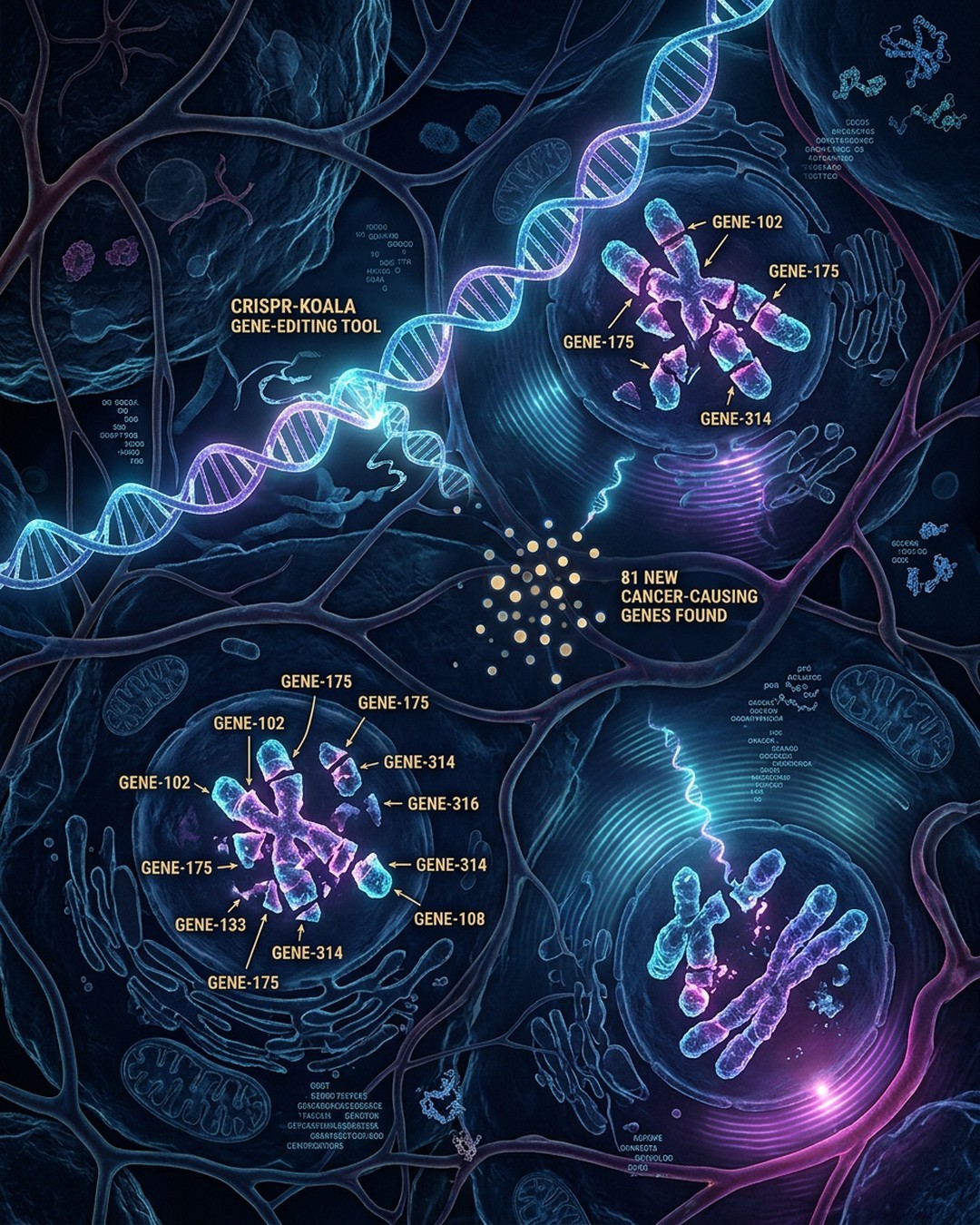
On July 22, 2026, researchers at the Lunenfeld-Tanenbaum Research Institute (LTRI) published a landmark study in Nature revealing 81 previously unknown cancer-causing genes linked to basal-like breast cancer (BLBC). Led by Dr. Daniel Schramek and Dr. Khalid Al-Zahrani, the team developed a novel dual-function gene-editing platform called CRISPR-KOALA (Knockout and Activation Linked Assay) to screen over 3,700 genes in living mouse mammary glands, successfully simulating both gene deletions and duplications caused by chromosomal instability known as aneuploidy. The author's primary viewpoint emphasizes that traditional cell culture models fail to replicate the complex biological microenvironment of living organisms, masking critical cancer drivers. By shifting research into living tumor systems, scientists can uncover hidden vulnerabilities that standard laboratory dishes overlook, paving the way for targeted precision therapies against aggressive, triple-negative breast cancers that currently have some of the worst patient outcomes. The core methodological innovation centers on CRISPR-KOALA, which simultaneously turns genes off to simulate losses and activates them to mimic duplications across 3,700 candidate regions. This breakthrough screening identified 81 new driver genes, 90 percent of which were completely undetectable in conventional cell culture experiments, highlighting the indispensable role of the real tumor microenvironment in cancer gene discovery. Practical applications of these findings include the identification of specific therapeutic targets such as the PLGRKT gene, which helps cancer cells survive under low-oxygen conditions deep within tumors. Researchers suggest that targeting these newly discovered metabolic and survival pathways can lead to novel precision treatments for basal-like breast cancer, ultimately improving survival rates and clinical management for high-risk patients.

キーポイント

01

🔹 Discovery of 81 New Cancer Drivers

Published on July 22, 2026, in Nature, researchers at the Lunenfeld-Tanenbaum Research Institute identified 81 previously unrecognized genes driving basal-like breast cancer (BLBC) by screening over 3,700 genes impacted by chromosomal rearrangements and aneuploidy.

02

🔸 Innovation of CRISPR-KOALA Tool

Dr. Khalid Al-Zahrani and Dr. Daniel Schramek developed CRISPR-KOALA (Knockout and Activation Linked Assay), a revolutionary gene-editing system that simultaneously silences genes and increases their activity in living mouse mammary glands to simulate both chromosomal deletions and duplications.

03

⭐ Failure of Traditional Cell Culture

Ninety percent of the newly identified cancer-driving genes were undetectable in standard cell culture experiments, proving that the complex living tumor environment—including immune cells, blood vessels, and oxygen gradients—is essential for uncovering true cancer drivers.

04

📊 PLGRKT Gene and Hypoxic Survival

The screening revealed that the PLGRKT gene acts as a powerful driver of BLBC by enabling cancer cells to metabolize and survive in oxygen-depleted hypoxic regions deep inside tumors, making it a prime candidate for future targeted therapy development.

05

💡 Clinical Implications for Triple-Negative Breast Cancer

Basal-like breast cancer, often classified as triple-negative breast cancer, lacks standard hormone receptors and has a low five-year survival rate compared to other types; discovering these new genetic drivers offers vital molecular targets for precision medicine.

自分のマインドマップを作成したいですか?

Neumap AIにログインして、あなた専用のマインドマップの作成を始めましょう!

今すぐ始める