Physics-Informed AI for Optical Material Design

ArtificialIntelligence Physics QuantumComputing Nanophotonics MachineLearning ChalmersUniversity

要約

マインドマップカバー画像
AI生成カバー画像

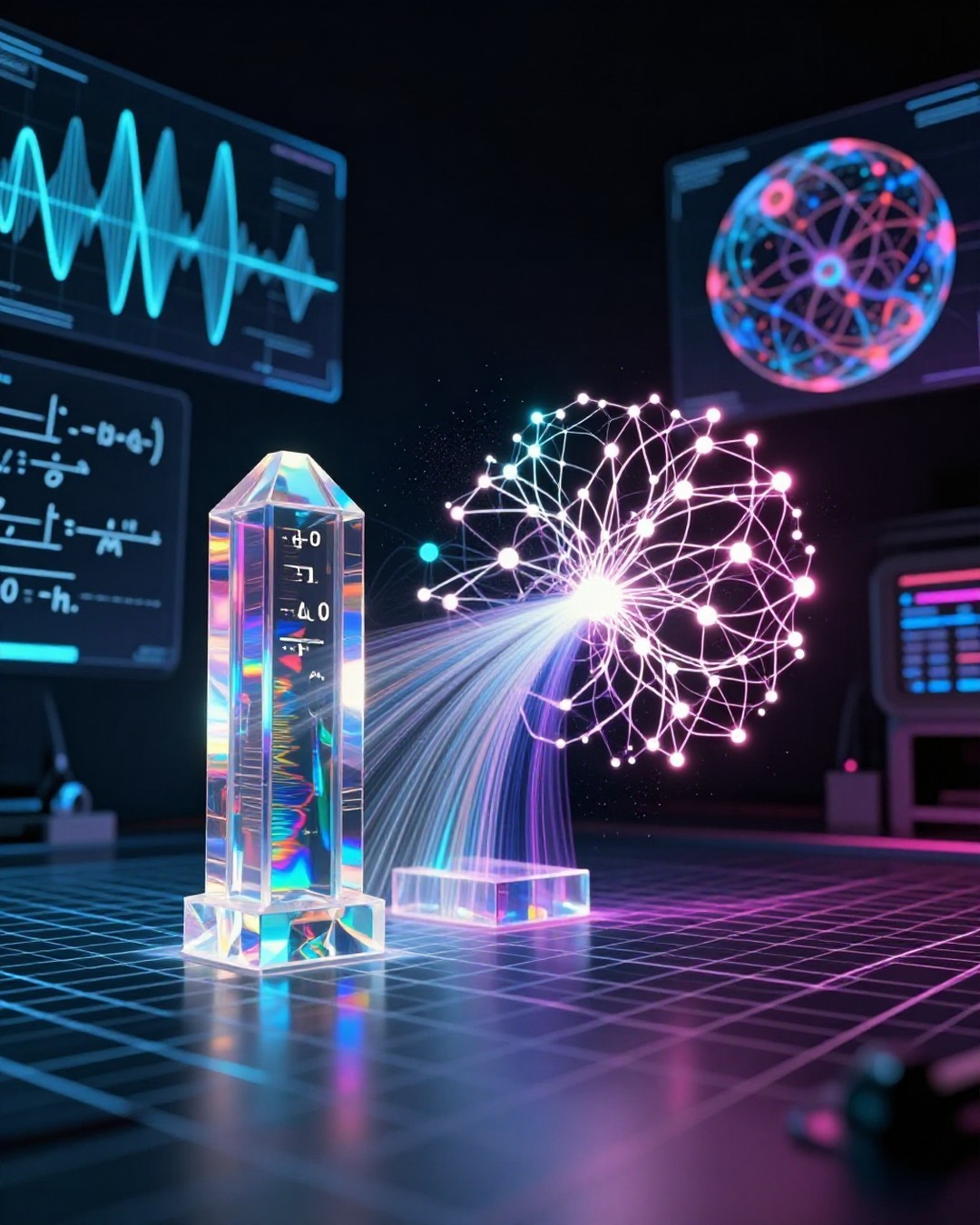
Researchers at Chalmers University of Technology have developed a groundbreaking machine-learning approach that integrates fundamental laws of physics directly into neural networks. By embedding electromagnetism equations into the AI architecture, the team has significantly enhanced the efficiency of designing advanced optical components, reducing computational time by 90 percent compared to traditional methods. The primary objective of this innovation is to overcome the limitations of natural optical materials, which often restrict the manipulation of light. By leveraging this physics-informed AI, scientists can now simulate and design nanostructured materials with unprecedented speed and accuracy, paving the way for breakthroughs in quantum computing, high-efficiency lenses, and advanced photonic technologies. This methodology shifts the paradigm from data-heavy training to knowledge-integrated learning. Instead of requiring the AI to discover physical relationships from scratch through thousands of simulations, the system utilizes pre-existing physical principles to guide its predictions. This results in more reliable estimates, fewer errors, and a drastic reduction in the time required for complex material design cycles. For researchers and engineers, this advancement offers a powerful tool to accelerate the development of next-generation optical hardware. The ability to analyze material properties in milliseconds allows for rapid prototyping and optimization, which is critical for the future of quantum information transmission and high-precision optical engineering.

キーポイント

01

🔹 Physics-Informed Neural Networks

Researchers at Chalmers University of Technology have successfully embedded the laws of physics and electromagnetism directly into neural networks. This approach ensures that the AI system adheres to fundamental natural laws, preventing it from needing to relearn basic physical relationships from scratch during the training process.

02

🔸 90% Reduction in Computational Time

The integration of physical laws has dramatically improved efficiency. Tasks that previously required 30 days of simulation time can now be completed in approximately three days. This represents a tenfold increase in speed, allowing for much faster development cycles for optical components.

03

⭐ Applications in Quantum Computing

The technology is specifically designed to support the development of nanostructured materials. These materials are essential for controlling light at extremely small scales, which is a prerequisite for transmitting information between quantum computers and across long distances using photonic crystals.

04

📊 Data Efficiency and Accuracy

Traditional machine learning models required up to 40,000 simulations to train effectively. By incorporating physical equations, the new model requires significantly less training data while simultaneously providing better estimates and avoiding the obvious errors often found in purely data-driven models.

05

💡 Research Publication and Funding

The study, titled A General Framework for Knowledge Integration in Machine Learning for Electromagnetic Scattering Using Quasinormal Modes, was published in Laser & Photonics Reviews on March 17, 2026. The project received support from the Swedish Research Council, the Knut and Alice Wallenberg Foundation, and the Chalmers Nano Area of Advance.

自分のマインドマップを作成したいですか?

Neumap AIにログインして、あなた専用のマインドマップの作成を始めましょう!

今すぐ始める