Evolution of Amphibious Hearing in Pinnipeds

ScienceNews MarineBiology Evolution Pinnipeds Paleontology

要約

マインドマップカバー画像
AI生成カバー画像

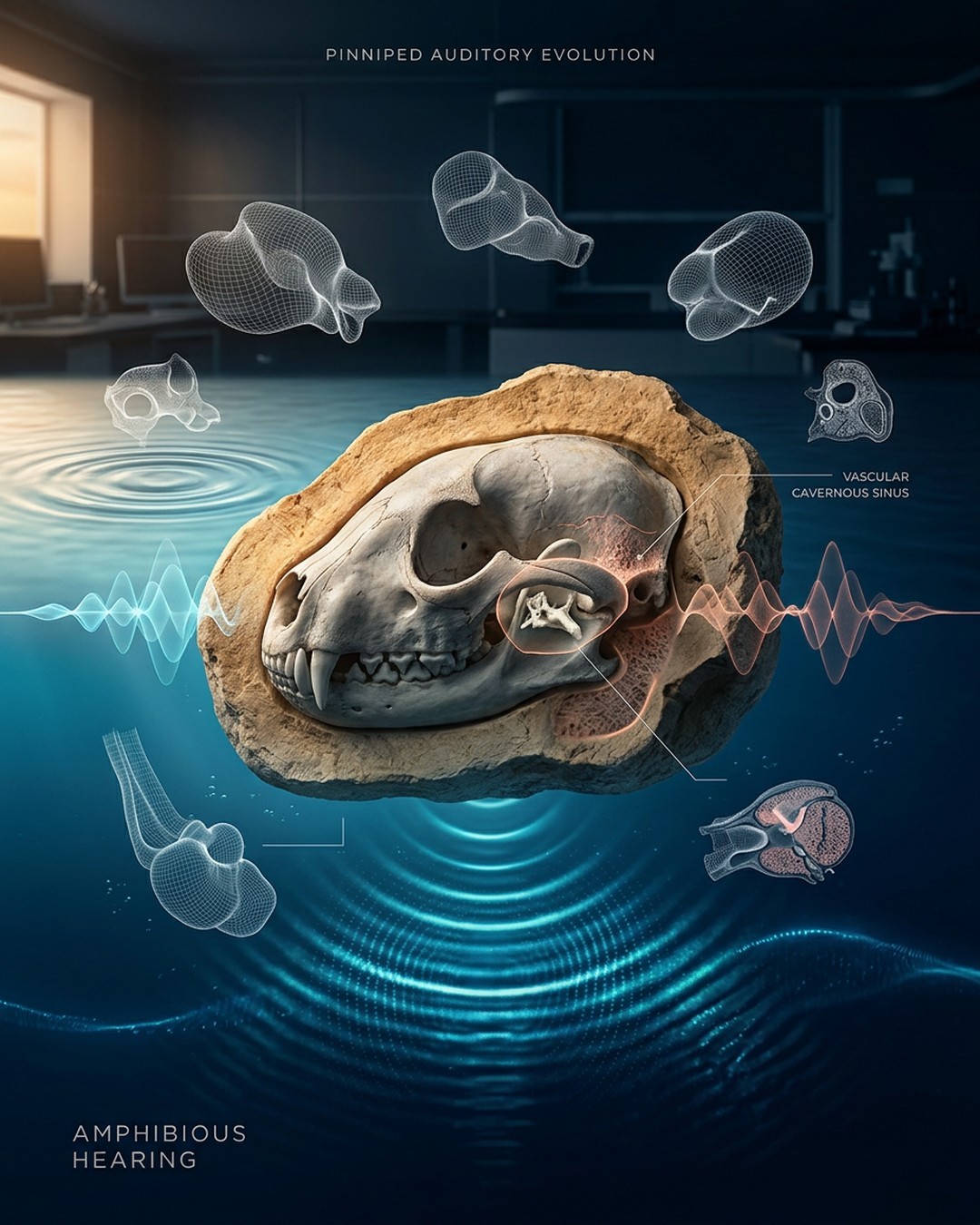
Recent scientific research reveals that pinnipeds, including seals, sea lions, and walruses, developed their unique amphibious hearing capabilities nearly 26.7 million years ago. This evolutionary milestone occurred about 100 million years after mammals first heard sounds in the air, making pinnipeds the only mammals capable of exceptional hearing both above and below water. Researchers led by vertebrate paleontologist James Rule at Monash University utilized advanced micro-CT scans on 217 ear specimens from 119 mammal species, including all 34 modern pinniped species, their close relatives, and fossil lineages. The analysis uncovered how spongy cavernous tissue in pinniped ears fills with blood during deep dives to equalize pressure, match water density, and process directional underwater sounds. The study highlights that underwater hearing adaptations emerged very early in the pinniped lineage, suggesting that acoustic perception was crucial for survival as these marine mammals expanded into deeper ocean environments. This physiological feature, initially an evolutionary accident involving blood-filled cavernous sinuses, subsequently underwent fine-tuning to regulate sound amplification effectively. These findings demonstrate how specialized anatomical structures allow pinnipeds to navigate and hunt efficiently in aquatic ecosystems while remaining sensitive to contemporary ocean noise pollution. Understanding this ancient evolutionary trajectory provides critical insights into mammalian adaptation and marine ecosystem dynamics over millions of years.

キーポイント

01

🔹 Evolutionary Timeline of Pinniped Amphibious Hearing

Pinnipeds, which comprise seals, sea lions, and walruses, developed amphibious hearing approximately 26.7 million years ago, as reported on July 15 in Proceedings of the Royal Society B: Biological Sciences. This adaptation occurred roughly 100 million years after ancestral mammals first acquired hearing capabilities in the air, establishing pinnipeds as the sole mammalian group with advanced hearing in both terrestrial and aquatic environments.

02

🔸 Micro-CT Scanning Methodology by Researchers

Led by vertebrate paleontologist James Rule at Monash University, a research team micro-CT scanned 217 ear specimens from 119 mammal species sourced from global museums. The dataset encompassed all 34 existing pinniped species, extinct fossil lineages such as the semi-aquatic freshwater carnivore Puijila and the fully marine Enaliarctos, alongside modern relatives like dogs, weasels, otters, and raccoons.

03

⭐ Anatomical Mechanics of Underwater Hearing

Pinniped middle ears contain spongy cavernous tissue that fills with blood during diving to equalize pressure and match the density of water, which is over 800 times denser than air. This specialized vascular tissue enables animals to hear clearly underwater, filter out useful sound signals, and determine sound source direction despite water dampening sound transmission.

04

📊 Evolutionary Significance and Survival Implications

The early development of underwater hearing in pinniped ancestors indicates that acoustic perception was vital for survival as lineages ventured into deeper ocean waters. While the oldest species resembled otters in shallow freshwater habitats where underwater hearing played a minor role, subsequent anatomical refinements transformed them into acoustic experts.

05

💡 Evolutionary Accident and Modern Ecological Sensitivity

The blood-filled cavernous sinus originally functioned as an evolutionary accident that initially amplified underwater sounds excessively, prompting subsequent middle-ear adjustments. This unique evolutionary pathway grants pinnipeds exceptional vocal mimicry and rhythmic abilities, but also makes them highly vulnerable to modern anthropogenic noise pollution in aquatic habitats.

自分のマインドマップを作成したいですか?

Neumap AIにログインして、あなた専用のマインドマップの作成を始めましょう!

今すぐ始める