Gluons and Proton Identity

ScienceNews ParticlePhysics ProtonIdentity Gluons BaryonNumber

要約

マインドマップカバー画像
AI生成カバー画像

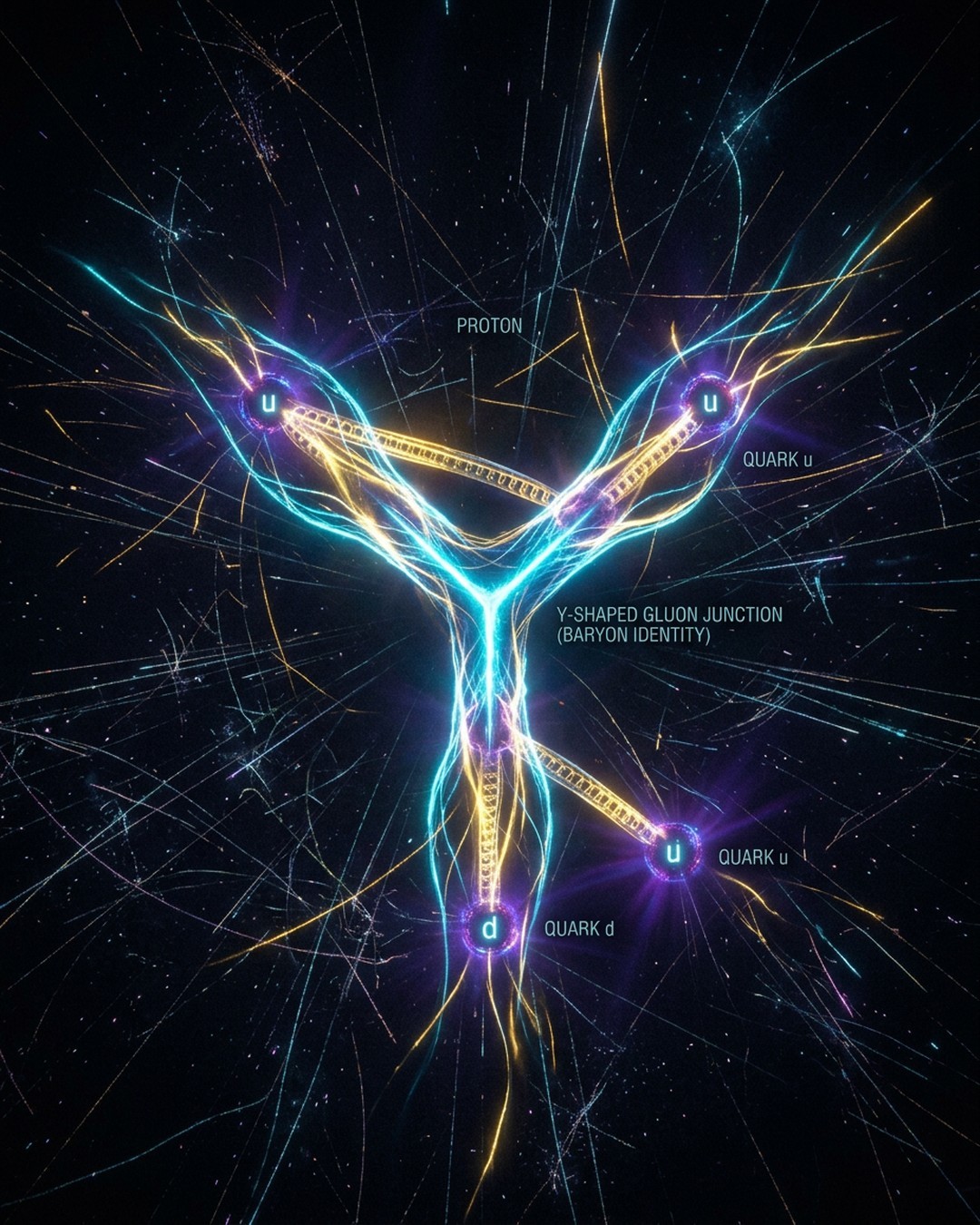
A recent study published in the August 13 issue of Science by the STAR collaboration reveals that a key facet of a proton's identity, specifically its baryon number, may reside within the gluey particles called gluons rather than the traditional assumption of quarks. By analyzing atomic nuclei collisions at nearly the speed of light at the Relativistic Heavy Ion Collider at Brookhaven National Laboratory, researchers observed particle emission patterns that match a Y-shaped gluon structure known as a baryon junction. The author highlights how this discovery challenges longstanding physical models, shifting focus from individual quarks carrying a baryon number of 1/3 each to a centralized gluon network. Physicists like Spencer Klein of Lawrence Berkeley National Lab and Chun Shen of Wayne State University note that while this provides strong evidence favoring the junction picture, further theoretical refinement and data from future facilities like the Electron-Ion Collider are necessary for absolute confirmation. The essence of this research underscores the profound contribution of gluons to proton properties, as gluons already account for a significant portion of the proton's mass and spin. This expanding paradigm positions gluons as the fundamental drivers behind several core quantum and mechanical characteristics of subatomic particles previously attributed solely to quarks. Researchers and physics enthusiasts can apply these findings to deepen their understanding of quantum chromodynamics and particle interactions, while keeping track of upcoming developments in high-energy particle physics experiments and collider upgrades slated for future research campaigns.

キーポイント

01

🔹 Discovery of Gluon-Based Baryon Number

A new study published in the August 13 issue of Science by the STAR collaboration indicates that the baryon number—a defining characteristic of protons and related particles—resides within gluons rather than quarks. Researchers analyzed atomic nuclei collisions at nearly the speed of light, finding that particle types and angles matched a Y-shaped gluon structure known as a baryon junction.

02

🔸 Challenging the Traditional Quark Model

The longstanding physical view assumed each of a proton's three quarks carried a baryon number of 1/3. However, separating a quark yields a meson with baryon number 0 instead of a fractional baryon number, supporting the alternative hypothesis that a Y-shaped baryon junction connecting the three quarks holds the baryon number of 1.

03

⭐ Experimental Evidence from Heavy Ion Collisions

Experiments at the Relativistic Heavy Ion Collider at Brookhaven National Laboratory in Upton, New York, showed that particles stopped in their tracks and flung perpendicular to the beam matched the gluon junction model predictions. Quarks carry higher momentum fractions and are harder to stop, whereas the junction model predicts increased emissions perpendicular to the beam path.

04

📊 Scientific Consensus and Future Outlook

Theoretical physicist Chun Shen of Wayne State University noted that the evidence strongly favors the junction picture, though it is not yet a definitive smoking gun. Future insights are anticipated from the planned Electron-Ion Collider, which is set to replace the Relativistic Heavy Ion Collider after its shutdown in February.

05

💡 Broader Role of Gluons in Proton Characteristics

Gluons consistently punch above their weight in subatomic physics by providing a hefty portion of the proton's mass as well as its spin, another critical quantum property. This new research suggests that the baryon number naturally follows this trend of gluon dominance within the proton's internal structure.

自分のマインドマップを作成したいですか?

Neumap AIにログインして、あなた専用のマインドマップの作成を始めましょう!

今すぐ始める