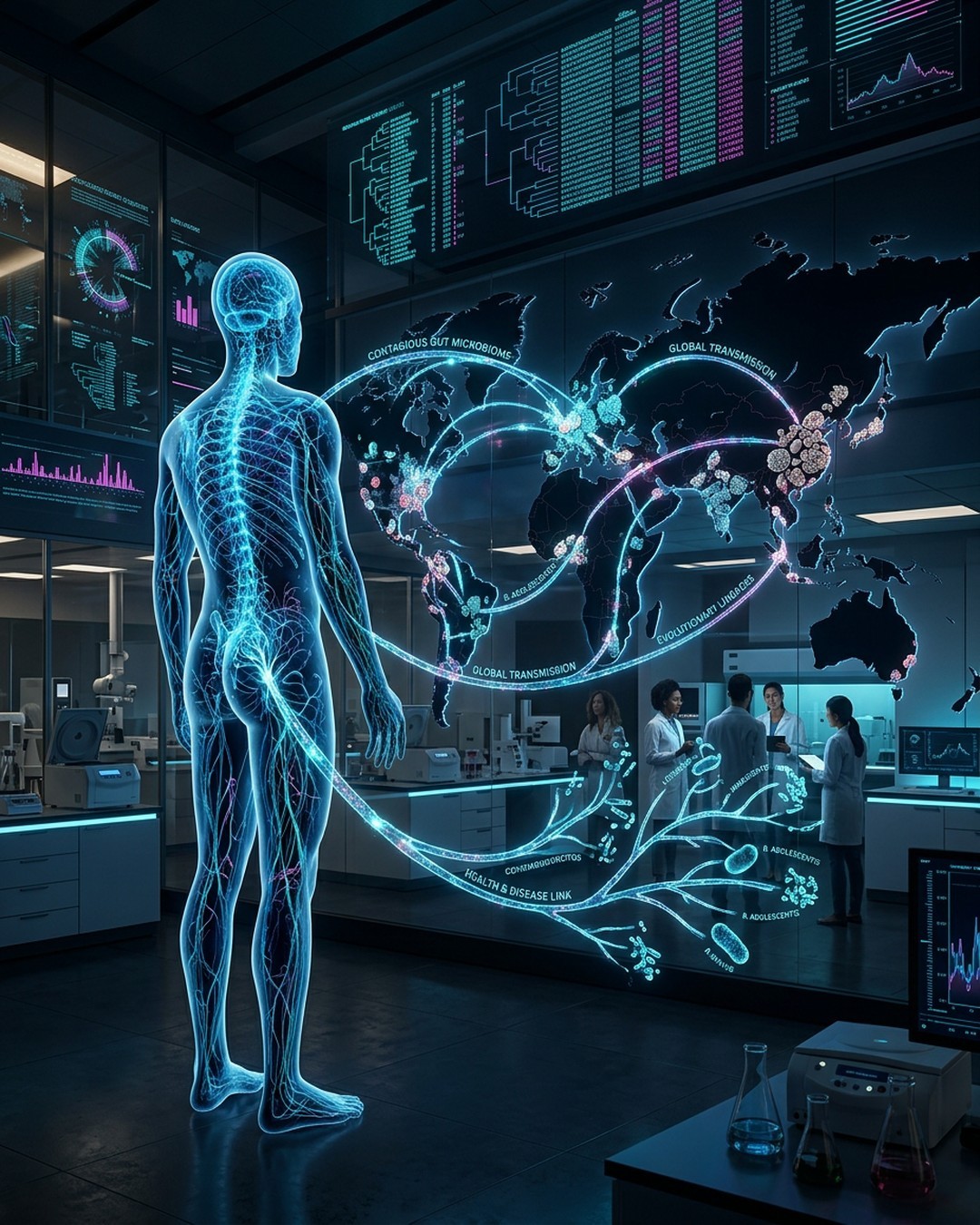
Contagious Gut Microbiome Discoveries

ScitechDaily UniversityOfVienna GutMicrobiome Microbiology Genomics NatureJournal

要約

マインドマップカバー画像
AI生成カバー画像

Recent scientific research published in Nature on August 29, 2026, by a team led by the University of Vienna reveals that the human gut microbiome may be contagious. Scientists discovered that familiar gut bacterial species are composed of evolutionarily separate groups adapted to specific niches, with some populations linked to older age, inflammatory bowel diseases, colorectal cancer, and type 2 diabetes. The researchers utilized an innovative bioinformatic method called 'reverse ecology' to analyze thousands of bacterial isolates and extensive metagenomic datasets across different countries, ages, and health groups. The findings demonstrate that well-adapted bacterial lineages can undergo genome-wide selective sweeps and spread internationally across continents within decades, mimicking patterns previously observed only in pathogens. This study fundamentally shifts the traditional understanding of how human microbiomes are shaped, highlighting that person-to-person transmission plays a crucial role alongside diet, medication, and lifestyle. By recognizing these discrete microbial populations rather than broad species categories, researchers can pinpoint disease connections with much greater accuracy. The breakthrough opens new pathways for medical diagnostics and biomarker discovery, paving the way for more precise therapeutic interventions. Future research will focus on isolating the specific genes that distinguish these populations to target beneficial strains or suppress problematic ones effectively.

キーポイント

01

🔹 Discovery of Contagious Gut Microbiomes

【📌 Core Finding】Scientists at the University of Vienna discovered that human gut bacteria can be contagious and spread rapidly between individuals and across continents. 【🔸 Transmission Dynamics】Well-adapted bacterial lineages can cross international borders within a few decades, showing dynamic patterns previously associated primarily with infectious pathogens. 【⭐ Broader Implications】This person-to-person transmission acts as a major, previously overlooked force shaping the human microbiome alongside traditional factors like diet and medication.

02

🔸 Reverse Ecology and Genomic Analysis

【📌 Methodology】Researchers used 'reverse ecology', a bioinformatic approach that infers ecological adaptations directly from genomic data. 【🔸 Dataset Scope】The team analyzed thousands of bacterial isolates and extensive metagenomic data collected from people across diverse countries, age groups, and health conditions. 【⭐ Selective Sweeps】The analysis identified genome-wide selective sweeps where advantageous mutations allowed specific bacterial strains to outcompete close relatives and form distinct evolutionary lineages.

03

⭐ Sub-Species Specialization and Disease Links

【📌 Categorization Shift】Traditional microbiome research groups bacteria by whole species, which often masks distinct populations adapted to specific internal niches. 【🔸 Disease Associations】Specific evolutionary lineages identified within familiar bacterial species are directly linked with older age, chronic inflammatory bowel diseases, colorectal cancer, and type 2 diabetes. 【⭐ Precision Diagnostics】Distinguishing these precise biological units helps scientists separate disease-linked bacteria from neutral or health-protective strains.

04

📊 Research Leadership and Publication Details

【📌 Author Information】Led by principal investigator Martin F. Polz and lead author Xiaoqian Annie Yu from the Center for Microbiology and Environmental Systems Science (CeMESS) at the University of Vienna. 【🔸 Publication Date】The groundbreaking study was officially published on May 6, 2026, in the prestigious scientific journal Nature. 【⭐ DOI Reference】The published work is referenced under DOI: 10.1038/s41586-026-10476-w, marking a major milestone in modern microbiological research.

05

💡 Future Medical and Therapeutic Applications

【📌 Biomarker Discovery】Moving beyond broad species classifications enables scientists to improve biomarker searches and clinical diagnostics significantly. 【🔸 Precision Therapies】Long-term medical applications include designing targeted therapies to encourage beneficial bacterial strains or reduce pathogenic ones. 【⭐ Next Steps】The research team plans to investigate the specific genes driving these population distinctions and map out the exact biological functions they control.

自分のマインドマップを作成したいですか?

Neumap AIにログインして、あなた専用のマインドマップの作成を始めましょう!

今すぐ始める