Two-Stage Model of Aging and Chronic Disease

Aging ChronicDisease Gerontology EvolutionaryBiology HealthResearch

要約

マインドマップカバー画像
AI生成カバー画像

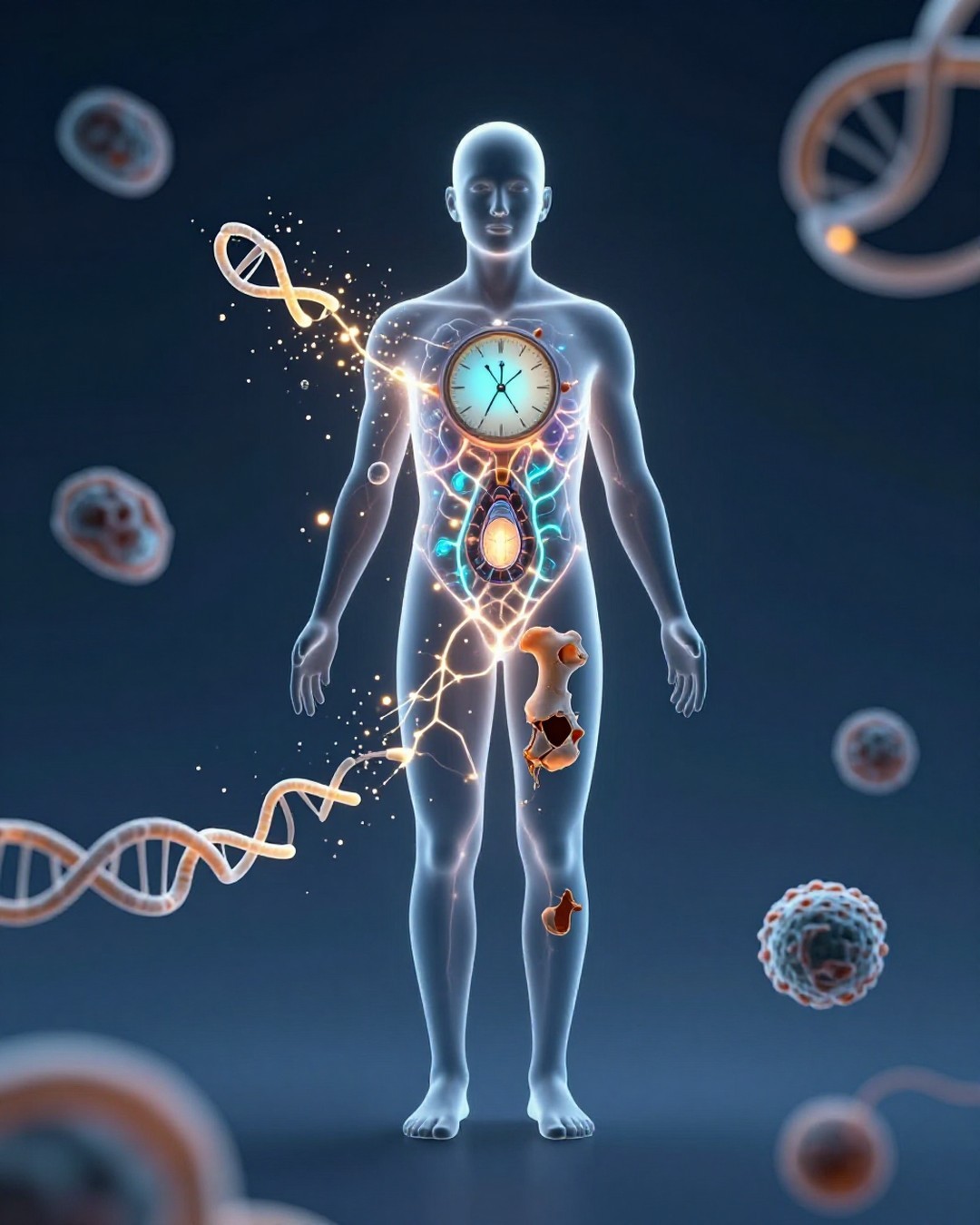
Researchers David Gems, Alexander Carver, and Yuan Zhao have introduced a two-stage model to explain the link between aging and chronic disease. This framework posits that aging is a multifactorial process where early-life damage remains dormant until later-life biological changes, driven by genetic activity, reduce the body's ability to contain these issues, leading to the manifestation of diseases like cancer and arthritis. The authors argue that aging is not caused by a single factor but by the interaction between accumulated early-life insults—such as infections, injuries, and mutations—and the natural decline in physiological maintenance during senescence. This perspective shifts the focus from viewing aging as purely molecular damage to understanding it as a failure of containment mechanisms. By integrating evolutionary biology concepts like Mutation Accumulation (MA) and Antagonistic Pleiotropy (AP), the model explains why certain conditions emerge only in later life. The research suggests that what were once harmless or beneficial biological processes in youth become pathogenic as the body ages and natural selection's influence wanes. This new framework provides a strategic foundation for future medical research, emphasizing the importance of early-life health management and targeted interventions. By identifying how latent damage interacts with age-related genetic expression, scientists can better develop strategies for disease prevention and promote healthier aging trajectories.

キーポイント

01

🔹 The Two-Stage Aging Framework

【📌 Core Concept】The model divides aging into two distinct stages: Stage 1 involves the accumulation of latent damage (infections, injuries, mutations) during youth that remains contained. Stage 2 occurs in later life, where age-related biological changes (senescence) weaken the body's ability to suppress these dormant issues, allowing them to manifest as chronic diseases.

02

🔸 Interaction of Early Damage and Late-Life Genetics

【📌 Mechanism】Aging is not a single-cause phenomenon but a multifactorial interaction. Early-life insults (e.g., joint injuries, dormant viruses) persist beneath the surface. As individuals age, 'wild-type gene action'—genetic processes that are typically beneficial or neutral in youth—becomes harmful, failing to maintain the containment of these early-life 'seeds' of disease.

03

⭐ Evolutionary Biology Foundations

【📌 Theoretical Basis】The research utilizes two key evolutionary theories: Mutation Accumulation (MA), where late-acting deleterious mutations are unmasked by programmatic changes, and Antagonistic Pleiotropy (AP), which explains how genes beneficial in early life for reproduction can have negative, disease-promoting effects in post-reproductive years.

04

📊 Clinical Examples of Latent Damage

【📌 Evidence】The authors cite specific examples where this model applies: 1) Shingles (reactivation of dormant viruses due to weakened immune defenses), 2) Osteoarthritis (early joint injuries resurfacing as tissues lose resilience), and 3) Cancer/Fibrosis (inherited genetic mutations remaining silent for decades before being triggered by age-related physiological shifts).

05

💡 Implications for Healthier Aging

【📌 Strategic Outlook】By understanding that chronic diseases are often the result of long-term latent damage interacting with late-life genetic expression, medical professionals can shift focus toward earlier preventative measures. This model encourages targeted interventions that aim to bolster the body's containment mechanisms before they fail in old age.

自分のマインドマップを作成したいですか?

Neumap AIにログインして、あなた専用のマインドマップの作成を始めましょう!

今すぐ始める