Saffron Cultivation Research Supporting Colorado Farmers

scitechdaily colorado-state-university agriculture saffron agrivoltaic

要約

マインドマップカバー画像
AI生成カバー画像

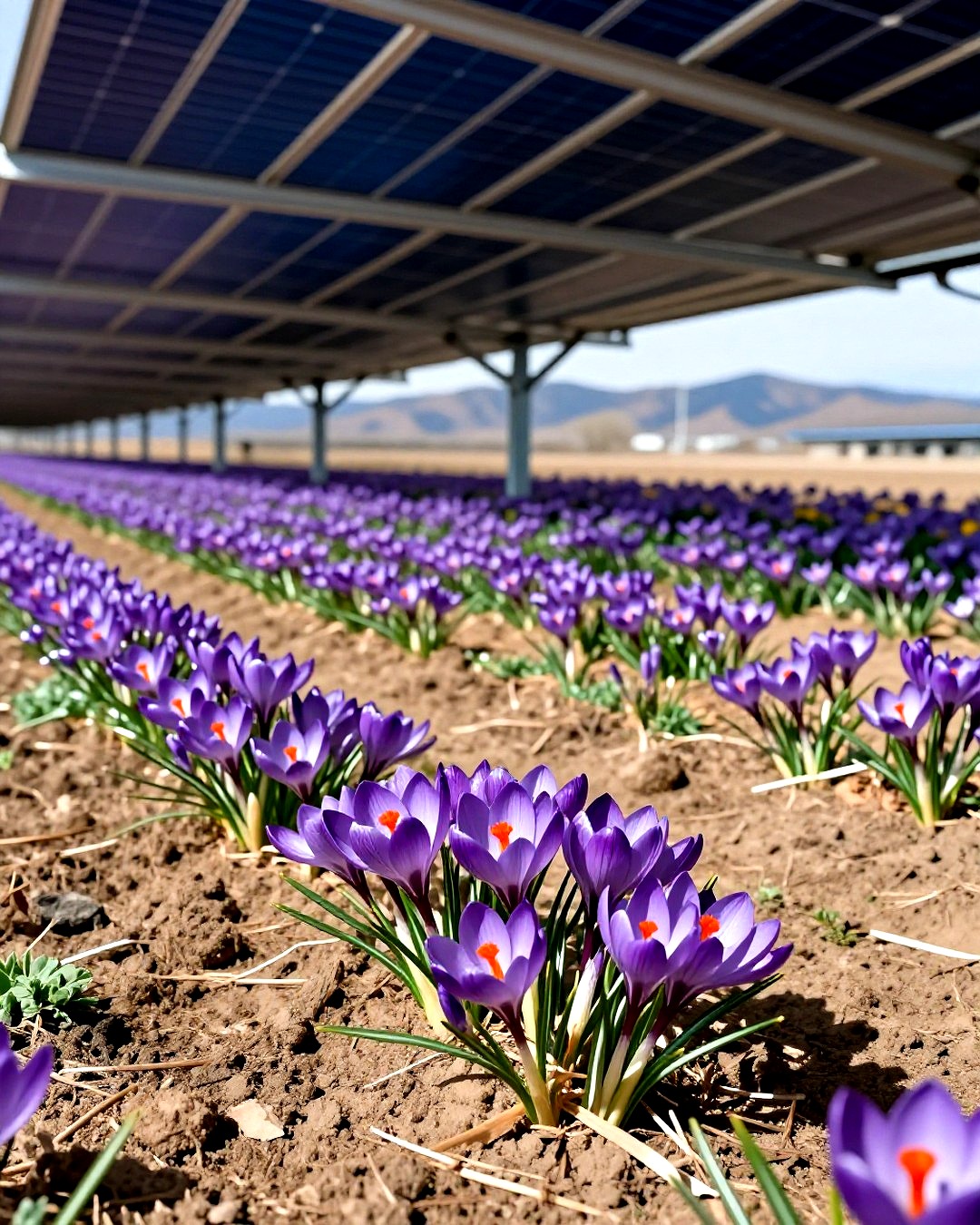
Published on November 12, 2026, by Colorado State University, recent research explores whether cultivating saffron, a spice valued between 600 and 10,000 dollars per pound, can provide crucial supplemental income for Colorado farmers facing rising operational costs and severe water shortages. Horticulture graduate student Reece Bailey and faculty adviser Jennifer Bousselot are testing saffron production on university green roofs and solar arrays to analyze its drought resilience and growth under agrivoltaic systems. The author highlights how saffron serves as a strategic solution for regional agricultural challenges by offering high-value returns with low water requirements compared to traditional crops like corn. Furthermore, its November bloom schedule creates potential seasonal employment for farmworkers during typically inactive months, positioning the spice as both an economic booster and a climate adaptation tool for local producers. The essence of the initiative lies in diversifying regional agriculture through high-value specialty crops that thrive in semiarid climates similar to Iran, which produces roughly 85 percent of global saffron. By leveraging urban rooftops and solar panel shading, where research shows yields nearly double, the project demonstrates innovative land-use dual-purposing that generates both agricultural products and solar electricity. For practical application, researchers have distributed saffron bulbs to working farms in Paonia, Pueblo, and Montrose to evaluate commercial viability. Farmers are advised to carefully weigh startup costs, labor demands requiring roughly 75,000 hand-picked flowers per pound, and market access before transitioning to large-scale saffron cultivation.

キーポイント

01

🔹 Extraordinary Market Value and Labor Demands

【📌 Key Finding】Saffron commands prices ranging from 600 to 10,000 dollars per pound, making it the world's most expensive spice, significantly outpacing vanilla priced at 90 to 225 dollars per pound. 【🔸 Impact Factors】Production requires an immense amount of manual labor, demanding roughly 75,000 purple Crocus sativus flowers to yield a single pound of dried spice extracted from tiny red stigmas during brief morning harvest windows. 【⭐ Data Support】The Colorado Department of Agriculture has committed 80,000 dollars through its Specialty Crop Block Grant Program to investigate saffron as a viable supplemental income source for regional producers.

02

🔸 Climate and Water Efficiency Alignment

【📌 Key Finding】Colorado shares mountainous, semiarid environmental conditions with Iran, which produces approximately 85 percent of the global saffron supply. 【🔸 Impact Factors】Saffron is exceptionally drought-resistant, requiring roughly half as much water as corn and potentially surviving solely on natural rainfall. 【⭐ Data Support】The November blooming cycle provides late-season income and seasonal employment for farmworkers during periods when traditional crops have already been harvested and standard agricultural jobs are scarce.

03

⭐ Agrivoltaic and Green Roof Production Success

【📌 Key Finding】Research led by Reece Bailey and Jennifer Bousselot at Colorado State University Spur tests saffron cultivation across urban rooftops and solar panel installations. 【🔸 Impact Factors】Shade tolerance allows saffron to thrive beneath solar arrays, where experimental research demonstrates that yields nearly double under partial shade conditions. 【⭐ Data Support】Trials are expanding beyond the Denver rooftop plots to Foothills Campus and Denver Botanic Gardens Chatfield Farms, as well as working farms in Paonia, Pueblo, and Montrose.

04

📊 Economic Viability and Farm Integration Challenges

【📌 Key Finding】High market prices do not automatically guarantee profitability due to substantial startup costs and labor requirements. 【🔸 Impact Factors】Farmers must thoroughly evaluate bulb suppliers, specialized harvesting equipment, labor availability, and dedicated buyers before commercial adoption. 【⭐ Data Support】Sam Hahn from the Colorado Department of Agriculture notes that while labor inputs are high, the crop acts as a vital buffer against rising input costs and tightening irrigation water supplies.

05

💡 Historical Uses and Modern Medicinal Research

【📌 Key Finding】Saffron has a rich historical record, utilized by Alexander the Great for battle wounds, Cleopatra for fragrance, and historical physicians against the bubonic plague. 【🔸 Impact Factors】Modern scientific studies are increasingly exploring its pharmacological properties, including potential anti-inflammatory effects and mental health benefits to alleviate depression. 【⭐ Data Support】Although medicinal demand adds commercial appeal, current Colorado trials remain strictly focused on successful cultivation and economic viability for local farmers.

自分のマインドマップを作成したいですか?

Neumap AIにログインして、あなた専用のマインドマップの作成を始めましょう!

今すぐ始める