Thermal History and Magma Explosivity

Volcanology Geology UniversityOfManchester MagmaDynamics NatureCommunications EarthScience

요약

마인드맵 커버 이미지
AI 생성 커버 이미지

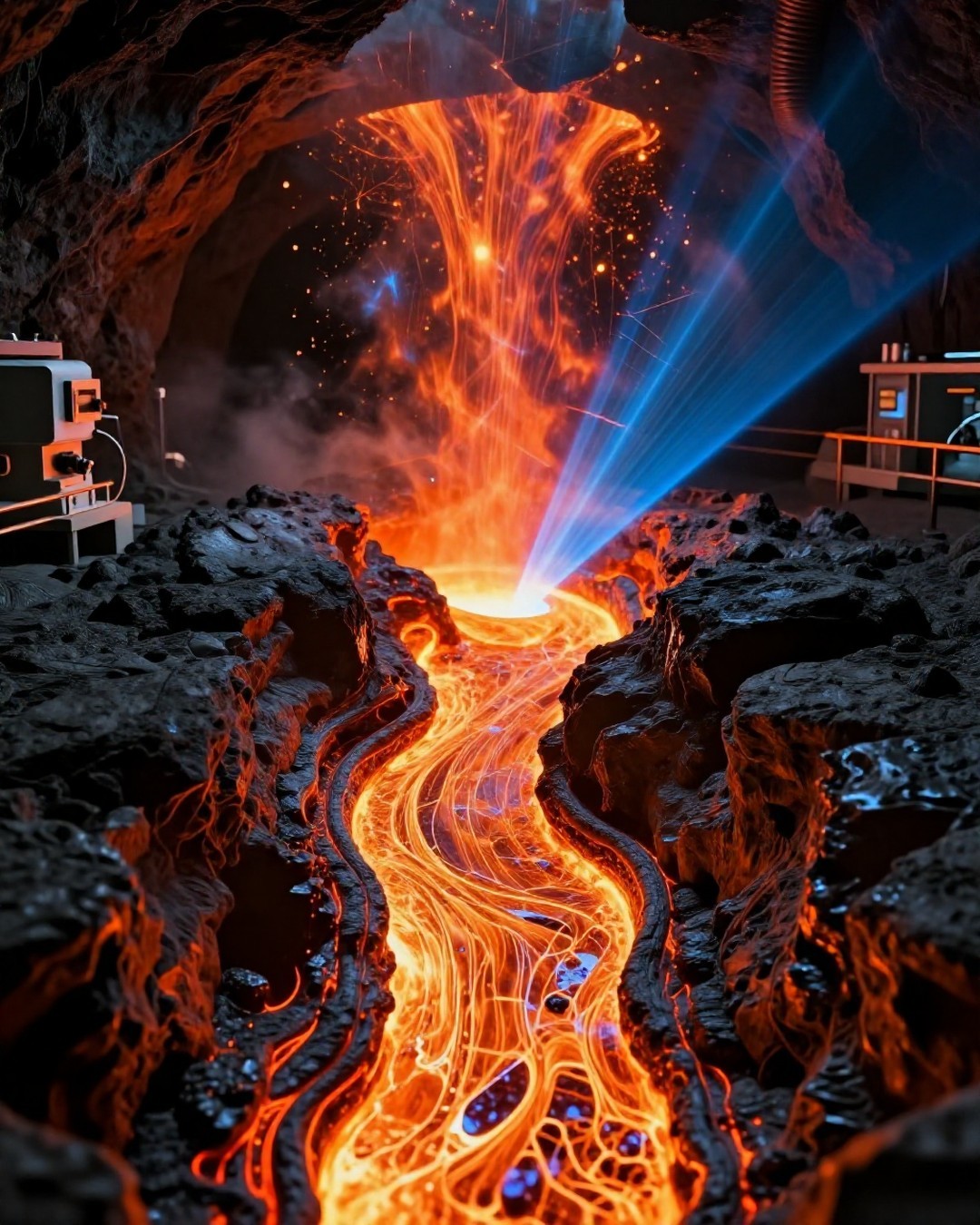
Researchers from the University of Manchester have identified that the thermal history of magma, specifically a process called superheating, is a critical factor in determining whether a volcanic eruption becomes explosive or remains effusive. By heating magma beyond the point where crystals can form, the material remains fluid for significantly longer periods, which influences its ascent speed and gas release dynamics. The study, published on June 8, 2026, in Nature Communications, challenges traditional volcanic hazard models that primarily focus on chemical composition and pressure. The authors argue that pre-eruptive thermal history and crystallization kinetics are essential variables for accurately forecasting eruption styles and improving volcanic hazard assessments. Using advanced synchrotron X-ray microtomography and internally heated pressure vessels, the team observed that superheated magma delayed crystal nucleation for over eight hours, compared to just 20 minutes for non-superheated samples. This delay allows magma to rise rapidly without the viscosity increase typically caused by crystal growth, facilitating intense lava fountaining. These findings provide a new framework for interpreting volcanic monitoring data. By incorporating these crystallization delays into predictive models, scientists can better anticipate the transition between gentle lava flows and explosive eruptions, ultimately enhancing safety protocols for populations living near active volcanic regions.

핵심 포인트

01

🔹 The Role of Superheating in Magma

Superheating is a process where magma is heated beyond the temperature threshold required for crystal stability. This excess heat effectively erases the microscopic building blocks (nuclei) necessary for crystal formation, keeping the magma in a crystal-free, fluid state for extended durations.

02

🔸 Experimental Findings on Crystallization Delay

【📌 Key Finding】Superheated magma exhibits a significant delay in crystallization. 【⭐ Data Support】Experiments using synchrotron X-ray microtomography showed that non-superheated magma began crystallizing in approximately 20 minutes, whereas superheated magma delayed this process for more than eight hours.

03

⭐ Impact on Eruption Dynamics

【📌 Causal Relationship】Delayed crystallization → Lower magma viscosity → Rapid ascent → Intense lava fountaining. Conversely, early crystallization → Higher viscosity → Slower ascent → Gas escape → Gentle, effusive eruptions.

04

📊 Methodology and Research Tools

The research team utilized an X-ray transparent internally heated pressure vessel at the Diamond Light Source (UK) to observe crystallization in real time. Complementary ex situ experiments were conducted in Prague to monitor the process over longer periods under controlled temperature and pressure conditions.

05

💡 Implications for Volcanic Hazard Assessment

Current hazard models often overlook thermal history. By integrating these new findings on crystallization kinetics into computer simulations, scientists can improve the interpretation of monitoring data, leading to more accurate forecasts of volcanic behavior and better risk management for at-risk communities.

자신만의 마인드맵을 만들고 싶으신가요?

Neumap AI에 로그인하고 나만의 마인드맵 만들기를 시작하세요!

지금 시작하기