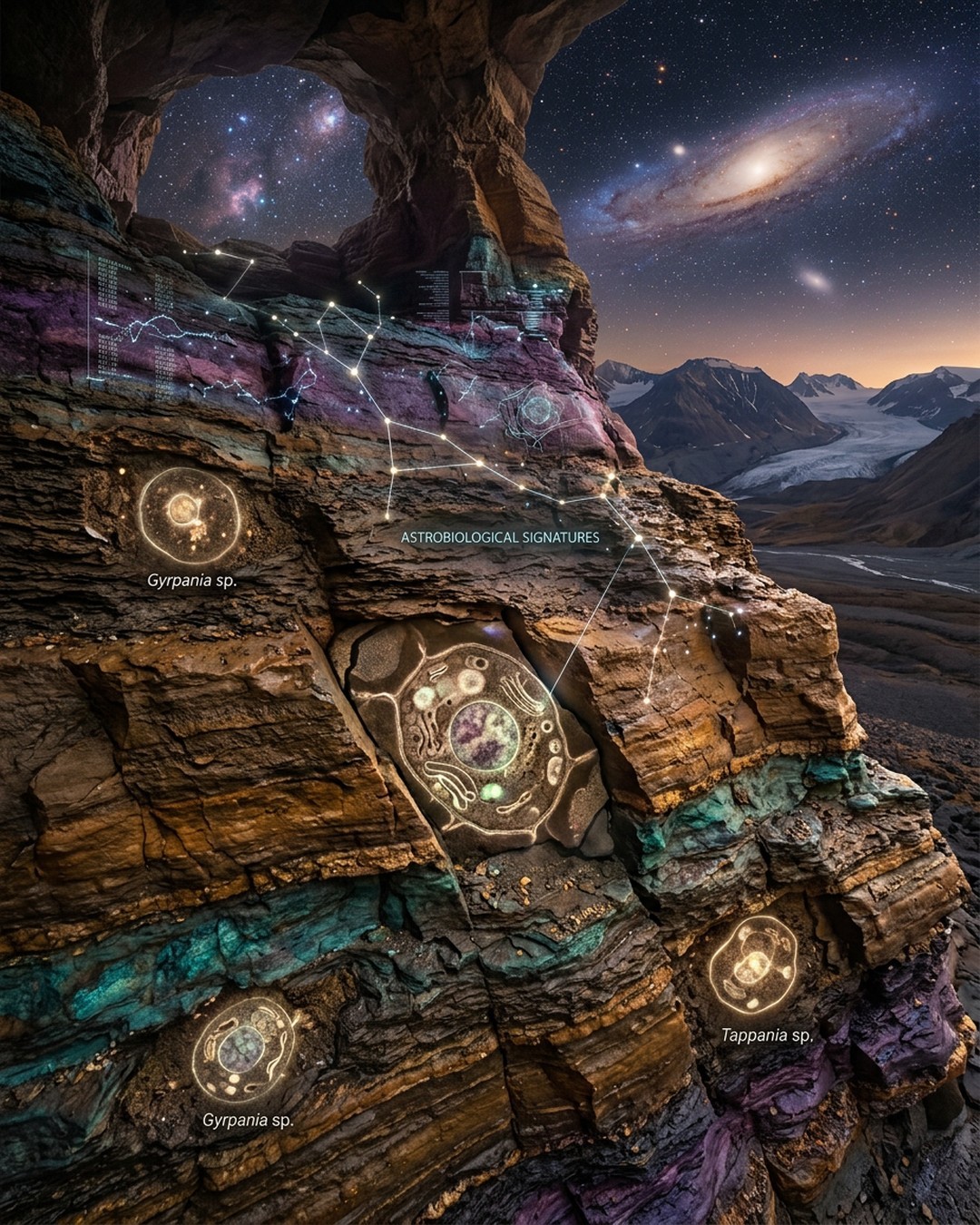
This article published on July 28, 2026, explores how Earth's earliest complex organisms, specifically the first eukaryotes, provide vital insights into evolutionary history and astrobiology. Led by paleontologist Ross Anderson from the University of Oxford, researchers are studying ancient microfossils to understand the transition from simple single-celled bacteria to complex multicellular life.
The author emphasizes that while searching for life on Mars or icy moons like Europa attracts significant attention, understanding Earth's history is crucial because microbial organisms dominated roughly 90 percent of our planet's timeline. Eukaryotes, featuring cell nuclei and energy-producing organelles like mitochondria, represent Earth's first truly complex organisms, serving as the evolutionary foundation for all modern animals, plants, and fungi.
Investigating this deep evolutionary past presents major hurdles due to the sparse fossil record, as organisms older than 500 million years lacked hard shells and skeletons. Scientists overcome this by analyzing ancient rock chemistry and focusing on pristine, remote settings like Svalbard, Norway, and Australia, where massive clay deposits help preserve fragile, soft-tissue microfossils dating back up to 1.75 billion years.
Ultimately, mapping out Earth's early biological transitions enhances our comprehension of how life emerged under specific planetary conditions. This terrestrial knowledge directly informs astrobiological search strategies, helping scientists evaluate the true likelihood of discovering complex life beyond our solar system.