Honeybee Queens Maternal Pesticide Offloading

scitechdaily biology entomology pesticides toxicology uc-davis

요약

마인드맵 커버 이미지
AI 생성 커버 이미지

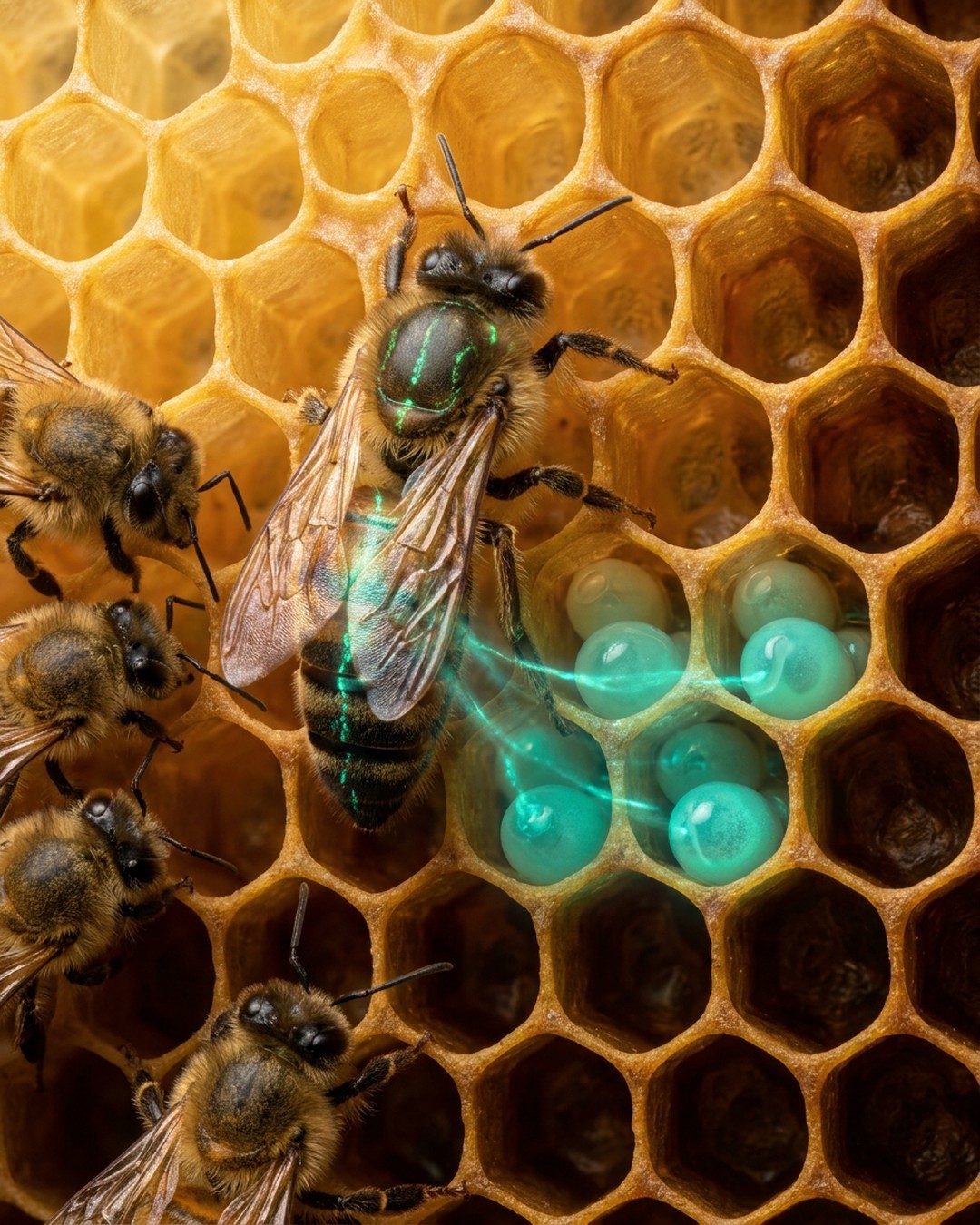
A study published on August 10, 2026, in Current Biology reveals that honeybee queens can pass toxic pesticide chemicals to their eggs through a process called maternal offloading when social buffering by worker bees fails. Researchers from the University of California, Lawrence Livermore National Laboratory, and the USDA found that while worker bees initially filter out 95 percent of pesticides from the queen's food, this filtration capacity drops to 86 percent by day 10 under continuous exposure. When pesticide accumulation overwhelms the worker bees' filtration defense, the queen bee shunts the toxic chemical burden directly into her eggs to protect her own body, which poses a severe risk to the colony's next generation and can lead to delayed colony collapse. This groundbreaking discovery highlights the hidden chemical burden inherited by future workers and underscores the need for better pest management strategies to protect honeybee populations that are crucial for global agriculture.

핵심 포인트

01

🔹 Discovery of Maternal Offloading in Honeybees

【📌 Key Finding】University of California Davis researchers documented for the first time that honeybee queens offload toxic chemicals into their eggs. 【🔸 Impact Factors】This process, published in Current Biology on July 2, 2026, acts as a survival strategy for the queen to remove contaminants from her own body. 【⭐ Data Support】The mechanism exposes the colony's next generation of developing workers to pesticides before they even hatch.

02

🔸 Breakdown of Worker Bee Social Buffering

【📌 Key Finding】Worker bees normally act as living filters, intercepting pesticide contamination to shield the queen and developing larvae. 【🔸 Impact Factors】During the first day in controlled nanocolony experiments using methyl parathion with a radioactive tracer, workers removed 95 percent of pesticides from the queen's food. 【⭐ Data Support】By day 10 of continuous exposure, the worker filtration rate dropped to 86 percent, proving that sustained chemical accumulation overwhelms this protective system.

03

⭐ Use of Advanced Nanocolonies and BioAMS Technology

【📌 Key Finding】Scientists utilized experimental nanocolonies housing one queen and 60 worker bees to track precise pesticide movement under controlled conditions. 【🔸 Impact Factors】Researchers from Lawrence Livermore National Laboratory measured radioactive markers using biological accelerator spectrometry (BioAMS). 【⭐ Data Support】BioAMS technology successfully traced environmentally relevant, non-lethal, and extremely low concentrations of pesticides that conventional instruments could not detect.

04

📊 Implications for Colony Health and Agriculture

【📌 Key Finding】A single honeybee queen produces between 1,500 and 2,000 eggs each day, making her reproductive health vital for the entire hive. 【🔸 Impact Factors】When eggs are heavily loaded with toxins, they may fail to develop properly, contributing to a slow creeping effect of chemical accumulation and delayed colony collapse. 【⭐ Data Support】Because honeybee colonies pollinate about one-third of the world's food crops, weakened hives directly threaten global agricultural productivity and food security.

05

💡 Future Research Directions and Applications

【📌 Key Finding】The study opens new avenues for understanding chronic pesticide exposure in social insects. 【🔸 Impact Factors】Researchers still need to determine how long queens continue transferring contaminants into their eggs and whether different pesticides trigger identical responses. 【⭐ Data Support】These findings are expected to heavily influence decisions made by beekeepers, commercial growers, and integrated-pest-management planners.

자신만의 마인드맵을 만들고 싶으신가요?

Neumap AI에 로그인하고 나만의 마인드맵 만들기를 시작하세요!

지금 시작하기