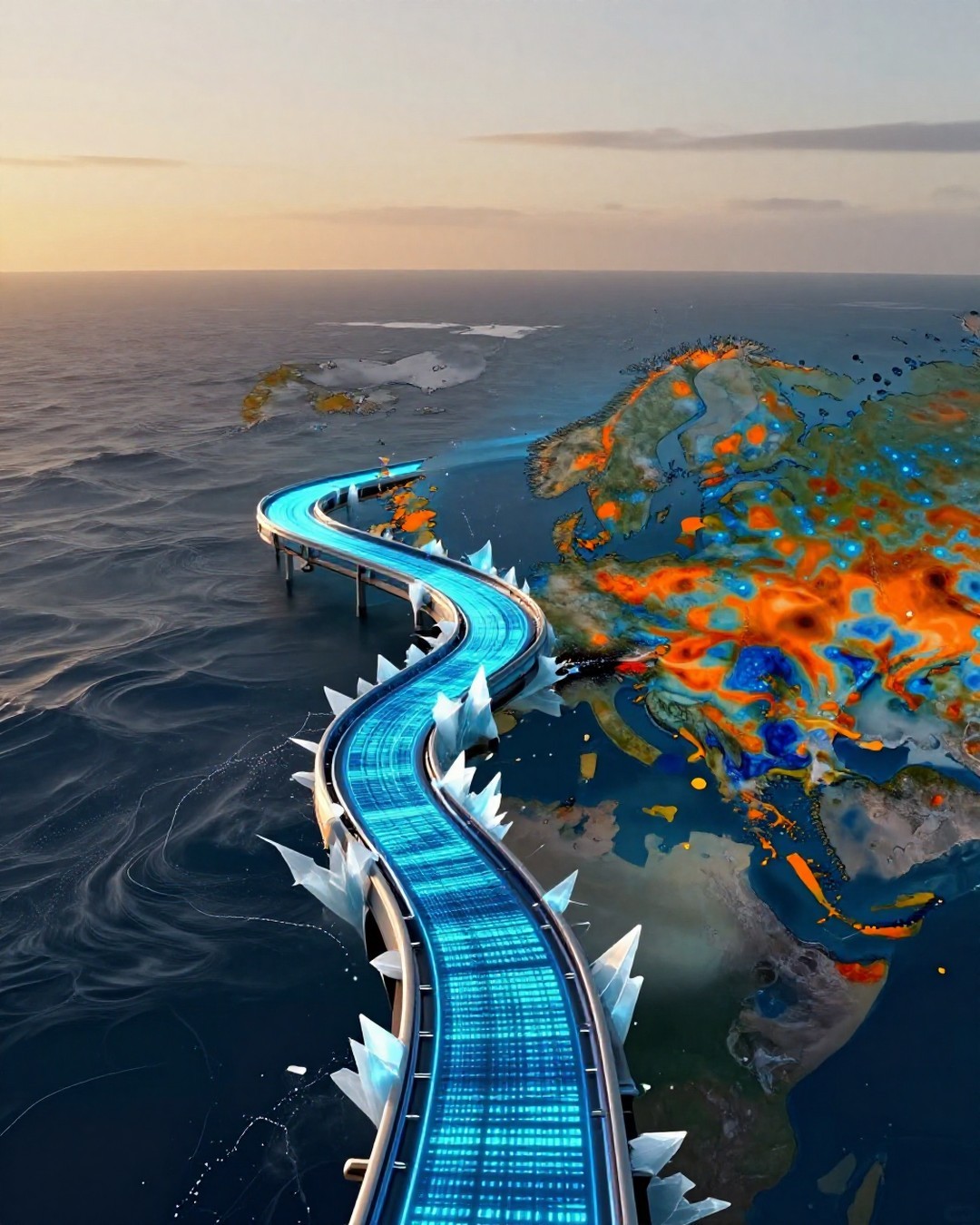
The Future of the Atlantic Meridional Overturning Circulation (AMOC)

ClimateChange Oceanography AMOC EnvironmentalScience GlobalWarming

요약

마인드맵 커버 이미지
AI 생성 커버 이미지

The Atlantic Meridional Overturning Circulation (AMOC), a critical ocean current system responsible for heat transport from the tropics to Europe, is experiencing a rapid and concerning decline due to global warming. Scientific consensus, bolstered by two decades of observational data and advanced statistical modeling, indicates that the current could weaken by approximately 51 percent by the year 2100. This shift threatens to disrupt global climate patterns, potentially causing extreme weather, increased droughts in Africa, and agricultural instability in Europe. Researchers emphasize that the uncertainty surrounding the AMOC's future is primarily driven by variations in climate models, particularly regarding salinity and precipitation simulations. While some conceptual geoengineering solutions, such as damming the Bering Strait to stabilize the current, have been proposed, they remain highly controversial and are viewed by many experts as distractions from the urgent necessity of reducing greenhouse gas emissions. The core challenge lies in the complex interplay of density-driven ocean currents, where freshwater influx from melting ice sheets and shifting salinity levels act as primary destabilizers. The scientific community warns that the AMOC may reach a critical tipping point as early as the 2040s, underscoring the immediate need for global climate action. For stakeholders and policymakers, this data highlights the narrowing window for effective intervention. Prioritizing adherence to international climate agreements, such as the Paris Agreement, remains the most viable strategy to prevent the catastrophic collapse of this essential climate-regulating system.

핵심 포인트

01

🔹 AMOC Weakening Projections

【📌 Key Finding】The Atlantic Meridional Overturning Circulation (AMOC) is projected to weaken by approximately 51 percent (plus or minus 8 percent) by 2100. 【⭐ Data Support】This conclusion is derived from ridge-regularized linear regression analysis of climate simulations, which identifies South Atlantic surface salinity as a primary predictor of the current's decline.

02

🔸 Climate Consequences of AMOC Shutdown

【📌 Impact Factors】The collapse of the AMOC would disrupt the transport of warm surface waters to Europe. 【🔸 Consequences】Potential outcomes include extreme temperature fluctuations in Europe, increased drought in the African Sahel, stronger North Atlantic storms, and significant reductions in summer precipitation, leading to severe agricultural failure.

03

⭐ The Role of Salinity and Density

【📌 Mechanism】The AMOC is a density-driven system where cold, salty water sinks in the North Atlantic. 【🔸 Cause-Effect】Increased freshwater influx from melting ice sheets (e.g., Greenland) and shifting wind patterns reduce water density, preventing the sinking process and effectively slowing the conveyor belt-like circulation.

04

📊 Controversial Geoengineering Proposals

【📌 Proposed Solution】Researchers have conceptualized building an 80-kilometer-long series of dams across the Bering Strait to restrict freshwater flow and stabilize the AMOC. 【⚠️ Risk Warning】Experts argue this is a highly controversial, unproven, and potentially counterproductive distraction from the primary goal of reducing global greenhouse gas emissions.

05

💡 Tipping Point and Urgency

【📌 Timeline】Scientific analysis suggests the AMOC could reach a critical tipping point as early as the 2040s. 【🎯 Conclusion】The consensus among physical oceanographers is that there is no time to lose, and the most effective path forward is strict adherence to the Paris Agreement to limit global temperature rise.

자신만의 마인드맵을 만들고 싶으신가요?

Neumap AI에 로그인하고 나만의 마인드맵 만들기를 시작하세요!

지금 시작하기